
As AT&T and Verizon prepare to roll out their new midband 5G spectrum this month, the Federal Aviation Administration (FAA) has published a list of 50 U.S. airports that the faster 5G coverage won’t be coming to — at least not right away.
Following several weeks of delays as the carriers and the aviation industry wrangled over potential safety issues, it looks like AT&T and Verizon are finally on track to begin the rollout of the new midband spectrum on January 19. While AT&T hasn’t yet outlined its specific plans for the new spectrum, Verizon has promised to use it to expand its 5G Ultra Wideband network to more than 100 million new customers across the U.S.
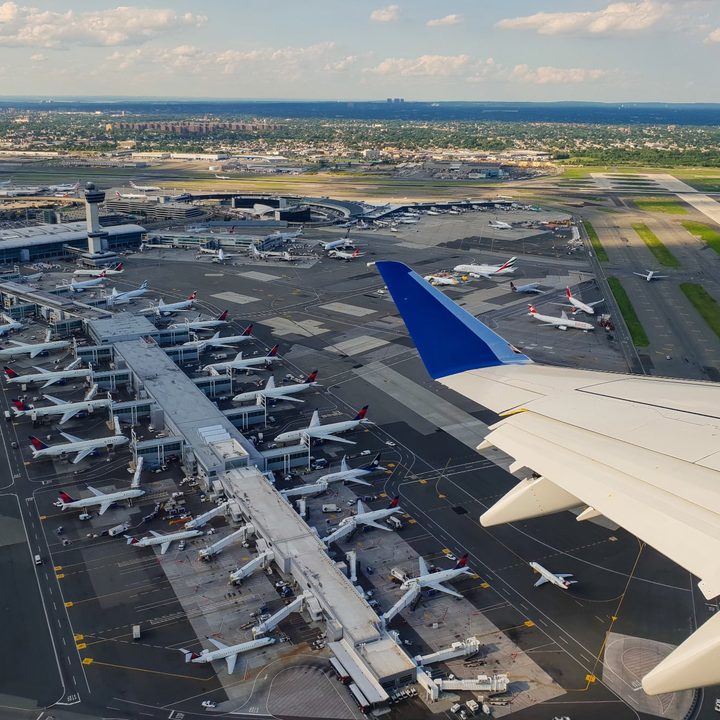
In the face of concerns that the new frequencies could interfere with important aviation instruments such as radar altimeters, both carriers agreed to delay the rollout of the new C-band spectrum into early 2022, while also proposing power limits that would lower the signal strength near airports.
When that proved insufficient to quell the fears of aviation industry officials, AT&T and Verizon’s CEOs went a step further, promising to create temporary “exclusion zones” around U.S. airports where the new 5G frequencies would not be deployed at all during the initial rollout.
In a joint letter last week, both CEOs then declared that these precautions should be more than sufficient, and emphasized that they wouldn’t entertain any more requests to delay their rollouts beyond January 5. However, after a day of intensive talks with the U.S. Department of Transportation and the FAA last Monday, both relented and agreed to one final two-week extension, with the rollout now scheduled to begin on January 19.
Where are the exclusion zones?
Now, the FAA has selected 50 specific airports where midband 5G spectrum won’t be deployed. The published list includes major U.S. passenger airline hubs such as Chicago’s O’Hare International, plus smaller regional airports that are prone to heavy fog and clouds, such as Paine Field in Snohomish County, Washington, and Tweed New Haven Regional Airport in Connecticut.
The exclusion zone list also includes all the biggest U.S. international airports in places like New York City, Los Angeles, Las Vegas, Dallas, Seattle, and beyond.
According to the Wall Street Journal, the agency selected airports based on traffic volumes, locations, and number of days with low visibility. The new C-band spectrum poses the greatest risk of interference to radar altimeters, which are most critical for low-visibility landings.
FAA officials pointed out that the exclusion list doesn’t necessarily mean that low-visibility flights can’t occur at other airports, although many airports don’t have the equipment necessary to handle low-visibility landings.
According to Reuters, the list published by the FAA omits several major airports in places like Denver and Atlanta, as well as Ronald Reagan Washington National, simply because the 5G deployments aren’t an issue in these places. They’re either in areas where 5G is not yet being deployed, or waterways are already “far enough away that a natural buffer exists.”
As things stand now, the exclusion zones will only be in effect for a period of six months, so AT&T and Verizon may still be deploying the new 5G hardware in those areas, and simply not switching it on during the initial rollout.
Aviation industry officials remain skeptical
Despite the agreement to forge ahead with the midband 5G rollout, the FAA is continuing to warn of possible disruptions to flights, telling Reuters that “even with the temporary buffer around 50 airports, 5G deployment will increase the risk of disruption during low visibility,” including “flight cancellations, diverted flights, and delays during periods of low visibility.”
Nonetheless, the FAA has committed to working with aerospace manufactures and airlines over the next six months to test and validate the avionics. The agency notes on its website that “as tests prove that some altimeters are safe, the FAA will be able to remove some restrictions on operations of aircraft with those altimeters.” It adds that “disruption risk will gradually decrease as more altimeters are tested and either deemed safe, retrofitted or replaced.”
In a statement to Reuters, Kevin Burke, President and CEO of Airports Council International — North America, an association that represents U.S. and Canadian airports, declared the FAA list “largely irrelevant,” warning that the “entire aviation system is about to be adversely impacted by this poorly planned and coordinated expansion of 5G service in and around airports.” Burke believes that “the entire aviation system will suffer under the terms of this deal.”
Airlines for America, the trade group that represents American Airlines, FedEx, and several other carriers, was somewhat more optimistic, however, with a spokesperson saying that the group appreciated the “FAA’s efforts to implement mitigations for airports that may be most impacted by disruptions generated by the deployment of new 5G service.”


