
At its annual Microsoft Ability Summit, Microsoft announced its Adaptive Accessories, a new series of products aimed at making PCs more inclusive for people whom a traditional mouse and keyboard aren’t all that helpful.
The first of the highly modular components is the Microsoft Adaptive Mouse. This new mouse can be adapted to fit one’s needs by adding mouse tail and thumb support, as well as 3D-printed tails for an even more customized setup. Unlike many products of this type, Microsoft says its new Adaptive Mouse still manages to be both light and portable. There’s even a thumb support accessory that can easily switch sides for both left-handed and right-handed folks.
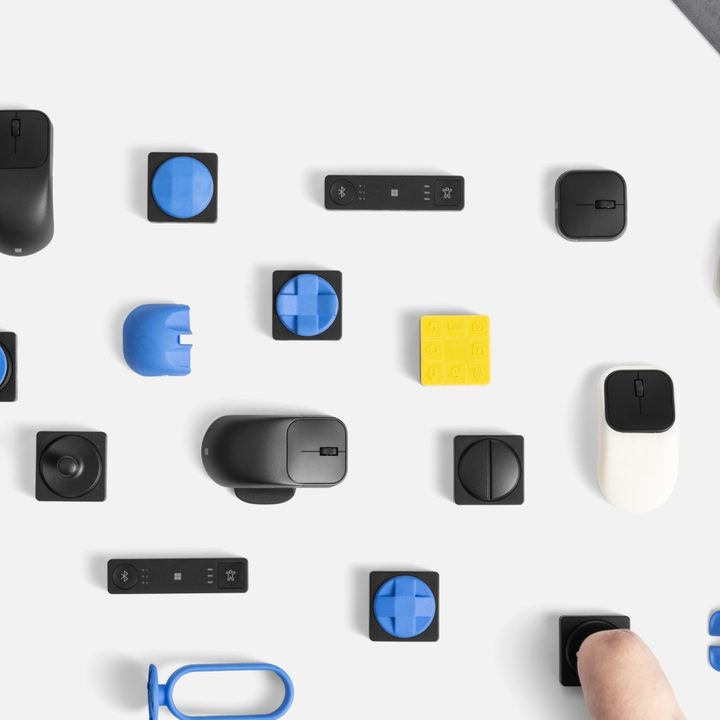
The other Microsoft adaptive accessories components are all about the keyboard. With the Microsoft Adaptive Hub, you get a central hub with wireless buttons in place of a traditional keyboard. It wirelessly pairs with up to four Microsoft Adaptive Buttons, allowing you to connect to your PC with ease.
Microsoft says the hub supports “standard 3.5mm assistive tech switches” and “features three distinct profiles for use with multiple devices.”
Those new Adaptive Buttons include a D-pad, joystick, and dual-button accessories. These can be configured for various needs with 3D-printed accessories as well.
“The wireless and versatile design allows you to create the setup that works best for you, whether you are using a versatile 2-in-1 like Surface Pro, or any Windows PC,” said Dave Dame, director of devices accessibility at Microsoft.
All the accessories help alleviate the pain points of using traditional keyboards and mice, as they can perform a variety of functions depending on the setup.
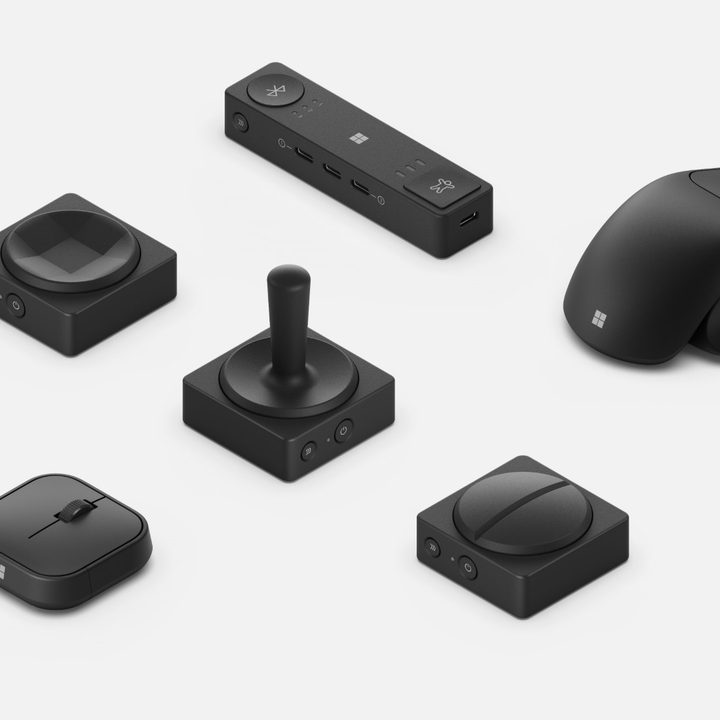
According to Microsoft, the accessories have three main components. The components can help you 3D print, configure, and customize your mouse or keyboard inputs and shortcuts in your own way.
Building on both the Surface Adaptive Kit and the Xbox Adaptive Controller, these adaptive accessories were assigned closely in partnership with communities of people who would actually benefit from such products. They’re built in Microsoft’s Inclusive Tech Lab, which aims “to learn and develop specifically for people with various types of disabilities.”
The new Microsoft adaptive accessories are coming later this fall.
Also detailed at the Microsoft Ability Summit were accessibility features for Windows 11. These are all currently in preview with Windows Insiders and were first mentioned during Microsoft’s Windows Powers the Future of Hybrid Work event. The list includes Focus, Live Captions, Voice Access, and Natural Narrator.
“We are designing inclusive Windows experiences both with and for people with disabilities and we all reap the benefits,” said Jeff Petty and Carolina Hernandez, Windows Accessibility leaders.
Accessibility is a huge theme for Microsoft across all of the company’s products. Also detailed at the event were ways in which the Microsoft Edge browser helps make the web accessible with features like automatic image descriptions, read aloud and immersive reader, and Microsoft Editor, which can improve writing skills. Even Xbox is going all-in on accessibility, with programs like the Gaming Developer Accessibility Resource Hub, Xbox Accessibility Guidelines, and accessibility resources in the Game Developer Kit.


