  1. Home
  2. Phones
  3. Mobile
  4. News

Google Play Store now offers third-party app payments, but only for some users

Add as a preferred source on Google

Google will now open up its Play Store as a result of the European Union’s Digital Markets Act, the company announced today. Now, any developers distributing apps or games in Europe (the European Economic Area, to be precise) will be able to sidestep the Google Play billing system with no penalty. The change comes after a similar push in South Korea.

“As of today, Google will not remove or reject updates of non-gaming apps from participating developers for offering alternative billing systems for EEA users. Google Play’s billing system will continue to be required for apps and games distributed via Play to users outside the EEA and for games distributed to users within the EEA. We expect to expand billing alternatives to developers of gaming apps for their users in the EEA, in advance of the DMA’s effective date,” Google’s Estelle Werth, director of EU Government Affairs and Public Policy, said in a blog post.
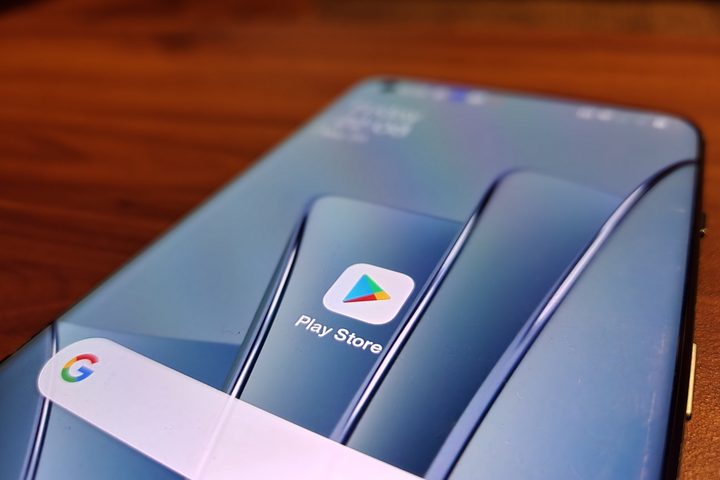
The Google Play store icon on an Android phone.
Google

In real terms, buyers will see a 3% decrease in payment prices, assuming all things remain equal. Most developers will pay the Play Store 12%, while others will be charged 27%. Developers who want to use these third-party payment systems in the EEA (cough, Tinder) will keep their place on the Play Store.

Recommended Videos

The EU’s Digital Markets Act prevents Apple and Google from platform providers mandating app store billing systems with a 10% fine of its total worldwide revenue given as a particularly thick stick. Google may not like it, but it’s certainly not going to go head to head with the EU, and it is absolutely not giving up that market as it did with China.

Apple can also be expected to adopt the same policy. It has already done so in South Korea as a response to the Telecommunication Business Act, though it made sure to note that consumers and developers alike would be losing some protections.

“If you’re considering using this entitlement, it’s important to understand that some App Store features, such as Ask to Buy and Family Sharing, will not be available to your users, in part because we cannot validate payments that take place outside of the App Store’s private and secure payment system. Apple will not be able to assist users with refunds, purchase history, subscription management, and other issues encountered when purchasing digital goods and services through an alternative purchasing method. You will be responsible for addressing such issues,” the company warned.

Michael Allison
Former Mobile News Writer
A UK-based tech journalist for Digital Trends, helping keep track and make sense of the fast-paced world of tech with a…
Apple says Lockdown Mode thwarted spyware attacks with a clean slate
Apple’s strongest defense is actually holding up
Lockdown Mode information page on an iPhone 14 Pro.

Apple says it has not seen a successful spyware attack on any iPhone with Lockdown Mode enabled, a claim it shared with TechCrunch.

Lockdown Mode arrived in 2022 as an opt-in feature for iPhone, iPad, and Mac. It was introduced as a stricter security mode for people at high risk of targeted attacks, such as journalists, activists, and government officials.

Read more
The Dynamic Island could shrink on the iPhone 18 series, and not just on the Pro models
One leaker, one claim, and a big question: is Apple genuinely ready to give every iPhone buyer the same design treatment as Pro owners this cycle?
Apple iPhone 17 Pro in Cosmic Orange leaning on a gray wall.

Apple’s Dynamic Island has been around long enough that most people have made their peace with it or forgotten it’s there. In fact, I’ve seen people associating the pill-shaped notch with newer iPhone models (released in the last 3 years). Now, a fresh leak suggests that the notch replacement is about to shrink, not just on the expensive models. 

What did the leaker actually say?

Read more
Apple Podcasts finally gets serious about video, adds multiple YouTube-inspired features
With offline downloads, Picture-in-Picture, and a dedicated video hub, iOS 26.4 turns Apple Podcasts into a platform creators can no longer afford to ignore.
Electronics, Phone, Mobile Phone

For years, the Apple Podcasts app supported video, at least it did technically, but nobody used it. Creators ignored it, while listeners forgot it. Meanwhile, other platforms like YouTube and Spotify quietly built empires on video podcasting. However, that changes with the iOS 26.4 update, or at least that is what Apple hopes for. 

Video podcasting exploded in popularity in recent years, with audiences gravitating toward platforms that treated the format well (as already mentioned above). Despite being an iPhone user, I personally consume podcasts on YouTube (I briefly paid for the Premium membership as well). 

Read more