
Qualcomm has revealed its latest audio chips for wireless earbuds and headphones, which will enable head-tracked spatial audio, low-latency for mobile gaming, lossless audio for true CD-quality sound, and compatibility with Bluetooth LE Audio, which is set to replace older Bluetooth standards over the next year or two. The S3 and S5 Gen 2 chips are currently being evaluated by manufacturers and Qualcomm expects we’ll see the first products equipped with these chips in the second half of 2023.
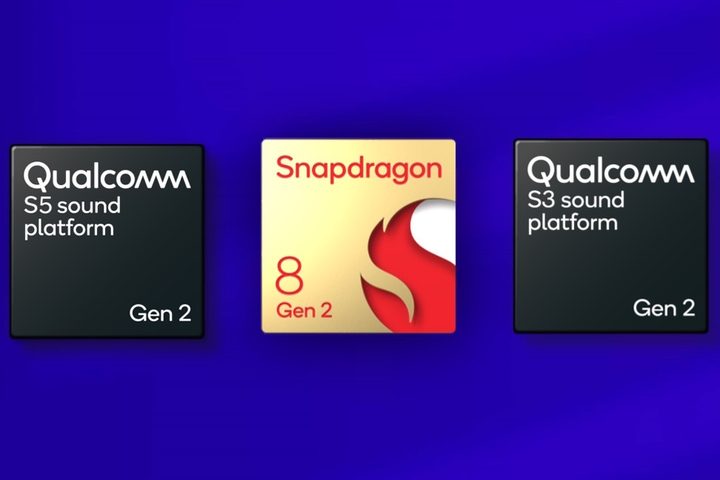
The new S3 and S5 chips enable the headphone/earbud/speaker side of Qualcomm’s evolving Snapdragon Sound platform, which the company introduced in 2021. Snapdragon Sound isn’t a technology — it’s more like a certification of features and performance. Qualcomm uses the brand to let people know what they can expect when they combine a wireless audio product (like earbuds or headphones) with a smartphone when both products display the Snapdragon Sound emblem. It’s also your way of knowing that Qualcomm has independently verified that these features work as expected.

In 2021 and 2022, that emblem meant that you could expect audio quality with a resolution of up to 24-bit/96kHz, thanks to the aptX Adaptive Bluetooth codec and the enhanced bandwidth of Qualcomm’s Bluetooth High Speed link technology. It also guaranteed low-latency performance when gaming or watching videos, to keep on-screen action in sync with their respective sounds. The last piece of the puzzle was aptX Voice, for high-quality phone calls.
With its S3 and S5 Gen 2 chips, Qualcomm is redefining what Snapdragon Sound means for 2023, thanks to the addition of head-tracked spatial audio, a feature that Apple helped to popularize when it added the technology to its first-gen AirPods Pro in 2020. Citing its own 2022 State of Sound survey, Qualcomm claims that more than half of its respondents said they want spatial audio on their next set of wireless earbuds. It’s not clear if these survey participants understand the difference between the extra sense of immersion offered by spatial audio and the added realism that head-tracking brings to the spatial audio experience.
Mobile gaming enthusiasts will also want to take note of Snapdragon Sound’s new promise for low-latency audio. Qualcomm says that certified earbuds and headphones will deliver as little as 48 milliseconds of lag between when you see an on-screen flash and when you hear the accompanying bang. That’s not quite lag-free, as Qualcomm suggests, but it’s far better than the latency most people will experience when using older Bluetooth codecs like SBC, AAC, or even Qualcomm’s own aptX classic.
Some of these can result in a latency of greater than 300 milliseconds, which would be very noticeable. Along with that promised low latency, Qualcomm has added backchannel support for in-game chat.
Qualcomm’s aptX Lossless codec made its official debut in 2022 on the Nura True Pro wireless earbuds, but so far, support for the codec — which the company claims can deliver bit-for-bit CD-quality sound at 16-bit/44.1kHz over the Qualcomm High Speed link — on both audio products and mobile phones has been limited. That’s expected to change now that new products bearing the Snapdragon Sound label include aptX Lossless compatibility.
Speaking of codecs, the latest Snapdragon Sound platform will be fully compatible with the new Bluetooth LE Audio specification, including that technology’s more interesting optional features like Auracast broadcast audio.
It’s worth noting that because of the sometimes confusing relationship between Qualcomm’s Snapdragon Sound program and the actual S3/S5 chips that enable the program’s features, it’s quite possible we’ll see headphones and earbuds that offer all of these great new features, yet without the Snapdragon Sound label. Participation in the Snapdragon Sound program is optional, but it’s not free, and some manufacturers may simply decide they don’t want to sign up for it.
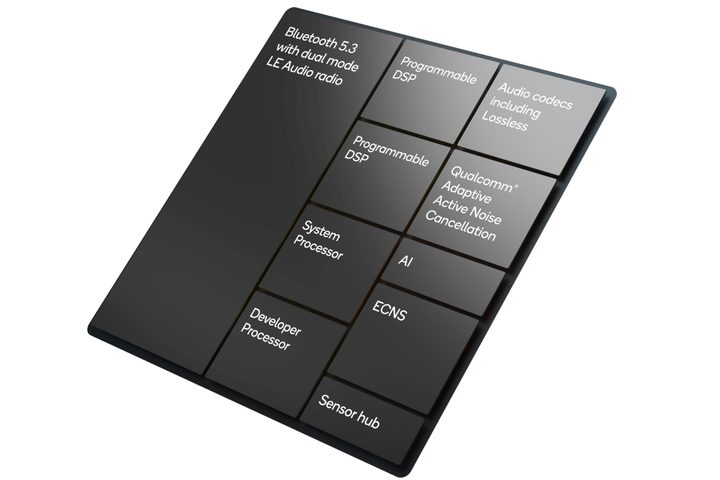
It’s also why there are two platforms: the S3 Gen 2 is a ready-built solution for companies that want to quickly develop headphones and earbuds using Qualcomm’s tech, while the S5 Gen 2 is fully programmable, letting companies use as few or as many of the platform’s capabilities as they wish, on their own or in conjunction with other technologies.
The new gen-2 platforms will also offer improved active noise cancellation (ANC) and an adaptive transparency mode that Qualcomm says will sense when you’re speaking and automatically improve your ability to hear your own voice. These are not technically included under the Snapdragon Sound label, and headphone and earbud makers can use Qualcomm’s tech for these features or implement their own.


