
The pill-hole cutout was introduced on the iPhone 14 Pro and iPhone 14 Pro Max a few months back, and it seems like Apple already wants to make it smaller. A new report from The Elec claims that the company is planning to introduce an under-display Face ID setup next year. The feature is supposedly in the pipeline for iPhone 16 Pro series, and not the iPhone 15 lineup, which will be launching later this year.
According to the report, Apple is looking to move the components required for Face ID authentication under the iPhone’s display in 2024. Theoretically, the TrueDepth sensor for Face ID will not be visible when not in use, which will provide a more intuitive experience when interacting with an iPhone. But the selfie shooter will have a cutout, so you aren’t going to get full-screen seamlessness like the unfolded Galaxy Z Fold 4.
Basically, Apple will reach the 2020 Android-level display design in 2024. It’s an exciting proposition at first read, but it also raises three big questions.
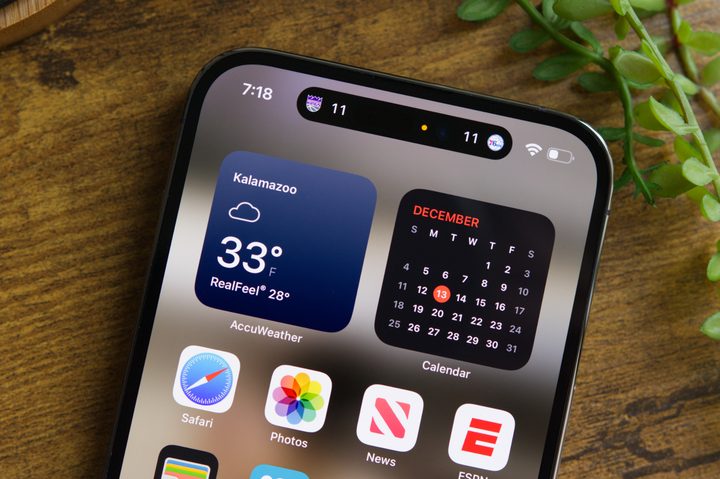
What happens to Dynamic Island?

Apple introduced Dynamic Island with the launch of the iPhone 14 Pro in September 2022, and said that it will get support for more apps in the coming months as it takes time for developers to create things for a new design element.
“At Apple, we’re focused on creating extraordinary products. Products born from designing hardware and software together, so you don’t know where one ends and the other begins. The Dynamic Island does this in a truly magical way and enables an entirely new iPhone experience,” said Alan Dye, vice president of human interface at Apple, upon the launch of the feature.
It’s been almost four months since the launch, and the Dynamic Island is still bare-bones for me. As I wrote before, I’ve encountered problems with the new pill-hole cutout on the iPhone 14 Pro, and my colleague, Andy Boxall, is on the same page. The Dynamic Island is already running out of time. It hasn’t changed the way I use my iPhone, and I don’t think it will.
It’s obvious that Apple won’t give up on Dynamic Island so soon – even if it plans to make the cutout smaller in 2024. But the question is, does it make sense to keep a design element that isn’t going anywhere? I’d like to give developers more time, and let it mature before I can answer this question. That being said, I suspect Apple will keep the Dynamic Island in some form at the top on iPhone 16 Pro, despite the smaller cutout. And (hopefully) by then, there will be a lot more uses for the feature.
Is this bad news for the selfie camera?
The report from Elec also says that after moving the Face ID sensors underneath the display, Apple’s next step is to introduce under-display cameras – like the ones we have seen on the RedMagic 7 Pro and Galaxy Z Fold 4. This change is expected to arrive on the iPhone 18 Pro in 2026.
If the current-gen under-display cameras are any indication, I’m with Apple on this. The phones with no selfie camera cutout that I’ve used look seamless, which makes for an intuitive experience. However, the camera quality is poor. It’s not even below average. It’s poor. I’m all-in on Apple’s apparent decision to adopt this setup when the tech matures, which could take another year or so.
What does this mean for future iPhone designs?

According to an old Tweet from reputed display analyst Ross Young, the notch is going away altogether this year, with all iPhone 15 models getting the Dynamic Island. In 2024, the iPhone 16 Pro could move to an in-display TrueDepth sensor for FaceID with a cutout for the selfie camera, while the lower-end iPhone 16 will retain a pill-shaped cutout.
Moving to 2025, all iPhone 17 models will have an in-display Face ID with a selfie camera cutout. The next major change will come in 2026 with the introduction of an under-display camera on the iPhone 18 Pro.
Based on the technical challenges remaining for under panel cameras to meet discerning brands quality requirements as well as panel manufacturers' cost requirements, I still believe this roadmap makes sense for the iPhone. pic.twitter.com/3ck5X3sVcL
— Ross Young (@DSCCRoss) May 10, 2022
The road map looks promising. But it will be interesting to see what distinguishes the Pro lineup from the vanilla iPhone 15 this year, since the design language is going to be the same. If both lineups have the Dynamic Island, what does Apple do to make the Pro models stand out?
These are all questions that will be answered in due time, but they’re still fun to think about. Big things are happening with the iPhone, and like it or not, they’re coming sooner than you might have expected.


