
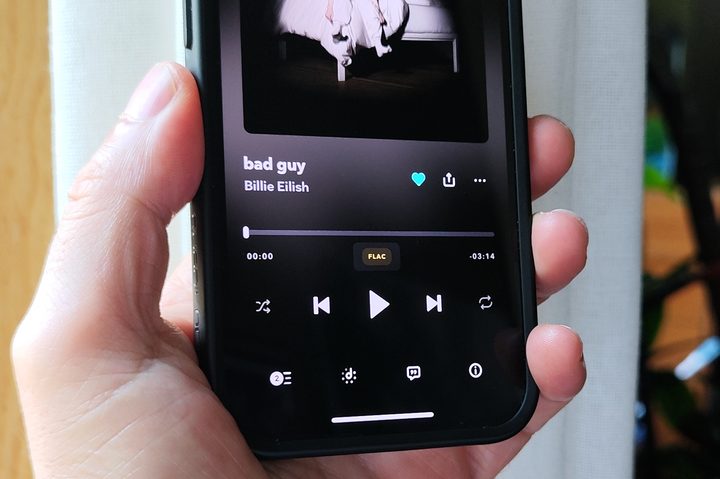
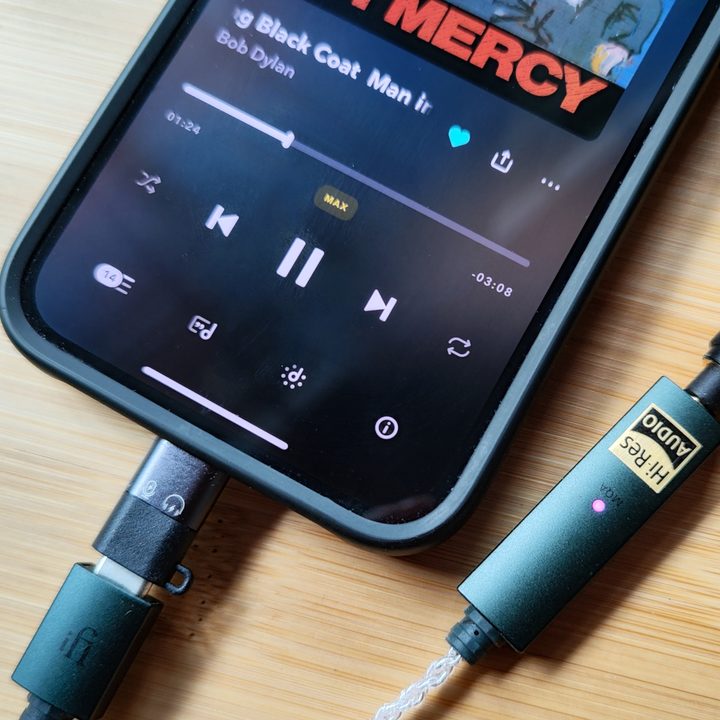
Tidal‘s Hi-Fi Plus subscription tier recently became the first place in the streaming music world where you could stream hi-res audio in both FLAC and MQA formats on your smartphone. Unfortunately, there was no way to know which one you were getting unless you used an external digital-to-analog converter (DAC). Tidal is now on the verge of correcting that error, at least partially: a new beta of the Tidal app for iOS now shows you the format of your currently playing track, instead of the essentially useless “Max” or “Hi-Fi” labels that non-beta users still see.
Audiophiles initially greeted the news that Tidal would be adding the open source, lossless FLAC format to its Hi-Fi Plus tier with enthusiasm. Many members of that community have concerns over MQA — the format that had previously been Tidal’s exclusive pick for its better-than-CD quality collection (Max) tracks — and had been lobbying for FLAC for some time.
However, when Tidal debuted the new FLAC versions, it came with several disappointing caveats. You couldn’t filter your searches by your preferred format, and there was no way to even see which format (or its bit-depth/sampling rate) you were getting unless you used an external DAC. Unsurprisingly, audiophiles in both FLAC and MQA camps were frustrated.


- 1. Long Way by Eddie Vedder in MQA format on Tidal.
- 2. Bad Guy by Billie Eilish in FLAC format on Tidal.
With the new labeling practice, the visibility problem has been partially addressed — you can now see the format — but you still can’t see the bit-depth or sampling rate. There’s still no way to filter by format (or even make one your preferred format), and there’s no way to know the format of a track or album until you hit play it.
Eventually, these concerns will become mostly academic. Tidal’s new policy is that when it adds a 24-bit FLAC version of a given track, that song will no longer be available to stream in MQA. It may take a while, but there will come a time when the entire Max collection will be exclusively available in FLAC. When that happens, music fans will have one less reason to keep paying Tidal Hi-Fi Plus’ monthly fee of $20 — almost double what Apple Music and Amazon Music charge for their nearly identical catalogs and format support.
It’s clear that Tidal is trying to slowly divest itself of the MQA format, which carries licensing fees, in favor of the essentially royalty-free FLAC format. And yet, doing it in this way — with a scorched earth approach — feels clumsy. A lot of music fans have spent money to acquire MQA-compatible hardware because they believe in the format. Without Tidal’s MQA streaming catalog, options for accessing MQA are few and far between.
If Tidal kept its MQA catalog intact, and if it could negotiate a new licensing deal with MQA (yep, the format and the company that owns it share the same name) whereby only streams of MQA tracks trigger a licensing fee, and if it gave Hi-Fi Plus members the ability to choose which format they want, Tidal could become the best streaming choice for all audiophiles.
Sadly, that doesn’t look like it’s going to happen.


