1. Home
  2. Emerging Tech
  3. Legacy Archives

Ten digits not enough? Hair-washing robot with 24 ‘fingers’ now undergoing trials

Add as a preferred source on Google

If Panasonic has its way, a simple trip to the barber shop could soon involve a hair wash given not by a human but by a robot.

The company has already made significant progress with the development of its special robot and is now testing it in a hair salon in central Japan.

Recommended Videos

Featuring what it calls “advanced scalp care” capabilities, the robot incorporates 24 “fingers” — eight on the right side, eight on the left side and eight under the neck — and begins a hair-washing session by feeling the person’s head to gauge its precise shape and size.

Besides having the ability to deliver a decent hair and scalp wash, the robot can also work conditioner into the hair, dry it off and give a head massage.

Image used with permission by copyright holder

A Panasonic video (you can check it out below) demonstrating the Japanese company’s innovative robot shows a brave volunteer having his hair and head vigorously rubbed by the robot’s articulated fingers. When the wash is over, the robot then gently massages the volunteer’s scalp.

“This is extremely relaxing and offers a degree of comfort that users can not experience with human hands,” the video’s narrator says.

Whether the robot will one day end up in hair salons across the country isn’t clear, though Yukio Honda, director of Panasonic’s robot development center, said there are definite plans to supply it to hospitals and care facilities in the near future, providing support for staff.

Would you be happy to place your head in the hands of a 24-fingered robot or are you someone that, on a visit to the barber shop, would prefer to have human digits working their way over your scalp?

At least if things begin to get a bit uncomfortable you can politely ask a real person to go a little easier whereas presumably the same words said to a robot would simply fall on deaf microchips.

[via Gizmodo]

Trevor Mogg
Contributing Editor
Not so many moons ago, Trevor moved from one tea-loving island nation that drives on the left (Britain) to another (Japan)…
DeepSeeek V4 is out, touting some disruptive wins over Gemini, ChatGPT, and Claude
An open-source model that beats GPT-5.4 on Codeforces and costs a fraction of Claude isn't just a news story; it's a pricing ultimatum to the entire AI industry.
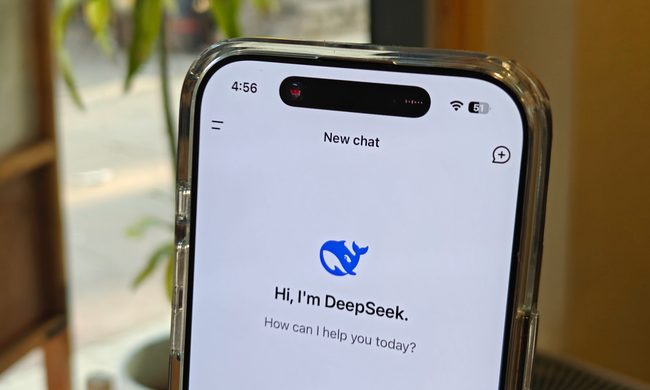
DeepSeek AI chatbot running on an iPhone.

China’s DeepSeek has a habit of showing up, uninvited, to Silicon Valley’s AI party, and this time, it has done so with the long-awaited V4 preview. The Hangzhou-based company has released its latest AI model, which beats popular American models in certain areas. 

DeepSeek has launched two new models: V4-Pro (Expert mode) and V4-Flash (Instant mode). While the former is a massive 1.6 trillion parameter model, the latter is at a more manageable 284 billion parameters. However, both of them have a one-million-token context window. 

Read more
The days of ugly solar panels could finally be over. Say hello to artsy colorful tiles!
These colorful solar panels can blend into almost any building.
ShadeCut-solar-panel

Solar panels are great for the planet, but have long been a headache for architects, homeowners, and historic preservation boards. That tension between sustainability and aesthetics may finally have a real solution.

Researchers at the Fraunhofer Institute for Solar Energy Systems ISE in Germany have developed a technology called ShadeCut, which applies colored, patterned films to solar modules that can convincingly mimic roof tiles, masonry, or even custom logo designs.

Read more
Sony’s table tennis robot made me think about what happens when AI gets a body
Ace starts as a flashy sports demo and quickly turns into a preview of AI moving from screens into factories, hospitals, farms, and homes
Ball, Sport, Tennis

I wanted to dismiss Sony’s table tennis robot as another expensive lab flex. A machine that can rally against elite players is impressive, sure, but it also sounds like the kind of demo built to make executives clap in a room where everyone already agreed to be impressed.

But table tennis is a nastier test than it looks. The ball is small, fast, spinning, and rude enough to change direction the moment it hits the table. Sony’s system faces something less forgiving than calculation. It has to see, predict, and act before the point is gone.

Read more