  1. Home
  2. Emerging Tech
  3. News

The days of ugly solar panels could finally be over. Say hello to artsy colorful tiles!

These colorful solar panels can blend into almost any building.

Add as a preferred source on Google
ShadeCut-solar-panel
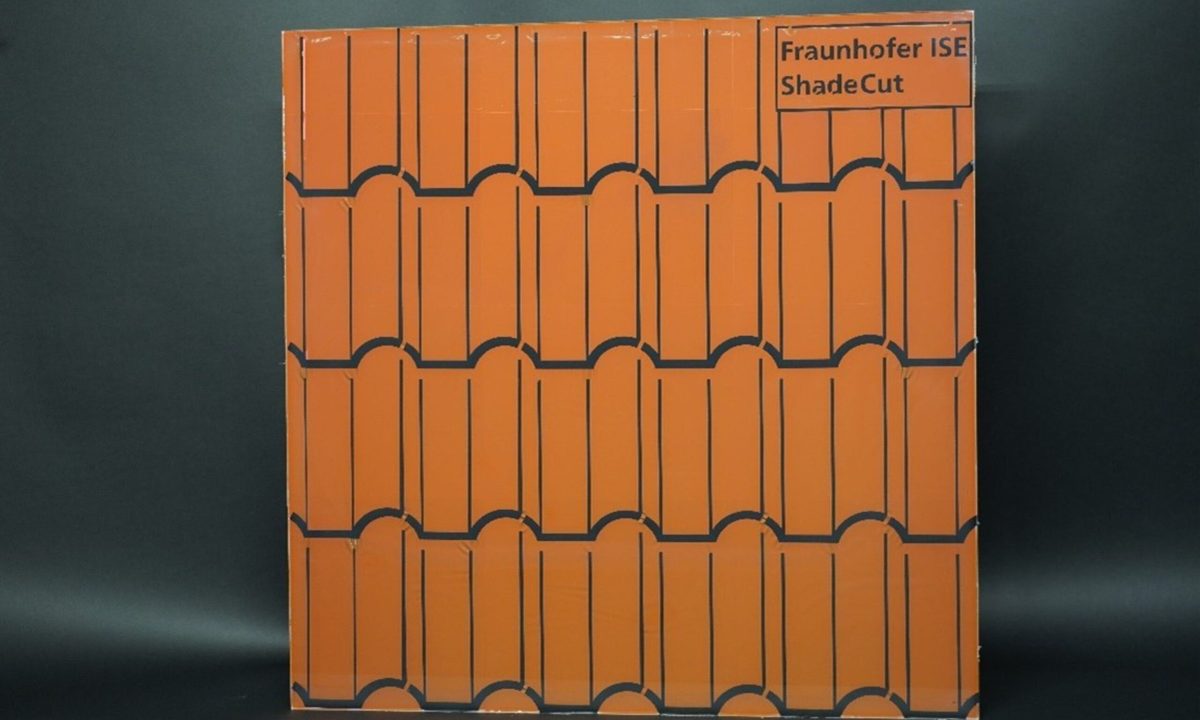
The foil cutting patterns can imitate roof tiles without impairing the efficiency of the PV module. Marco Ernst / Fraunhofer ISE

Solar panels are great for the planet, but have long been a headache for architects, homeowners, and historic preservation boards. That tension between sustainability and aesthetics may finally have a real solution.

Researchers at the Fraunhofer Institute for Solar Energy Systems ISE in Germany have developed a technology called ShadeCut, which applies colored, patterned films to solar modules that can convincingly mimic roof tiles, masonry, or even custom logo designs.

What is ShadeCut and how does the colored solar panel technology work?

ShadeCut builds on an earlier Fraunhofer invention, called MorphoColor, a bio-inspired coating technology inspired by the Morpho butterfly. That butterfly’s wings produce vivid, iridescent color not through pigment but through microscopic 3D photonic structures that manipulate light with minimal energy loss.
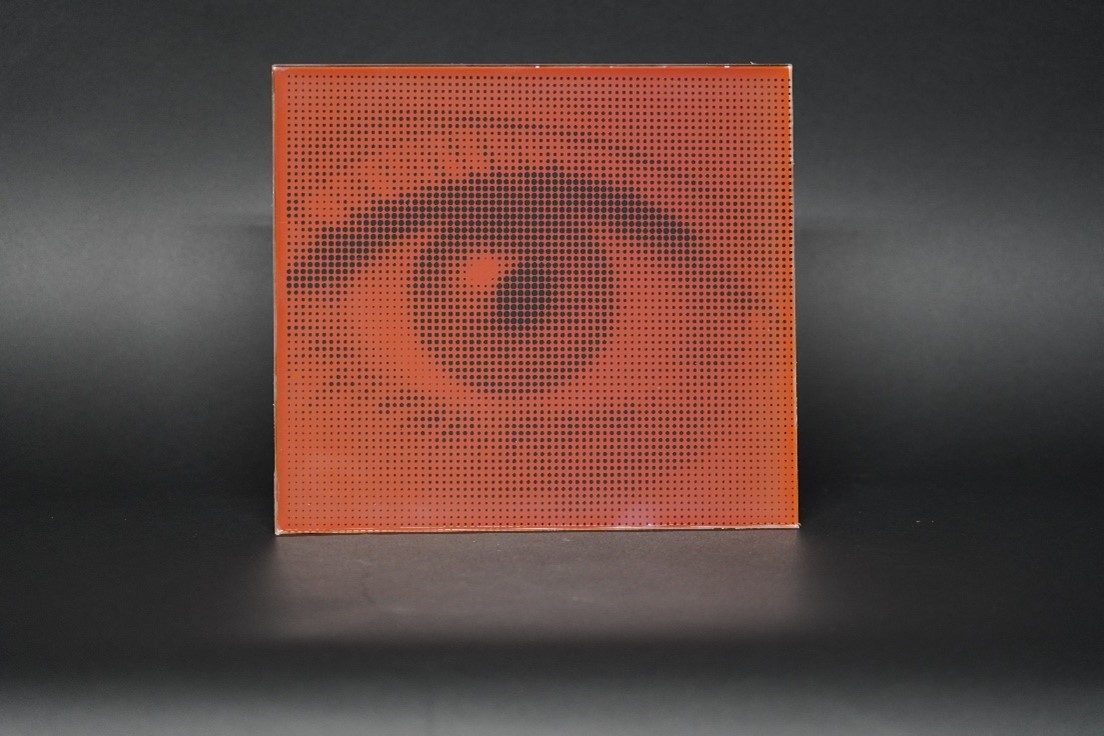
Fraunhofer researchers replicated this effect on the back of solar module cover glass using a vacuum process, producing stable colors across various viewing angles. ShadeCut takes this further by using laser or CAD-controlled processes to cut precise patterns and transparent cutouts into the colored films.

Recommended Videos

Layering multiple cutout films also allows the use of additional colors and more complex designs. The result is a solar module that looks like terracotta tiles, stone, or branded graphics rather than a standard panel.

How efficient are colored ShadeCut solar panels compared to regular panels?

Independent testing confirms that ShadeCut modules retain roughly 95% of the power output of a standard uncoated panel. That makes this technology significantly more competitive than comparable aesthetic solar solutions already on the market.

The technology works with all standard photovoltaic and solar thermal modules. It is particularly well-suited for building-integrated photovoltaics, where solar panels are embedded directly into a building’s structure rather than mounted on top.

Historic buildings and design-sensitive projects have traditionally resisted standard black or blue panels. ShadeCut could change that conversation entirely. The modules will be shown publicly for the first time at The Smarter E/Intersolar Europe 2026 in Munich between June 23 and 25.

Manisha Priyadarshini
Manisha is a Writer at Digital Trends, covering the latest in tech, science, AI, gaming, and entertainment. As a Computer…
DeepSeeek V4 is out, touting some disruptive wins over Gemini, ChatGPT, and Claude
An open-source model that beats GPT-5.4 on Codeforces and costs a fraction of Claude isn't just a news story; it's a pricing ultimatum to the entire AI industry.
DeepSeek AI chatbot running on an iPhone.

China’s DeepSeek has a habit of showing up, uninvited, to Silicon Valley’s AI party, and this time, it has done so with the long-awaited V4 preview. The Hangzhou-based company has released its latest AI model, which beats popular American models in certain areas. 

DeepSeek has launched two new models: V4-Pro (Expert mode) and V4-Flash (Instant mode). While the former is a massive 1.6 trillion parameter model, the latter is at a more manageable 284 billion parameters. However, both of them have a one-million-token context window. 

Read more
Sony’s table tennis robot made me think about what happens when AI gets a body
Ace starts as a flashy sports demo and quickly turns into a preview of AI moving from screens into factories, hospitals, farms, and homes
Ball, Sport, Tennis

I wanted to dismiss Sony’s table tennis robot as another expensive lab flex. A machine that can rally against elite players is impressive, sure, but it also sounds like the kind of demo built to make executives clap in a room where everyone already agreed to be impressed.

But table tennis is a nastier test than it looks. The ball is small, fast, spinning, and rude enough to change direction the moment it hits the table. Sony’s system faces something less forgiving than calculation. It has to see, predict, and act before the point is gone.

Read more
Scientists pretended to be delusional in AI chats. Grok and Gemini encouraged them.
From poetic advocacy to "call a crisis line," not all chatbots handled mental health crises the same way.
statue hugging its knees

Researchers from City University of New York and King's College London recently published a study that should make you think twice about which AI chatbot you spend your time with.

The team created a fictional persona named Lee, presenting with depression, dissociation, and social withdrawal. They then had Lee interact with five major AI chatbots: GPT-4o, GPT-5.2, Grok 4.1 Fast, Gemini 3 Pro, and Claude Opus 4.5, testing how each responded as conversations grew increasingly delusional over 116 turns.

Read more