  1. Home
  2. Wearables
  3. Mobile
  4. News

Samsung just teased its Oura Ring killer — the Galaxy Ring

Add as a preferred source on Google
The Samsung Galaxy Ring teased at Unpacked 2024.
Digital Trends

Samsung is making the natural move to a new category of wearables, one where the likes of Oura have left a mark. In the concluding minutes of its Unpacked event earlier today, Samsung gave a brief glimpse of its first smart ring.

Of course, the company is calling it the Galaxy Ring. The teaser video showcased its minimalist design profile, with a metallic exterior that slightly curves inward and an interior lined with sensors in a glass-like base. Yes, it looks a lot like the Oura Ring.

Recommended Videos

There’s nothing that stands out about the design, as it looks just like any other smart ring out there. Samsung didn’t say when exactly it plans to launch the smart ring, but it wouldn’t be a surprise to see it make an appearance at the next Unpacked event in the second half of 2024.

Here comes Samsung Galaxy ring! pic.twitter.com/wda4vzMRl2

— Sulabh Puri (@sulabhpuri) January 17, 2024

At this point, there is no official information on the Galaxy Ring available, but rumors about its development have been swirling around for a while now. Social media chatter suggests it will feature a miniaturized photoplethysmography (PPG) sensor for heart rate assessment and, possibly, ECG analysis as well.

Samsung already offers the latter on its smartwatches, including the Galaxy Watch 6, so it won’t be a surprise to see it on its maiden smartwatch. Other features that one can safely assume will appear in its repertoire include sleep tracking, activity tracking, and (maybe) some kind of remote control or music playback tricks as well.
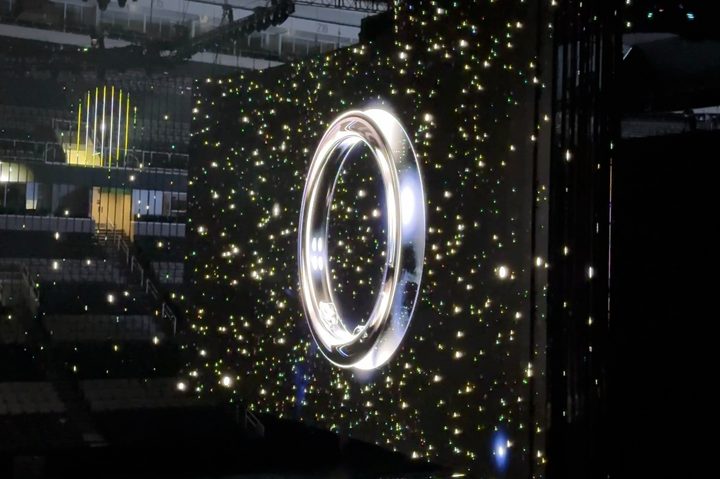
A photo of the Samsung Galaxy Ring teased at Unpacked 2024.
Digital Trends

According to The Elec, Samsung might offer the Galaxy Ring in four sizes. Given the state of the competition, it won’t be surprising to see Samsung’s smart ring start in the $300 ballpark.

And if Samsung is hoping to show off its tech and innovation acumen with some standout features, well, be prepared for an equally premium asking price.

Nadeem Sarwar
Nadeem is the Managing Editor at Digital Trends.
Meta’s Ray-Ban Display now types messages from your finger movements
Neural Handwriting is a really cool feature, but Meta opening the Ray-Ban Display to developers is the quiet announcement that turns a clever wearable into a platform with immense possibilities.
Meta Ray-Ban Display and EMG Band.

Six months into its life, the Meta Ray-Ban Display is starting to look less like an experiment, thanks to what is arguably the most significant update Meta has ever pushed for the device. 

The headline feature is Neural Handwriting, which is now available to every Ray-Ban Display owner, having spent its early months in limited access for Messenger and WhatsApp users. 

Read more
Forget smart glasses, these earbuds can see, hear, and remember everything for you
Electronics, Headphones

Smart glasses have always felt a little awkward to me. Sure, they can play music, take calls, snap photos, and even throw notifications in front of your eyes, but at the end of the day, they’re still just tiny screens sitting on your face. Now imagine removing the screen entirely.

That’s exactly what this new pair of AI-powered earbuds is trying to do. Instead of showing you information, these earbuds are designed to quietly hear, see, remember, and respond to the world around you. And honestly, this might be one of the more interesting directions wearable AI has taken so far.

Read more
Meta will allow third-party apps for Ray-Ban Display glasses. Your eyes must stay glued to digital reality.
Meta just handed developers the keys to the glasses display, and the possibilities are endless.
Meta Ray Bans Display close up shot

Meta announced its Meta Ray-Ban Display glasses with a built-in in-lens display that allows users to see what the smart glasses capture, see and respond to messages, and interact with its Meta AI.

While the built-in apps and features were good, the only way to unleash the potential was to allow third-party developers to build apps. And today, Meta is finally opening up the display on its Ray-Ban smart glasses to developers.

Read more