
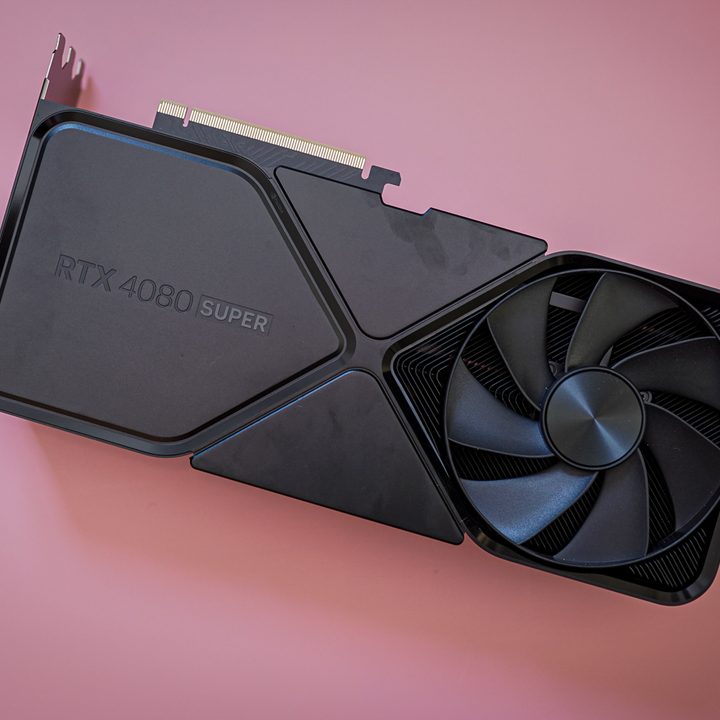
Whether you pick the RTX 4080 Super or the RX 7900 XTX, you’re getting a powerful GPU that’s capable of seamless gaming at 4K. But which one is better for the money? There used to be a clear answer to that question when we were only dealing with the RTX 4080, but the release of its Super successor made it a lot less straightforward.
Both the RTX 4080 Super and the RX 7900 XTX are among the best graphics cards that money can buy. While they’re close in performance, they’re not exactly the same, and the scales might now be tipping in an unexpected direction.
Pricing and availability
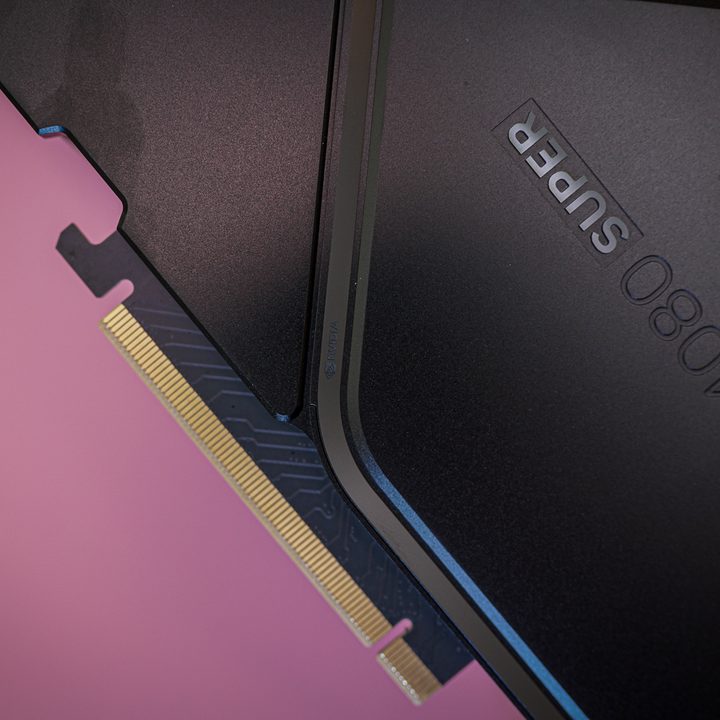
GPU prices are one of the main reasons why the base model of the RTX 4080 is one of the least popular cards of this generation. When that GPU launched at $1,200, it was almost universally declared to be terrible value. Nvidia largely fixes that issue with the RTX 4080 Super.
First announced on January 8, the RTX 4080 Super hit the shelves on January 31, 2024. It arrived as the last of the three graphics cards in the RTX 40-series Super refresh, following the successful RTX 4070 Super and the not-quite-as-super RTX 4070 Ti Super. Although the 4080 Super doesn’t serve up any notable improvement in specs, Nvidia addressed the glaring pricing problem and priced it at $1,000.
Meanwhile, AMD’s RX 7900 XTX has already been around for a while. It officially launched on December 13, 2022, with its companion flagship, the RX 7900 XT. The GPU was $1,000 at launch. Although it’s dropped in price a little bit since then, various models hover around the $960 to $980 range.
It’s rare for AMD and Nvidia to have two evenly matched graphics cards that cost exactly the same amount of money, but that is currently the case. However, the RTX 4080 Super might still end up being more expensive depending on whether Nvidia’s board partners choose to add a lot extra on top of the MSRP.
Specs
| RX 7900 XTX | RTX 4080 Super | |
| Architecture | RDNA 3 | Ada Lovelace |
| SPs/Cores | 6,144 | 10,240 |
| Memory | 24GB GDDR6 | 16GB GDDR6X |
| Memory speed | 20Gbps | 23Gbps |
| Memory bus size | 384-bit | 256-bit |
| Boost clock speed | 2.3GHz | 2.5GHz |
| Total board power | 355W | 320W |
| List price | $1,000 | $1,000 |
Nvidia and AMD don’t share that much in common when it comes to GPU architecture. This means that comparing any two cards on paper is tricky. For instance, AMD uses stream processors and compute units, but Nvidia relies on CUDA cores. Although it might look like the RTX 4080 Super has much more compute power than the RX 7900 XTX based on the specs listed above, that’s not how it works. Simply put, the graphics cards are so different on an architectural level that comparing them in this way makes little sense.
Still, some specs are shared, and those are easy to match up. AMD’s RX 7900 XTX has a boatload of VRAM, with 24GB spread across a 384-bit bus, while the RTX 4080 Super is limited to 16GB and a 256-bit interface. However, Nvidia’s card uses faster GDDR6X memory, delivering a higher bandwidth as a result. It’s also clocked a little bit higher. Surprisingly, the RTX 4080 Super also consumes less power.
The RX 7900 XTX is a testament to AMD’s affinity for decking out its GPUs with more video memory. After all, this amount of VRAM pits it against the RTX 4090. However, using GDDR6 instead of GDDR6X makes it comparable to the RTX 4080 Super for gaming purposes.
Another interesting difference between the two cards concerns their connectivity. AMD already supports DisplayPort 2.1 in RDNA 3, but Nvidia sticks to DisplayPort 1.4a (although it’s rumored to support the next iteration in RTX 50-series). While this isn’t an issue now, it might be a mild disappointment if DisplayPort 2.1 becomes more widespread over the next few years.
We can’t list these specs without sharing how they match up against the base RTX 4080. The gains for Nvidia’s new GPU are negligible, with a tiny bump in cores that maxes out the AD103 GPU and a minor increase in memory speed. Everything else is the same.
Performance

We already tested the RX 7900 XTX extensively upon its release and matched it up against the RTX 4080. Over a year later, we’ve done it again, this time with the RTX 4080 Super. The RTX 4080 Super is new, so to make sure that we’ve got the latest data, we also retested the RX 7900 XTX. How do they match up? Not much has changed, but there are a few differences.
Overall, both GPUs are close in performance. This is very apparent in our 4K gaming benchmarks, although Nvidia’s RTX 4080 Super wins that battle. On average, across our entire gaming test suite at 4K and using max settings, the RTX 4080 Super proved to be around 7% faster than AMD’s RX 7900 XTX. Mind you, this includes ray tracing, which may knock a few frames off for the AMD GPU.
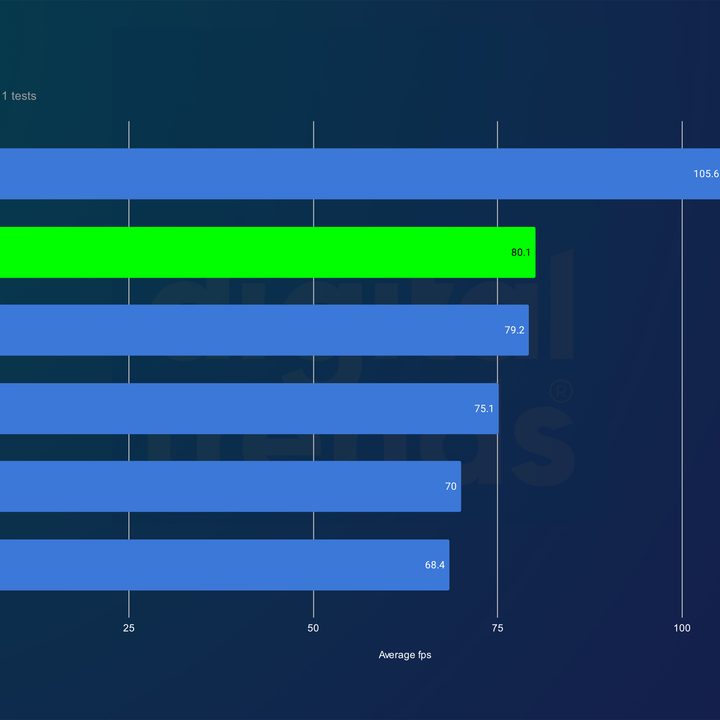
We’ve tested both cards across some of the most demanding games, such as Horizon Zero Dawn and Cyberpunk 2077.
No matter the test, the RTX 4080 Super is basically the same as the RTX 4080. The spec tweaks were too small to make a dent in its performance, giving the GPU an extra point of frame rate here and there, and nothing else. It’s around 1% faster than its predecessor, which means it falls well within the margin of error — it’s essentially the same GPU. While a couple of titles favored AMD, the two GPUs always fell within a few frames per second (fps) of each other, making the difference in straight-up rasterization negligible.
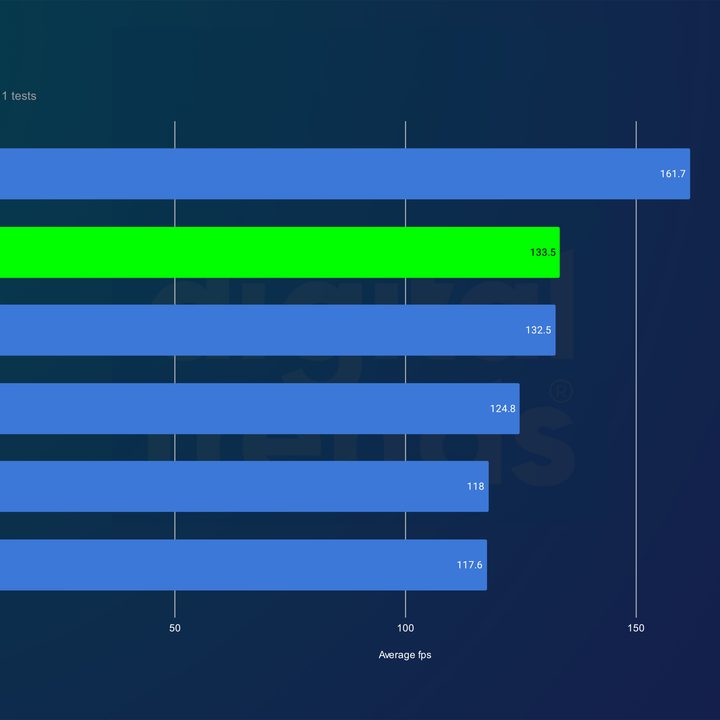
Moving down to 1440p reveals a very similar set of benchmarks, although the results vary from game to game. The RTX 4080 Super remains around 7% ahead of the RX 7900 XTX, but taking ray tracing out of the equation brings the cards even closer.
The 4080 Super does a good job in Horizon Zero Dawn, beating the 7900 XTX by 8%, but the AMD card shoots ahead in a few games, Forza Horizon 5 included. In fact, both 4080s are defeated by AMD in this benchmark, and not just by the RX 7900 XTX, but also by the recently discounted RX 7900 XT.
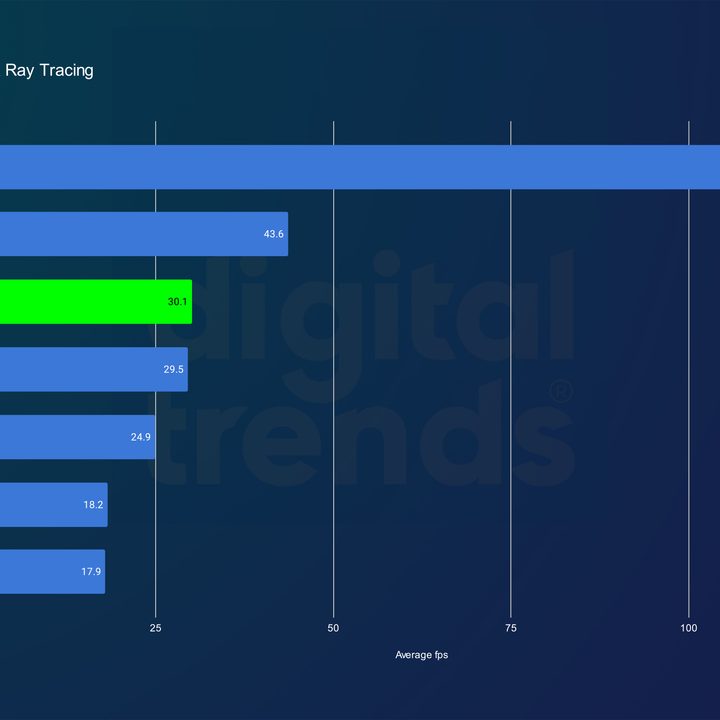
Things get a little more interesting when we account for ray tracing. Historically, AMD has struggled to deliver the same kind of ray tracing performance as Nvidia, and that remains true in our benchmarks. Nvidia also provides access to DLSS 3.5, and that’s what gives it a massive edge over AMD at 4K, with ray tracing toggled on.
The above benchmark of Cyberpunk 2077 at 4K with ray tracing is the perfect example of this. The RX 7900 XTX is far behind both the RTX 4080s, but also behind the $200 cheaper RTX 4070 Ti Super. Those few frames aren’t much when you’re already sitting at 100 fps and above, but at such low thresholds, they make the difference between “playable” and “slideshow.”
Enabling DLSS 3.5 gives the RTX 4080 Super performance far above the RTX 4090 (without DLSS). It leaves everything AMD can offer in the dust, and although AMD also offers frame generation through FSR 3, it’s not supported in Cyberpunk 2077 just yet. In fact, it’s not available in many games in general.
It’s important to note that the ray tracing performance of both cards is significantly better in games that aren’t quite as overkill as Cyberpunk 2077. Take Returnal, for example — while Nvidia still maintains a commanding lead with 70 fps, the RX 7900 XTX holds its ground with 59 fps.
A surprising turn of events
Between the RTX 4080 Super and the RX 7900 XTX, which one should you be buying? It’s surprising, but we’ll have to do a complete 180 compared to our previous verdict. Nvidia’s unexpected price cut is too much to resist.
When we matched up the RTX 4080 against the RX 7900 XTX, the AMD card provided better value. It was $200 cheaper while being able to deliver similar levels of 4K gaming performance. The only issue was the downgrade in ray tracing capabilities and the lack of DLSS, but beyond that, it was (and still is) a powerful GPU.
In terms of raw performance, not much has changed. The RTX 4080 Super is essentially an RTX 4080 with a new name tag. To see Nvidia slash its price is downright shocking, and it puts it in a whole new league of GPUs. Now, with the two cards sporting the same price, the narrative changes in favor of Nvidia. It’s slightly faster, it’s better in ray tracing, and it provides DLSS 3.5 for when you need that little bit of extra power.
If you’re not sure which GPU to include in your next PC build, let the pricing be your guide. If they’re similarly priced and you can spot an RTX 4080 Super near its $1,000 price, that’s a clear winner. Until AMD drops the price of the RX 7900 XTX, the RTX 4080 Super will remain the better deal.


