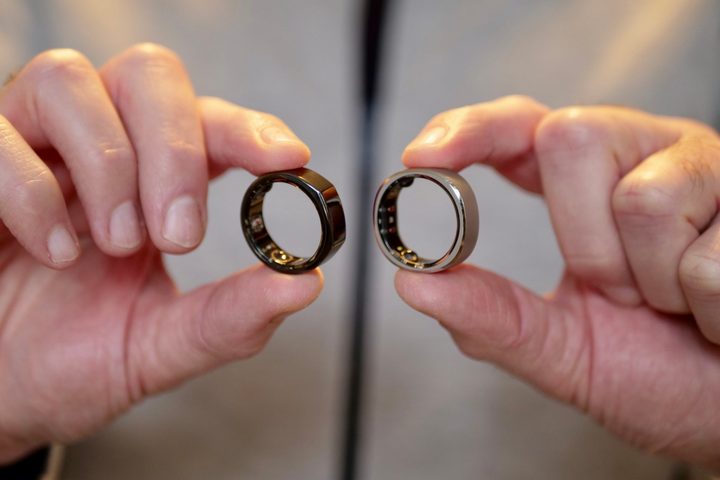
I recently had the opportunity to remove my Oura Ring and try a more affordable alternative. What I discovered changed my opinion of the entire fitness and wellness ring concept for the better.
I used to wear an Apple Watch Ultra 2 and a third-generation Oura Ring. I could pretend I’m superhuman and about to compete in the Paris Olympics and that’s why I wore two devices offering many of the same features … but that’s not true. Instead, I’m a geek who writes about the tech industry and likes to try new things; it’s as simple as that.
So, when presented with the chance to try out another smart ring, I didn’t turn it down.
A competitor worth discussing

Recently, I got to try out an Oura competitor called the RingConn Smart Ring. I hadn’t heard of RingConn until its PR team reached out to me, and even then, I didn’t know what to expect. I agreed to review the product, but I knew that Digital Trends had already done so earlier this year. However, that didn’t persuade me, and I was challenged to write this article about a comparison between Oura and RingConn. Comparing these two wearables in depth has already been performed. Instead of rehashing, I’m concentrating on what it’s like to switch from one ring to another.
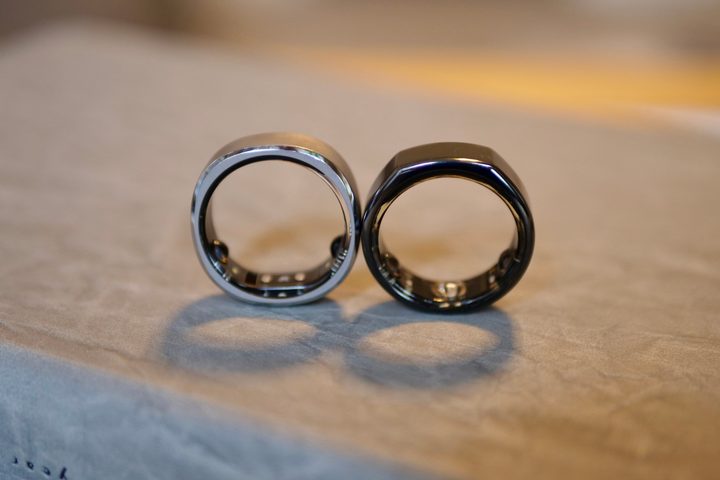
It should be noted these rings have far more in common than differences. Both rings, for example, are made of lightweight titanium, providing a comfortable fit. Oura offers more finishes than RingConn, but both feel similar when worn. Additionally, both rings offer up to seven days of battery life and send smartphone alerts when they need to be recharged. Officially, Oura is entirely circular, while Ringconn is more like a squircle, although they feel about the same on the finger.

The rings are safe to wear while showering and swimming but not while scuba diving or submerging for over 12 hours. Oura can withstand water pressure up to 330 feet, while the RingConn’s maximum is 165 feet.
Again, in terms of features, these products are strikingly similar. Both are excellent at tracking sleep and daily activities and keeping track of heart rate data. Oura offers resting heart rate and heart rate variability tracking, body temperature monitoring, calorie monitoring, blood-oxygen-level monitoring, and cardiovascular age tracking. It also monitors steps and other activities. On the other hand, RingConn also offers sleep tracking, heart rate and heart rate variability monitoring, calorie tracking, oxygen saturation measurement, and daily activity monitoring.
After wearing these rings simultaneously for nearly two weeks, I noticed no significant differences in the results. I’m not surprised by this, but it’s good to know.
What I learned using the RingConn Smart Ring
It’s easy to get caught up in the details and over-analyze tech products when covering them. In this process, losing sight of what matters most to the average person is possible. Before comparing the Oura and the RingConn smart rings, I thought smart rings were helpful but not as much as smartwatches. Feature-by-feature, that might still be correct. And yet, what competent ring developers, in general, are bringing to the table shouldn’t be discounted. As such, I have a new appreciation of what they provide.
Whether you are talking about Oura or RingConn, both track essential health and wellness data. They offer users a real-time snapshot of how their body functions and where improvements are needed, and they do so all within a much smaller device than a smartwatch.

These products offer a few differences worth considering. The Oura app is essential to the Oura Ring experience, providing detailed analytics and insights from the ring’s data. It is often praised for its intuitive design, which simplifies complex data and motivates users to engage more with their health data.
The RingConn app also plays a crucial role in user interaction with the device but tends to prioritize real-time feedback more. The app is designed to provide actionable advice and lifestyle tips, making it more hands-on for users who prefer active guidance.
So, which one is better? There’s no denying that Oura provides a more comprehensive experience. However, that complexity has often made me skip checking the Oura app to see where things stand. It was when I could compare and contrast, however, that I realized what kept me from visiting the Oura app more often.

RingConn’s more basic app presentation might not make it a better solution. Still, it could be more appealing to everyday users who prefer a glance at their daily health data instead of a deep dive.
Two other points are at play here. Oura costs more and requires a monthly subscription to unlock most of its features, including detailed health insights, personalized recommendations, and advanced features. RingConn doesn’t need a subscription to access all the data it provides.
Moving forward

In the coming days, Samsung will finally launch the Samsung Galaxy Ring. The long-rumored and teased ring is expected to compete with Oura. Similar to RingConn, it may not require a subscription. The release of the Galaxy Ring is expected to disrupt the market, and it will be interesting to see its impact in six months, a year, and beyond. Increased competition will undoubtedly lead to great innovation, although not every player will survive the ride.
I haven’t yet decided which smart ring to wear alongside my Apple Watch. The final determination might be where Oura and RingConn take their products in the coming months. Regardless, I have a newfound appreciation for the emerging smart ring market, and I can’t wait to see where it goes next.