
While most Chromium-based browsers treat tab management as an afterthought, Vivaldi takes a smarter approach. Its latest iOS update doubles down on one of its best ideas: two-level tab stacks. It’s not a new feature, but it’s one of the few that actually makes juggling dozens of tabs on a phone feel manageable.
A small but genuinely useful feature
Instead of hiding grouped tabs in a menu or forcing you to switch to a different page, Vivaldi keeps everything accessible, letting you switch between related tabs quickly and intuitively. The browser displays your main tabs in a row at the top and surfaces a second row underneath when you’re inside a stack.


For anyone who’s constantly bouncing between research, work, and random reading, this makes a huge difference. Imagine planning a trip while comparing flights, hotels, and reviews across multiple sites. Vivaldi’s implementation lets you easily group all those tabs and switch between them instantly without breaking your flow.
The solution also makes sense for power users who rely on their phones for work. Whether you’re cross-referencing sources, tracking multiple stories, or managing research-heavy tasks, being able to keep related tabs grouped and visible can save a surprising amount of time.
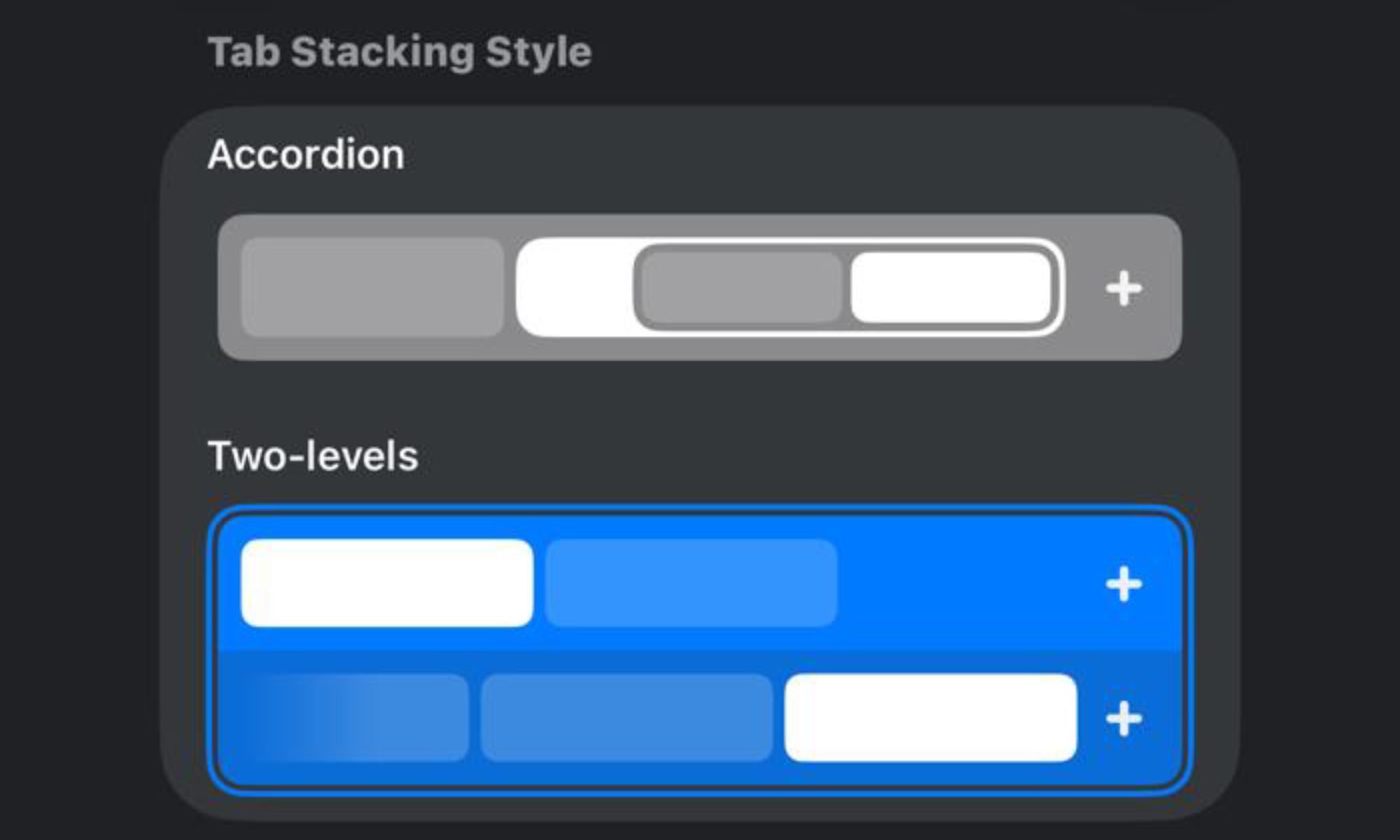
To use this feature, you can long-press the New Tab button and select the “New Tab Stack” option. The browser offers two styles of tab stacking, Two-level and Accordion, and you can switch between them by navigating to Settings > Tabs > Tab Stacking Style.
Chrome gets the job done, but it’s not as intuitive
Google Chrome on mobile does have tab groups, but they live inside its grid-style tab switcher. Once you group tabs, the group appears as a single tab in the main tab switcher and can easily get lost among all the other open tabs. Accessing them means opening the tab switcher and scrolling through the open tabs or jumping into the dedicated group view, which adds extra steps.



Google’s approach works, but it’s not seamless. Switching between tabs in a group isn’t seamless either. You have to tap the Tab button in the bottom bar to return to the group view and then select another tab, which adds up if you’re jumping back and forth frequently.
Safari prioritizes simplicity over convenience
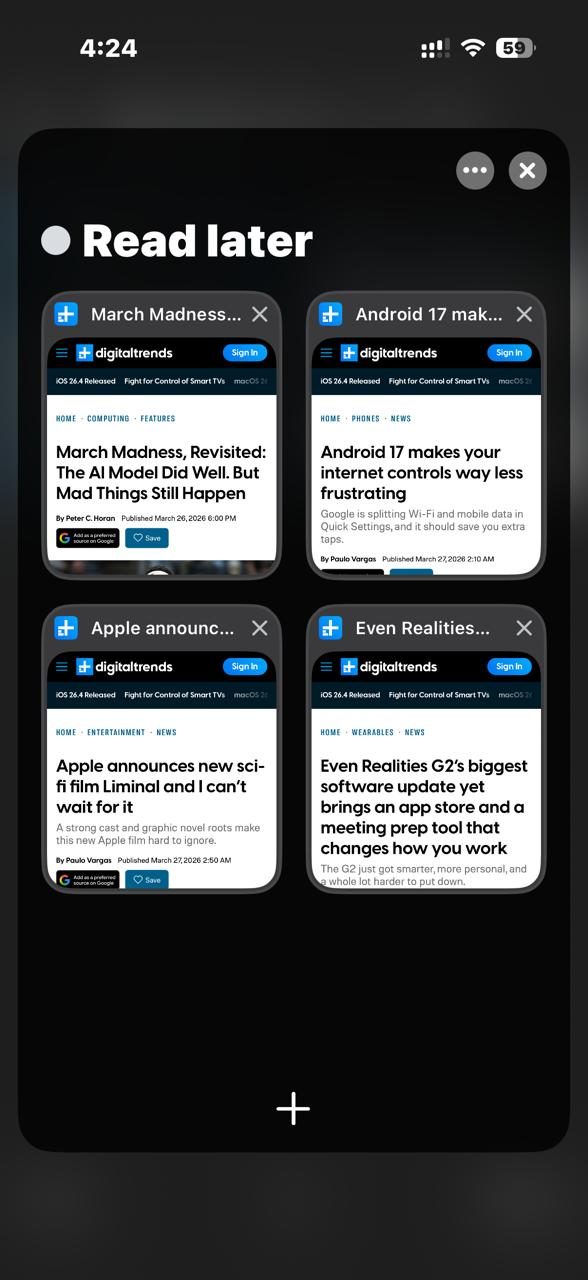
Safari on iPhones goes in the opposite direction. Its tab groups are clean and simple, but they behave more like folders than active browsing spaces. Swiping on the bottom bar to quickly move from one tab group to another is quite intuitive, but the same can’t be said for switching between different tabs within a group.
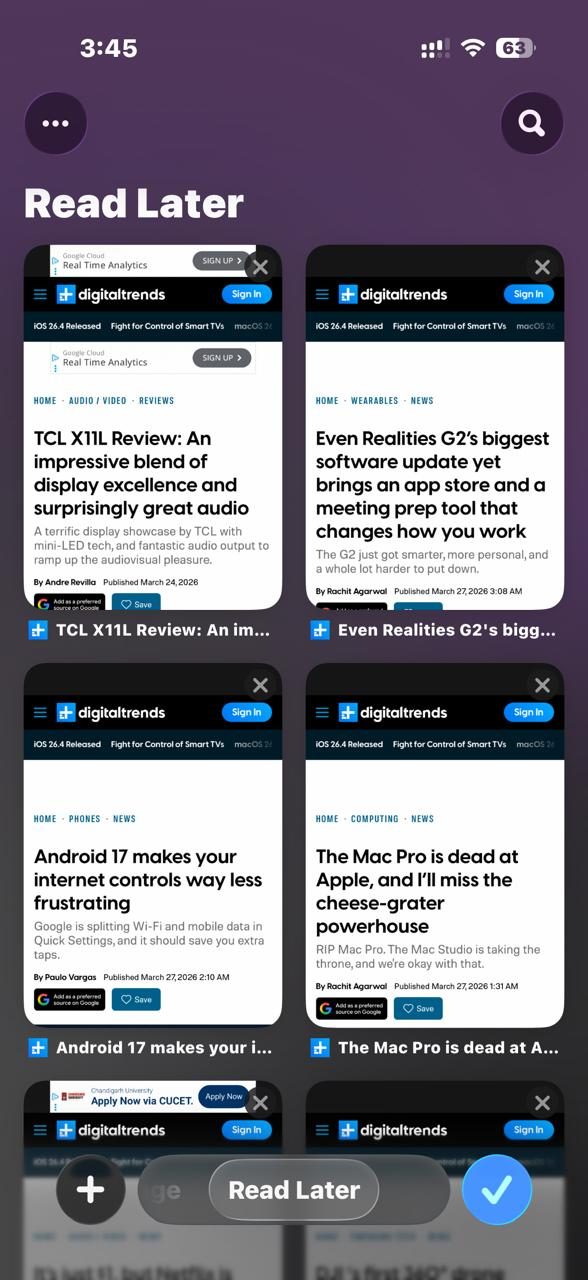
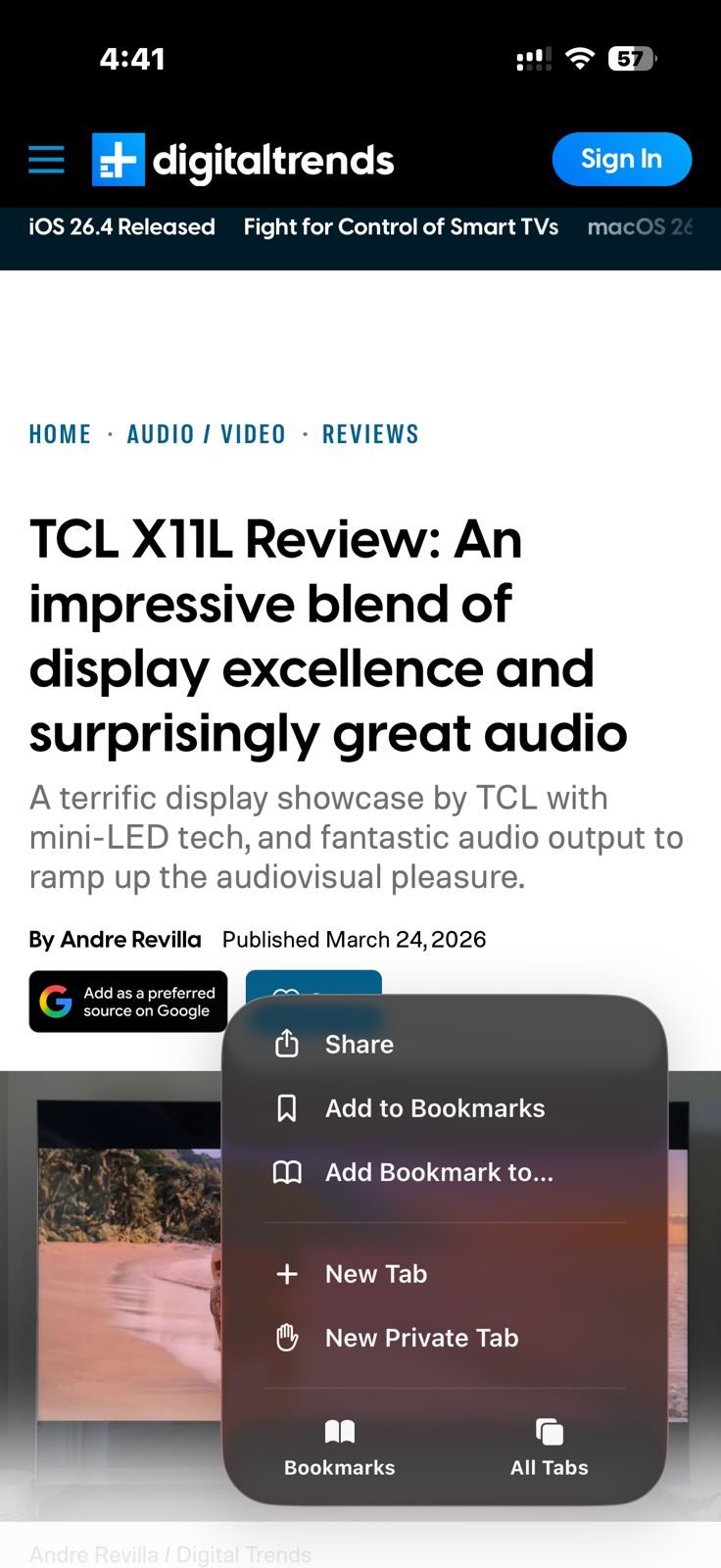
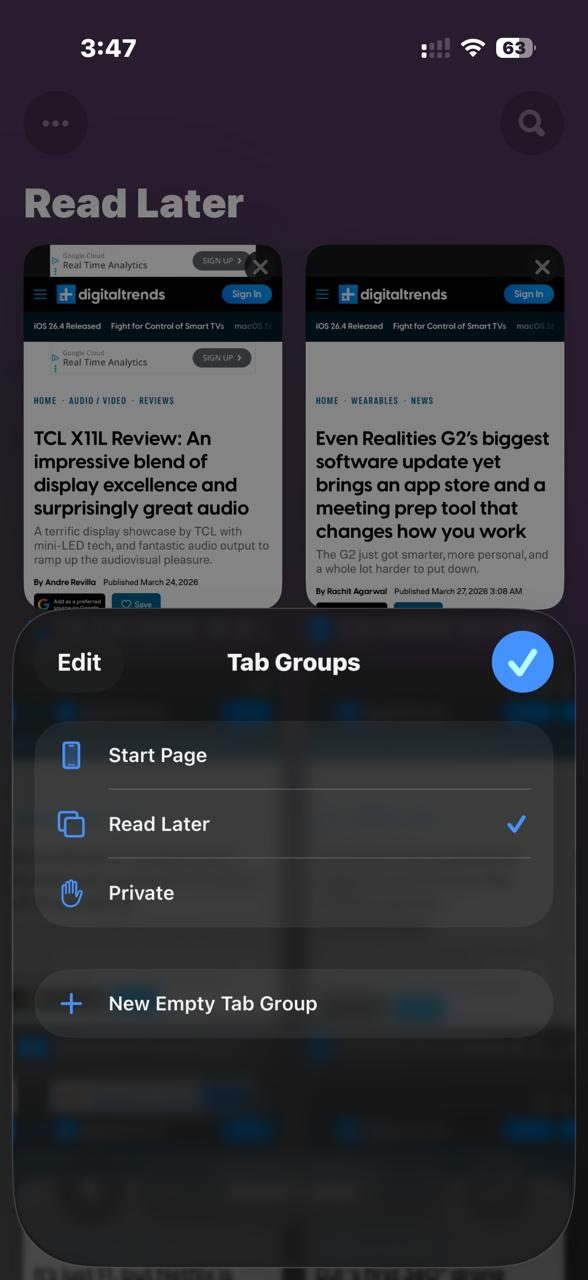
You open a group, pick a tab, and then have to return to the tab switcher to choose another. There’s no quick way to move between tabs within a group. You have to tap the three-dot menu button and select All Tabs to go to the tab group grid view to pick a different tab every time.
There’s an obvious trade-off to Vivaldi’s approach
Vivaldi’s two-level tab stacks make switching between tabs more seamless, but this implementation has a downside. Showing stacked tabs in a second row takes up extra screen space, so you don’t see as much page content as you would with a single row.
Vivaldi’s accordion-style stacking reduces this by grouping tabs into a single line, but it’s not as fluid as the two-level view. However, since the second row only appears when you’re using a stack, it doesn’t permanently clutter the interface. If you regularly juggle between a lot of tabs, the added visibility feels like a fair trade-off for losing a little bit of screen space occasionally.
A more practical approach to tab management
Vivaldi’s implementation isn’t perfect, but it highlights how much room there is to improve tab management on mobile. Instead of hiding tab groups away, the browser makes them easier to work with.
That’s what makes it stand out. And it also makes it harder to ignore how limited tab management still feels on Chrome and Safari. I hope Google and Apple catch on and implement something similar in their respective browsers soon.