  1. Home
  2. Computing
  3. News

Copilot+ PCs are already selling well, but not because of AI

Add as a preferred source on Google
The Surface Laptop shown in front of a Copilot+ sign.
Luke Larsen / Digital Trends

Despite a few setbacks, the highly anticipated Copilot+ PCs appear to be selling pretty well. During their launch week, 20% of all PCs bought globally were Copilot+ PCs. That’s impressive, I have to say.

However, it seems the hyped-up AI features behind the new line of laptops aren’t actually what’s driving the sales. Instead, buyers are being drawn in by a much more practical feature: the longer battery life provided the new Arm-based chips.

Recommended Videos

At launch, Copilot+ PCs have three main AI features that run on-device (unlike normal PCs that process AI tasks via the cloud). These are Cocreator, an AI art tool, Windows Studio Effects, and Live Captions with Translations, which turns audio input into translated subtitles in real-time. Microsoft’s original plans did include a fourth feature, Recall, but it was postponed due to privacy concerns. All of this is powered locally by the new powerful neural processing unit (NPU), and yet, that’s not the aspect of the new Qualcomm chips that people are excited about.
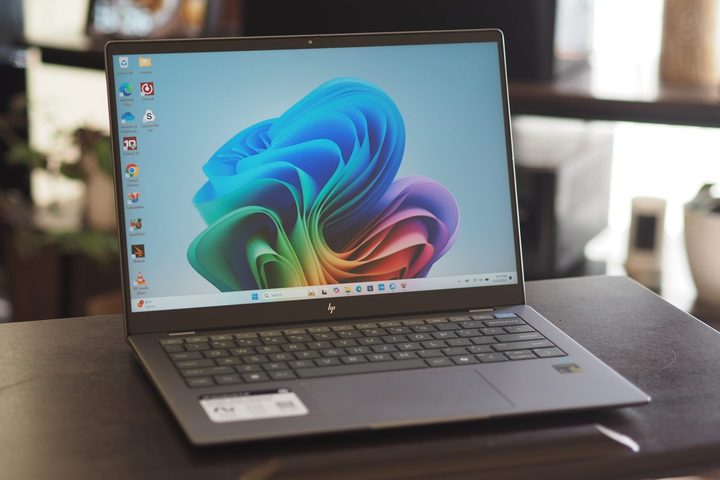
HP OmniBook X front angled view showing display and keyboard.
Mark Coppock / Digital Trends

According to an industry analyst from Techsponential, it really is all about the battery life. Because the real game changer with Copilot+ PCs isn’t that they have AI capability, it’s that they’re Arm-based — just like MacBooks. And while Windows has struggled to switch to Arm and benefit from its superior power efficiency in the past — this time is different. There are more native Windows-on-Arm apps, and Microsoft’s new emulator, Prism, works really well.

Jumping outside of all that tech stuff, the result is a line of Windows PCs with massively improved battery life and no huge sacrifices in usability. According to some early tests, the Snapdragon X Elite chip can even put out the same performance levels while running battery as it can while plugged in. That’s something we noticed in our testing, including with  the Samsung Galaxy Book4 Edge. Although battery life hasn’t always lived up to the claims in our testing so far, it’s certainly an improvement over current Intel-based options.

When you put it like that, it’s no wonder Windows laptop buyers are scooping them up. In fact, anyone who doesn’t consider Apple an option has probably been waiting for this moment for years. AI or no AI, good battery life is a winner for any portable PC, and the results Microsoft has achieved here have finally put them back in the game.

Willow Roberts
Willow Roberts has been a Computing Writer at Digital Trends for a year and has been writing for about a decade. She has a…
Google’s new desktop mode makes one thing clear: Samsung DeX was onto something
Android 16 finally brings a real desktop mode to Pixel phones, but Google’s long-awaited move mostly proves Samsung spent years getting the hard parts right
File, Webpage, Person

I’ve been waiting for Android to take desktop mode seriously for years. Back in 2019, I bought a OnePlus 7 Pro and wasted an embarrassing amount of time trying to brute-force its half-baked desktop mode into something useful.

The idea made perfect sense to me even then. Phones were already absurdly powerful, and the thought of carrying one real computer in my pocket felt less like science fiction and more like delayed common sense.

Read more
Anthropic launches Claude design to simplify visual creation with AI
Finally, AI that designs your slides so you don’t have to
Claude

Anthropic has introduced a new AI-powered design tool called Claude Design, aimed at helping users create visual content such as prototypes, presentations, and marketing assets through simple conversational inputs. The product, developed under Anthropic Labs, is currently available in research preview for paid Claude subscribers and is being rolled out gradually.

Claude Design is powered by the company’s latest vision model, Claude Opus 4.7, and is positioned as a tool that bridges the gap between technical design expertise and everyday creative needs.

Read more
AI triggered a RAMmageddon so bad that Apple looks like the sensible choice
Laptop prices got so stupid in 2026, that Apple turned into the value king.
Student using MacBook Neo in classroom.

I really didn't want to believe it, but here we are. Apple is now looking like the sensible laptop brand. Not the cool underdog. Not the affordable alternative. Apple, in 2026. The reason is not that the company suddenly became generous, but rather the rest of the competition has suddenly become so deranged that a MacBook lineup starting at $599 feels weirdly grounded.

Apple's MacBook Neo starts at $599, while Microsoft's own 13-inch Surface Laptop now starts at $1,199 after this month's price hikes. This isn't a small gap that you can ignore. Meanwhile, Apple's MacBook Air with M5 starts at $1,099 with 16GB of memory and 512GB of storage, which looks like one of the few premium laptops still priced by human beings.

Read more