  1. Home
  2. Computing
  3. News

Apple hid one of the best features of the M4 MacBook Pro

Add as a preferred source on Google
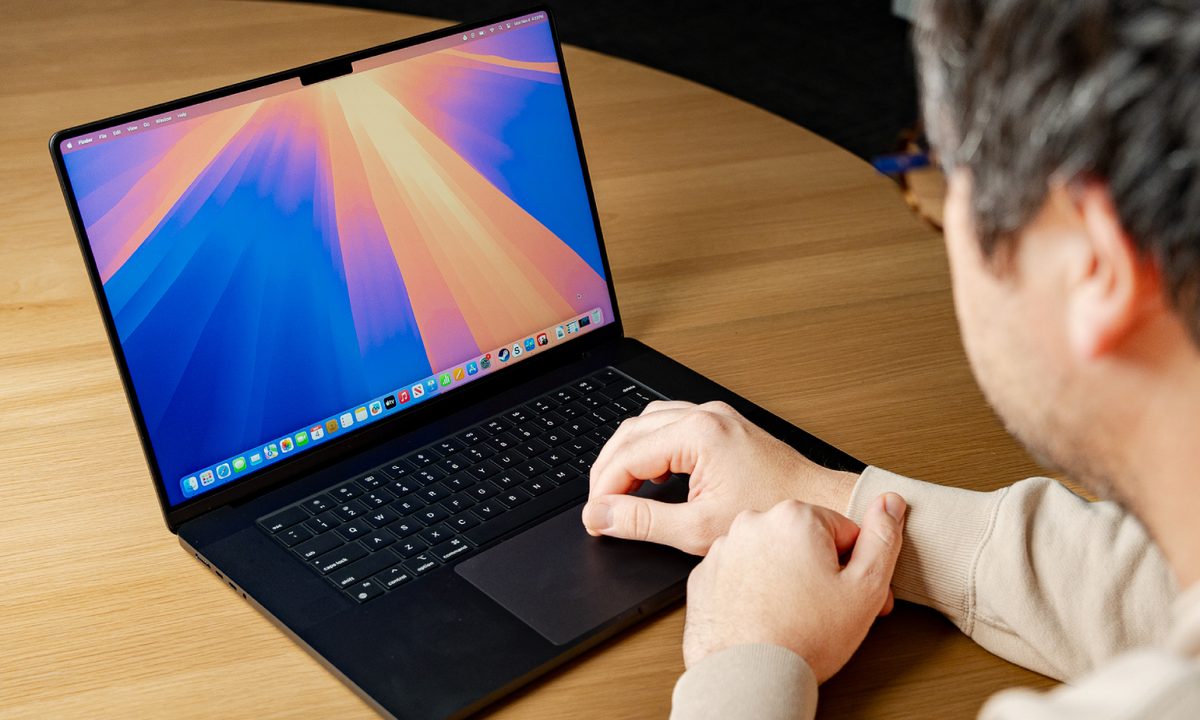
Someone using a MacBook Pro M4.
Chris Hagan / Digital Trends

Apple’s new M4 MacBook Pro is great. It earned a rare Editors’ Choice badge in our M4 MacBook Pro review, and it’s cemented itself as one of the best laptops you can buy. Even with so much going for it, Apple hid one of the most exciting developments it made with its new range of laptops — the use of quantum dot technology.

Like the last few generations of MacBook Pro displays, the M4 range is using a mini-LED backlight. There’s no tandem OLED like we saw on the iPad Pro earlier this year. However, according to Ross Young, CEO of Display Supply Chain Consultants (DSCC), Apple added a layer of quantum dots to the M4 MacBook Pro. This, according to the display expert, offers better color gamut and motion performance compared to the solution Apple previously used.

Recommended Videos

Big Apple display news, they have adopted quantum dots for the first time. The latest MacBook Pro's (M4) use a quantum dot (QD) film rather than a red KSF phosphor film.

In the past, Apple went with the KSF solution due to better efficiency and lack of cadmium (Cd), but the… pic.twitter.com/5olq9lEHs9

— Ross Young (@DSCCRoss) November 14, 2024

We have a deep dive on how quantum dot tech works, but in short, they’re a layer of phosphorescent crystals that sit between the backlight and the color filter of a display. This layer allows pure white light to hit the color filter — LED backlights don’t produce perfect white — by mixing blue, green, and red primaries that quantum dots produce when exposed to light. This not only gives you more accurate and vibrant colors, but it also improves brightness, as the color filter doesn’t need to correct the errors of the backlight.

Young says Apple previously used a “KSF solution,” referring to KSF phosphor powder, which is used in wide-gamut displays like the MacBook Pro to help produce the wider gamut — see the sharp red spike in the post above. With quantum dots, the MacBook Pro is able to provide much more consistent color coverage.

There are a lot of holdouts for an OLED MacBook Pro, and that was a point of contention we mentioned in our review. However, the inclusion of quantum dots significantly improves the color quality of the M4 MacBook Pro, even if it’s unable to match the heights of a true OLED display. In addition, Apple isn’t charging a premium for the new inclusion — you’ll find the quantum dots regardless of if you spend the extra $150 for the nano-texture display option.

Jacob Roach
Former Lead Reporter, PC Hardware
Jacob Roach is the lead reporter for PC hardware at Digital Trends. In addition to covering the latest PC components, from…
Google Photos is finally making backups and exports a tad less vexing
Incremental exports can save time and storage, though setup requires a Photos-only Takeout schedule.
Art, Collage, Plant

Google Photos backups are getting a little less wasteful for people who use Takeout to keep their own copy of a photo library.

This is aimed at Google Photos users who don’t want Google to be the only place their photos live, especially anyone keeping a second archive on an external drive, NAS, or another cloud service. Google says Incremental Takeout for Photos will make recurring downloads faster and more efficient once the initial archive is complete.

Read more
Asus V700 Mini desktop serves a wood-grain finish and it’s a design trend that must stay
Asus’ V700 Mini Tower wraps AI PC hardware in a wood-grain design made for actual living rooms.
Computer Hardware, Electronics, Hardware

Asus’ V700 Mini Tower, announced at Computex 2026 gives the home desktop a rare design win. The new mini desktop keeps the practical shape of a tower PC, but swaps the usual cold box look for clean lines, soft contours, and a wood-grain finish meant to sit where people can actually see it.

That visual shift does real work. A mini desktop doesn’t have to be hidden under a desk, tucked behind a monitor, or parked beside a router because it looks too harsh for the room. Asus introduced the V700 Mini Tower as part of its Computex 2026 AI PC lineup, and the warmer design is the detail that gives it a sharper identity.

Read more
Asus Zenbook 14 gets a splash of new colors, and hopefully, a MacBook Neo-tier price, too
Asus’ refreshed 14-inch laptop pairs new colors with AI PC hardware, but its real appeal may come down to value.
Furniture, Table, Tabletop

Asus has a new Zenbook 14 announced at Computex 2026 with the kind of color range most AI laptops still avoid. Arctic Blue, Komodo Coral, and Zabriskie Beige give this 14-inch ultraportable a livelier hook than another argument about neural processors.

The refreshed Zenbook 14 wraps those finishes around a 1.1kg Ceraluminum and metal chassis. It also checks the premium laptop boxes, with Copilot+ PC support, OLED display options, and processor choices spanning Intel, AMD, and Snapdragon. For a MacBook Neo rival, though, one unanswered detail matters most, price.

Read more