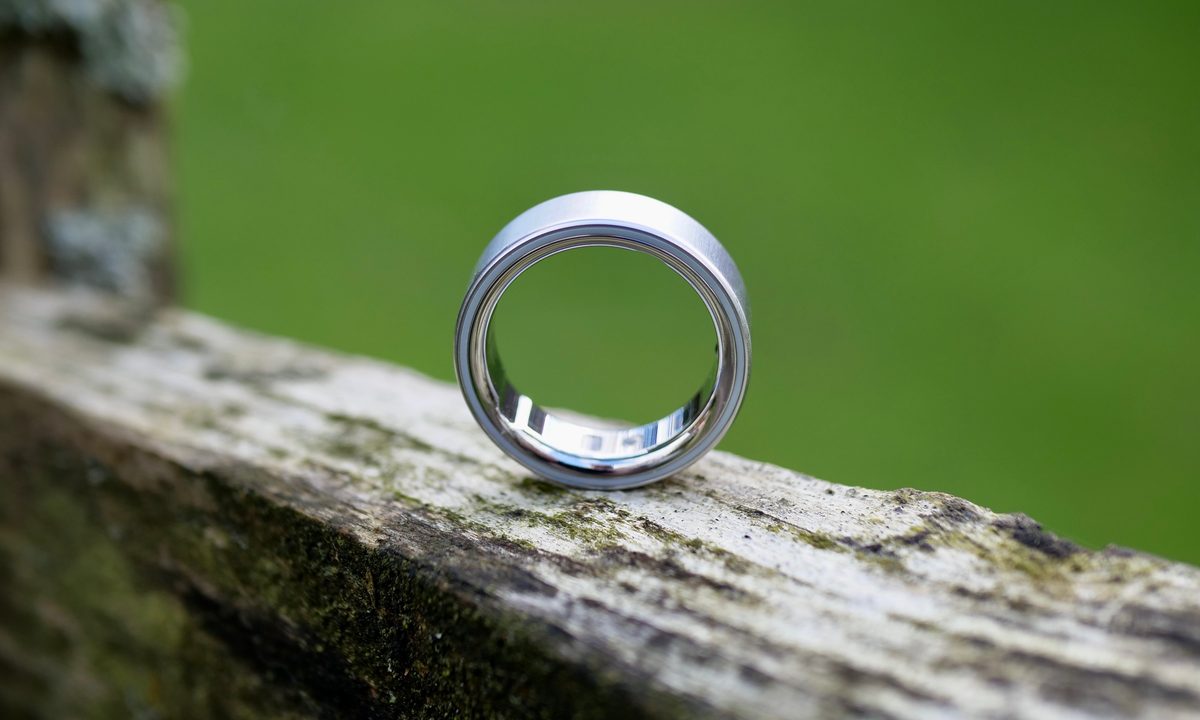
I’ve worn one wearable more than any other this year, and it speaks to not only its convenience but also its brilliance. It’s the Oura Ring, and I started off 2024 with the third-generation version on my finger, but I will close it with the Oura Ring 4.
While I’m going to generally sing its praises, I’m also going to share why I’m a little concerned about it, too.
How much have I worn the Oura Ring?

I have worn the Oura Ring every day throughout the year, which means the app contains a huge amount of historical data as a reward for my perseverance. Only the Apple Watch Series 9 and Apple Watch Series 10 have come close to matching its stickiness, but because I often want to wear other non-smart watches, there are periods when I don’t put them on. The Oura Ring is always on my finger, and I never have any reason to take it off.
I’ve said this before, but it’s always worth repeating: A health, activity, and lifestyle tracker is only worth owning if you are going to wear it. It tracks absolutely nothing when it’s on the charger or in a drawer. If I didn’t care about mechanical watches, I’d probably wear my Apple Watch most of the time, but I still find a smartwatch bothersome to wear overnight, whereas a smart ring is completely unnoticeable.
My initial concerns over the Oura Ring 4’s size and the slipperiness of the titanium underside have not become a long-term issue, and while the ring isn’t quite as snug on my finger as before, it has never shaken loose or fallen off overnight. I can’t size down, so this is a good thing, but there is a part of me that wishes the Oura Ring 4 fitted my finger exactly rather than somewhat approximately.
What about the data?

Wearing any health and fitness tracker consistently for a year will result in having a wealth of data stored in its accompanying app. The Oura Ring’s app was redesigned for the Ring 4’s release, and I’ve had no problem adapting to the new look and navigation style. I check the app when I wake up and before I go to bed each day, something I never do with any other wearable.
Why? It gives me a comprehensive yet incredibly easy-to-interpret look at how I’m set for the day and how active I’ve been at the end of it. Oura has now brought back its Symptom Monitor feature, but before its re-release, I’d become accustomed to noticing any alterations to my resting heart rate, heart rate variability (HRV), and body temperature overnight — which gave me a good idea of my general recovery and readiness, plus an early warning of any impending illness.
The Oura Ring’s excellence at noting the changes to your body when you’re ill can be seen in my Sleep Score and Readiness data for September when I had COVID-19, along with tracking fluctuations in my body temperature too. I’d rather have not tested the feature out, but it’s reassuring to know that it does work.
What’s worrying me?

I find value in the data the Oura Ring presents, but there is something I’m a little worried about: the durability of the ring’s finish. I chose the Brushed Silver Oura Ring 4 and was surprised by its shininess, but I’ve gotten used to it making a bit of a statement on my finger. I don’t do any activities that may put it at risk, like rock climbing or regularly gripping big dumbbell bars, yet it has already picked up some quite substantial marks on the surface.
I’ve worn the Oura Ring 4 since October, and I’m writing this before the end of December. I’d have hoped the ring’s surface would still be unmarred in this short amount of time, especially as it’s not getting much harsh treatment. I seem to have scratched the top leading edge quite badly, and the mark is immediately visible on the shiny, reflective surface. When I take the ring off and look more closely, I can quickly see other scratches and marks are already gathering.

Oura says surface marks are to be expected, and given its location on your body, it obviously won’t stay pristine forever. However, I would have liked it to stay looking new for a bit longer than it has. While it wouldn’t put me off buying an Oura Ring, as I know it would happen eventually, it may push me into trying a different finish. My third-generation Oura Ring’s standard silver finish looked bad after a couple of years, but it stood up quite well early on. However, the Stealth version — a matte black — I’d worn previously was more easily damaged.
Will I stop wearing it?

The Oura Ring is going to get damaged, and aside from putting a special cover over it, there isn’t much I can do. It doesn’t stop the ring from functioning, and it doesn’t impact the battery life, so it’s a purely cosmetic issue. Even then, I will probably be the only one that notices. That’s the beauty of a smart ring; it’s considerably more incognito than other wearables like smartwatches and smart glasses.
It does make me wonder how the Oura Ring 4 will look this time next year, but before I get there, I’ll be interested to see how the competition changes over that time and whether a different smart ring can pull the Oura Ring from my finger. RingConn and Samsung put up serious challengers to Oura in 2024, and the lack of subscription already makes them tempting.
However, as another year passes, I’ve got another year of data inside the Oura Ring’s app. It knows me really well, and that means it provides useful and personalized insights, which would be a hard thing to give up. I don’t expect a few scratches to stop me from wearing the Oura Ring and enjoying its informative data in 2025, and the competition has got to do something very special to change that, too.