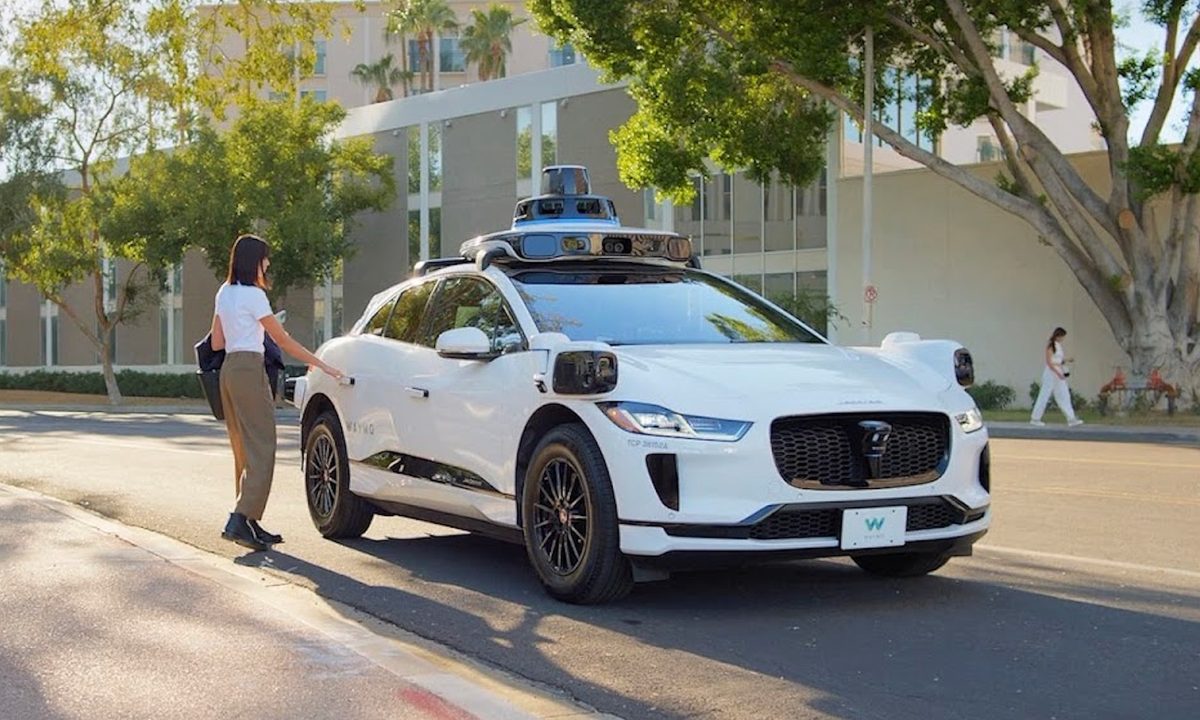
Love them or hate them, but robotaxis have certainly been making headlines in 2024. And beyond the glamorous, sci-fi-inspired marketing around Tesla’s recently unveiled Cybercab robotaxi, safety has remained, in one way or another, a recurring theme.
Earlier this year, a survey revealed a majority of the U.S. public, or 68%, brought up safety concerns when asked what they thought about having self-driving vehicles (SDVs) on public roads. Yet within that majority, more than half either believe that SDV safety issues can be addressed or that SDVs will actually be safer than humans.
It’s no wonder then that Alphabet-owned Waymo, which provides the only functioning robotaxi service in the U.S., devotes a lot of energy to addressing these concerns.
In a just-released research study with insurance company Swiss Re, Waymo now says its Waymo Driver service demonstrates better safety performance metrics than human drivers.
The study compared insurance liability claims against Waymo to those brought against human drivers, based on Swiss Re’s data from over 500,000 claims and over 200 billion miles of exposure. Compared to humans, data for the Waymo Driver showed an 88% reduction in property damage claims and a 92% reduction in bodily injury claims.
In real numbers, across 25.3 million miles already driven by the Waymo Driver, the service was involved in just nine property damage claims and two bodily injury claims. For the same distance, human drivers would be expected to have 78 property damage and 26 bodily injury claims, Swiss Re says.
“This analysis complements our safety impact data, which indicates that over 25 million fully autonomous miles, the Waymo Driver had fewer serious collisions than human drivers, independent of who was at fault,” Waymo says on its blog.
So far, Alphabet-owned Waymo has been the only robotaxi service operator able to convince U.S. regulators about the safety of its technology.
On the other hand, General Motors-backed Cruise had to stop testing operations last year after one of its vehicles fatally struck a pedestrian. GM also recently announced it would stop funding Cruise altogether.
As for Tesla, regulators have opened an investigation into 2.4 million Tesla vehicles equipped with its full self-driving software following three reported collisions and a fatal crash. Tesla still hopes to launch its Cybercab robotaxi as a service in 2025.
Of course, Tesla CEO Elon Musk appears to have a different approach than Waymo to tackle concerns about safety: Now that Musk has been freshly anointed to head a newly-created governmental agency, he seems to have convinced the incoming Trump administration to loosen regulations around self-driving vehicles, including the reporting of crashes.