
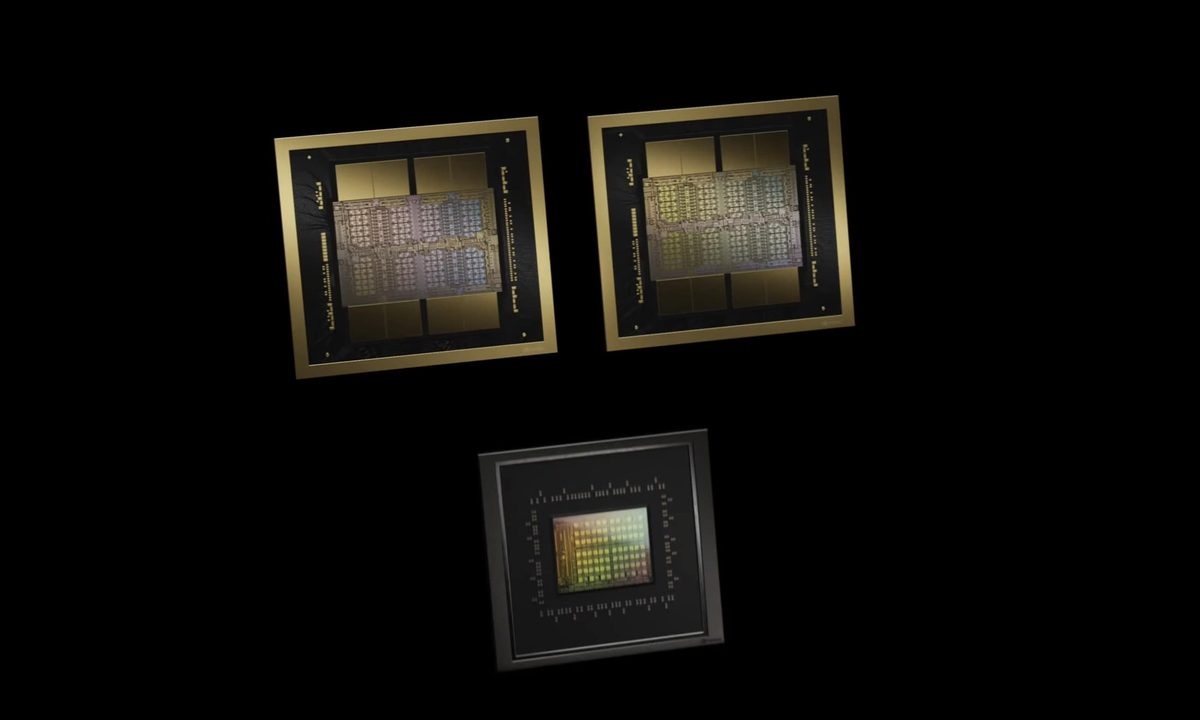
Taiwan Semiconductor Manufacturing Company (TSMC) is reportedly working with Nvidia to develop next-generation GPUs utilizing advanced chiplet technology. This collaboration is expected to play an important role in Nvidia’s upcoming “Rubin” architecture, which is rumored to be the successor to the current Blackwell generation.
The shift toward a chiplet-based design marks a notable departure from traditional monolithic GPU structures, offering improved performance, scalability, and cost efficiency. Chiplet technology enables manufacturers to assemble multiple smaller semiconductor dies into a single package, allowing for better yields and reducing production costs.
This approach has become increasingly popular in the semiconductor industry, particularly as chip designs become more complex and traditional scaling methods face limitations. By leveraging TSMC’s manufacturing processes, Nvidia could potentially enhance the power efficiency and processing capabilities of its future GPUs, making them well-suited for AI, data centers, and high-performance computing.
It is rumored that Nvidia’s Rubin GPUs will be produced using TSMC’s advanced N3P process node. The N3P process is an optimized version of TSMC’s 3nm technology, delivering improved performance, power efficiency, and transistor density compared to its predecessors. This node is designed to maximize the benefits of chiplet-based architectures, which could allow Nvidia to push the limits of GPU performance while maintaining energy efficiency.
To further optimize the performance of its chiplet-based GPUs, Nvidia will also leverage TSMC’s advanced packaging technologies, including SoIC (System-on-Integrated Chip). This technology enables the vertical stacking of chips, enhancing power efficiency and reducing latency between different chiplets within the GPU. AMD has been using the same design for its 3D V-Cache CPUs for years.
TSMC is expected to ramp up its production with plans to significantly expand its SoIC capacity by the end of 2025. As per Wccftech, Nvidia’s upcoming Rubin lineup is expected to utilize an SoIC design, leveraging the capabilities of HBM4 memory. The Vera Rubin NVL144 platform is rumored to feature a Rubin GPU with two reticle-sized dies, delivering up to 50 PFLOPs of FP4 performance and 288 GB of next-generation HBM4 memory. Meanwhile, the higher-end NVL576 model is anticipated to incorporate a Rubin Ultra GPU with four reticle-sized dies, pushing performance to 100 PFLOPs of FP4 and housing 1TB of HBM4e memory spread across 16 HBM stacks.
Nvidia’s adoption of chiplet technology follows a broader industry trend where leading semiconductor companies, including AMD and Intel, have already integrated similar designs into their processors. The modular nature of chiplets allows manufacturers to mix and match different processing units, optimizing performance for specific workloads. With AI and high-performance computing driving the demand for more powerful hardware, the partnership between TSMC and Nvidia is expected to yield breakthrough advancements in GPU design.


