  1. Home
  2. Space
  3. News

Gorgeous cotton candy clouds show how Hubble processes space images

Add as a preferred source on Google
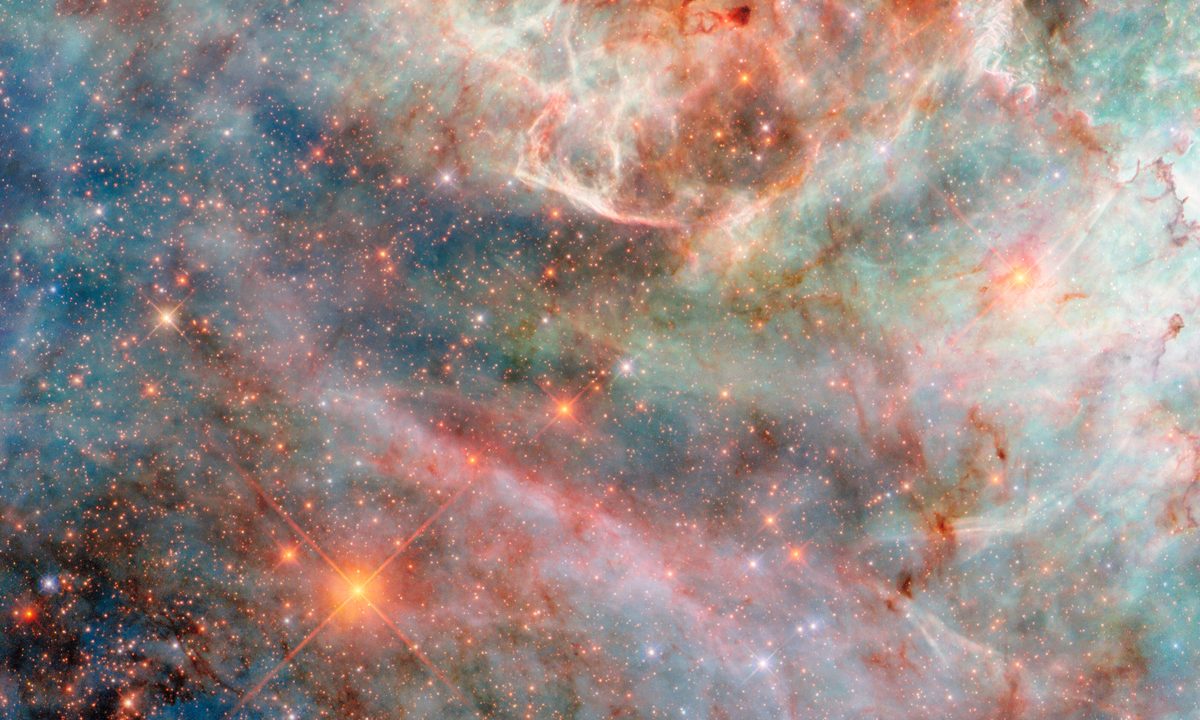
This NASA/ESA Hubble Space Telescope Picture of the Week features a sparkling cloudscape from one of the Milky Way’s galactic neighbours, a dwarf galaxy called the Large Magellanic Cloud.
This NASA/ESA Hubble Space Telescope Picture of the Week features a sparkling cloudscape from one of the Milky Way’s galactic neighbours, a dwarf galaxy called the Large Magellanic Cloud. ESA/Hubble & NASA, C. Murray

This stunning new image from the Hubble Space Telescope might look like cotton candy, but in fact it’s part of a nebula in a next door galaxy. Located in the Large Magellanic Cloud, a satellite galaxy of the Milky Way which is around 160,000 light-years away, this nebula consists of dust and gas that glows in different colors which indicate different physical processes at work.

If you’re curious about how Hubble produces such vivid and colorful images and whether the colors are real or not, it helps to understand how telescope cameras work. Unlike the camera on your phone, for example, Hubble doesn’t just point at an object and snap an image. Instead, its instruments like the Wide Field Camera 3, which produced this image, take multiple observations of the same object using different filters.

Recommended Videos

Each filter restricts the light being observed to just particular wavelengths. In this case, five different filters were used, covering wavelengths that the human eye can see, called optical wavelengths, as well as some in the ultraviolet and infrared.

With multiple observations of the same object at different wavelengths, each of which is in black and white, the observations can then be combined to create a single colored image, which you can see in full size below.
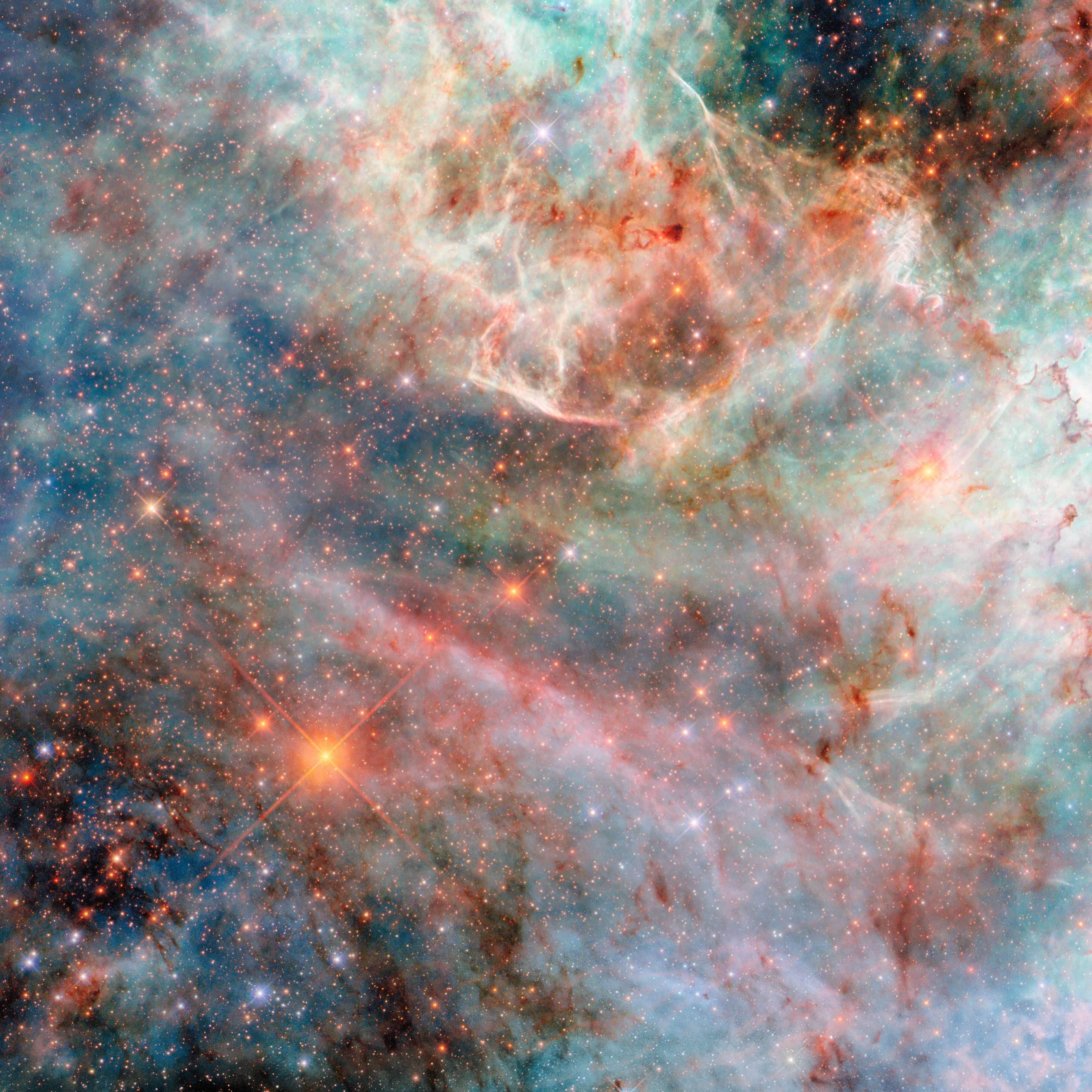
“When image-processing specialists combine raw filtered data into a multi-coloured image like this one, they assign a colour to each filter. Visible-light observations are typically matched to the colour that the filter allows through. Shorter wavelengths of light such as ultraviolet are usually coloured blue or purple, while longer wavelengths like infrared are typically coloured red,” Hubble scientists explain. “This colour scheme closely represents reality while adding new information from the portions of the electromagnetic spectrum that humans cannot see.”

The way that Hubble images are produced is similar to how the James Webb Space Telescope uses filters and combines these to create stunning pictures of otherwise invisible objects, a process which requires both scientific knowledge and a degree of artistic flair from the image processors.

Georgina Torbet
Georgina has been the space writer at Digital Trends space writer for six years, covering human space exploration, planetary…
Orbot Robotics’ space robot has four arms, but its Goro physique has a purpose
This four-armed robot could make routine space-station work easier for astronauts
Robot with four arms

Helios is a new four-armed robot from Zurich-based Orbit Robotics, and at first glance, it reminded me of Goro from Mortal Kombat. But unlike the prince from Outworld, Helios is not built for combat. It is designed to help astronauts on space stations with the repetitive, time-consuming work that keeps life in space running.

Orbit Robotics says that in microgravity, legs are not much help. Instead of walking or standing, Helios needs to move through tight station interiors, hold itself steady, and handle cargo, tools, or equipment. Its four-arm design turns extra limbs into both mobility aids and working hands.

Read more
A billionaire crypto bro will lead humanity to Mars atop Musk’s Starship
Chun Wang could become one of the first humans to travel toward Mars
Chun Wang in a space suit

Neil Armstrong and Buzz Aldrin became the faces of the Moon landing era. Elon Musk’s Mars era may get a very different public face in Chun Wang, a cryptocurrency billionaire whose fortune traces back to Bitcoin mining.

Wang is expected to lead a future SpaceX Starship mission that would fly past Mars and return to Earth. SpaceX has not announced a launch date, and the plan still depends on Starship proving it can safely carry humans far beyond Earth's orbit.

Read more
Elon Musk will get a historical paycheck if he builds a colony of one milliion humans on Mars
SpaceX may hand Musk a historic payday, if Mars becomes a city
Elon Musk talks to the press as he arrives to to have a look at the construction site of the new Tesla Gigafactory near Berlin.

An executive's pay packages are typically tied to review, profit, share price, or operational targets. But SpaceX apparently has something different in mind. According to a Bloomberg report and details from SpaceX's IPO filing, Elon Musk's latest compensation plan includes a wild condition.

The company must establish a permanent human colony on Mars with at least 1 million inhabitants. However, this is only a part of the crazy deal.

Read more