1. Home
  2. Mobile
  3. Legacy Archives

Intel announces Lexington Atom chip Z2420 for emerging markets and Bay Trail quad-core Atom processor for tablets

Add as a preferred source on Google
Image used with permission by copyright holder

Intel just announced the “Lexington” Atom chip, the Z2420, at CES 2013, which is targeted at emerging markets. This chip is described as a value proposition with modest specs compared to Medfield devices. The reference design has a 3.5-inch display with a 320×240 resolution, 1.2GHz single-core processor with hyper-threading, HSPA+ support, dual SIM capability, microSD card slot, FM radio, and wireless display sharing.

According to Intel it still offers “high performance multimedia” including 1080p video capture at 30fps, and support for dual shooters with 5MP and 1.3MP cameras which includes a 7 frame burst capture mode for still photography at 7fps. 

Recommended Videos

Apparently Acer, Safaricom and Lava are already working on devices based on the new reference design.

Image used with permission by copyright holder

Intel also showed off its next gen tablet architecture with its Bay Trail 22nm chip which promises twice the performance of the current Atom processors. Designed specifically for tablets, the new processor will work with Windows and Android devices. It promises improved battery life and it should be available in the summer of 2013. We saw reference devices from Compal, Pegatron, and Wistron in the CES 2013 event.

There was also mention of Clover Trail+, the Atom Z2580 platform which is a slightly more powerful platform than the Lexington chips which are being aimed at emerging markets. The Z2580 should offer twice the power of the current Medfield Z2560 chips and better battery life, but details are scant. It’s also set for release later in the year.

Simon Hill
Former Associate Mobile Editor
Simon Hill is an experienced technology journalist and editor who loves all things tech. He is currently the Associate Mobile…
Topics
Snapchat Planets: What’s the order, and what do they mean?
Snapchat Planets turns your best friends list into a solar system, and yes, your orbit says a lot
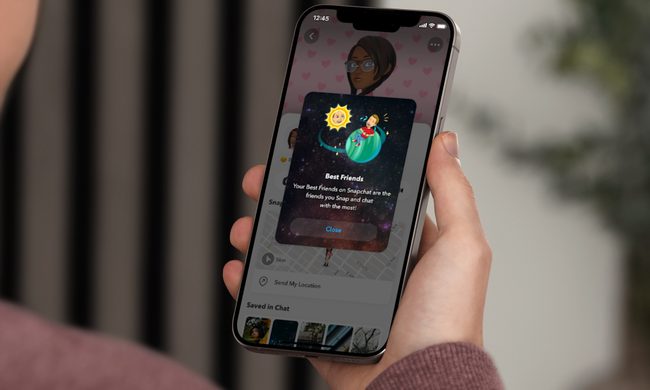
Snapchat Planets being shown on the Snapchat app on iPhone.

Snapchat is already packed with little symbols that can be weirdly hard to decode. You have streaks, emojis, badges, scores, Best Friends, and if you use Snapchat Plus, a tiny solar system that shows where you sit in someone’s closest-friends list.

The feature is called Friend Solar System, though most people just call it Snapchat Planets. It takes your position in a friend’s Snapchat orbit and turns it into a planet. From Mercury to Neptune, these celestial bodies signify how close a person is to you.

Read more
How to use WhatsApp Web
We'll show you how to use WhatsApp on your desktop or laptop
WhatsApp Web

As one of the most popular messaging services, you’ve already heard of WhatsApp. From its humble beginnings in 2009—two years before Apple introduced iMessage—to its acquisition by Facebook (now Meta) in 2014, WhatsApp has become the dominant messaging platform around the globe.

In recent years, it's grown even more potent with new features like video messages, self-destructing voice messages, the ability to edit sent messages, and more. We even finally got an WhatsApp iPad app in May 2025.

Read more
What is WhatsApp? How to use the app, tips, tricks, and more
From setting it up to mastering hidden features, here is your complete guide to WhatsApp.
Electronics, Phone, Mobile Phone

There's no shortage of messaging apps out there. The past decade has given us more options than we know what to do with, largely because smartphones demanded something better than plain old SMS.

Both the App Store and the Play Store are packed with apps that promise to revolutionize the way we communicate. Most of them didn't make it. The truth is, a messaging app is only as good as the number of people using it, and most apps never cross that threshold.

Read more