  1. Home
  2. Mobile
  3. Computing
  4. Emerging Tech
  5. Legacy Archives

Google engineers apply Gmail filter technology to end annoying robocalls

Add as a preferred source on Google
gmail
Image used with permission by copyright holder

The Federal Trade Commission has announced the winners of its Robocall Challenge. The contest, which attracted 800 submissions, was created to find a solution to the growing robocall problem. Each month, more than 200,000 people complain to the FTC about spam calls, which was enough to prompt some good ol’ crowd sourcing to squash the issue once and for all.

Aaron Foss and Sedar Danis split first prize while Dean Jackson and Daniel Klein won the “technology achievement award,” which goes to the winning submission associated with a large company – in this case, Google. The winning submissions are encouraging, but initial reactions to the contest were less exciting. At first, nothing compelling was being introduced to the contest.

Recommended Videos

Foss’s selection is called Nomorobo and proposes automatic hangs ups as the ultimate solution. Calls are forwarded to the Nomorobo service, which picks up the call before the user and disconnects it. The solution is great because most phones already support call forwarding so it could be easily integrated. 

Danis suggested an external device, mobile app, or service provider feature. It involves autonomously compiling “whitelisted, blacklisted, and graylisted numbers” to a database to handle unwanted calls. Danis’s solution can also detect whether the call is originating from a spoofed number (a fake number that disguises the call’s true source.)

The Googlers, Jackson and Klein, approached the problem in a similar way to how Gmail keeps spam at bay and actually relates to Danis’ idea. Their system asks users to report offending phone numbes to an online database. External hardware then checks each phone call to the database and blocks it. The hardware  also blocks spoofed numbers and records additional information like call volume, frequency, and inbound-to-outbound ratio. 

There’s no guarantee that any solutions will actually be implemented, but Foss told The Verge that he plans to use the $25,000 prize to bring his idea to the real world. He plans to reach out to major carriers and starters alike. Foss has been involved in a number of New York City startups so this is nothing new for him. Fingers crossed that someone actually blocks robocalling before it takes up the world’s airtime. 

Andrew Kalinchuk
Andrew covers news and opinions pertaining to smartphones, tablets, and all else mobile for Digital Trends. He recently…
Snapchat Planets: What’s the order, and what do they mean?
Snapchat Planets turns your best friends list into a solar system, and yes, your orbit says a lot
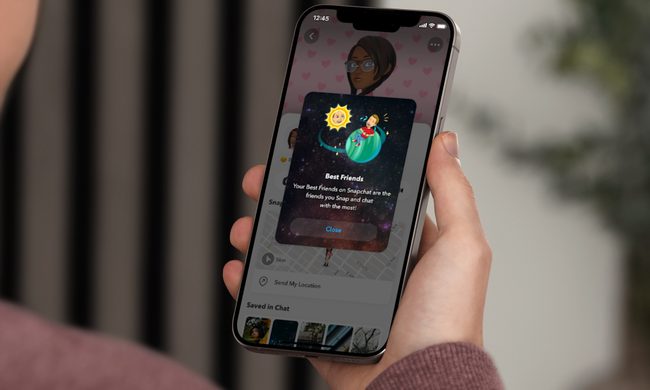
Snapchat Planets being shown on the Snapchat app on iPhone.

Snapchat is already packed with little symbols that can be weirdly hard to decode. You have streaks, emojis, badges, scores, Best Friends, and if you use Snapchat Plus, a tiny solar system that shows where you sit in someone’s closest-friends list.

The feature is called Friend Solar System, though most people just call it Snapchat Planets. It takes your position in a friend’s Snapchat orbit and turns it into a planet. From Mercury to Neptune, these celestial bodies signify how close a person is to you.

Read more
How to use WhatsApp Web
We'll show you how to use WhatsApp on your desktop or laptop
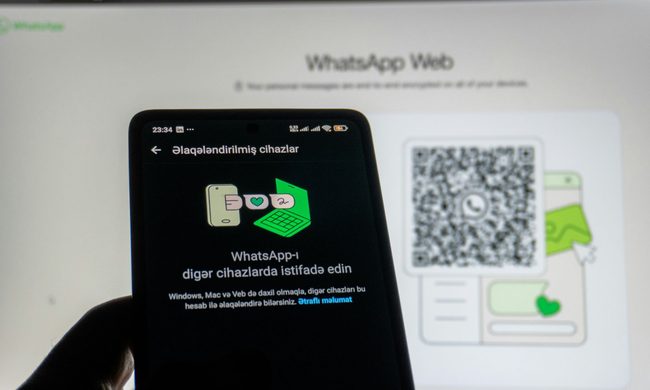
WhatsApp Web

As one of the most popular messaging services, you’ve already heard of WhatsApp. From its humble beginnings in 2009—two years before Apple introduced iMessage—to its acquisition by Facebook (now Meta) in 2014, WhatsApp has become the dominant messaging platform around the globe.

In recent years, it's grown even more potent with new features like video messages, self-destructing voice messages, the ability to edit sent messages, and more. We even finally got an WhatsApp iPad app in May 2025.

Read more
What is WhatsApp? How to use the app, tips, tricks, and more
From setting it up to mastering hidden features, here is your complete guide to WhatsApp.
Electronics, Phone, Mobile Phone

There's no shortage of messaging apps out there. The past decade has given us more options than we know what to do with, largely because smartphones demanded something better than plain old SMS.

Both the App Store and the Play Store are packed with apps that promise to revolutionize the way we communicate. Most of them didn't make it. The truth is, a messaging app is only as good as the number of people using it, and most apps never cross that threshold.

Read more