  1. Home
  2. Computing
  3. Legacy Archives

Passwords are so last season, ‘pass-thoughts’ let you log in with your mind

Add as a preferred source on Google
brainwave-authentication
Image used with permission by copyright holder

We try to make our passwords as secure as possible, but sometimes even complicated character strings can be vulnerable. That’s why companies, researchers, and organizations continue to search for ways to make accessing devices and accounts more secure. Google, for one, wants to replace passwords with USB sticks and smart rings. A team of researchers from the UC Berkeley School of Information, on the other hand, devised a way to unlock gadgets and accounts with brain waves. 

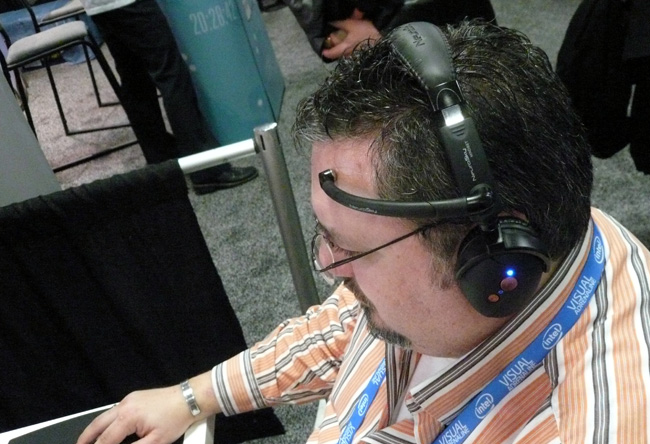
To be able to use “pass-thoughts,” as the team calls them, instead of passwords, the team took an affordable and readily available Bluetooth headset with built-in electroencephalogram (EEG) called Neurosky Mindset. Previously, using pass-thoughts would’ve been considered unfeasible because EEG devices are very expensive, but a $199 headset might make using pass-thoughts a reality. The team used Neurosky on test subjects and found that in order for the headset to provide enough brainwave signal, they had to make users perform seven mental tasks and then calibrate the headset for each one of them so nobody else’s thoughts can unlock their devices and accounts.

Recommended Videos

The team determined that the most effective way to implement pass-thoughts is to ask users to perform a mental task that’s not too complicated or boring. According to tests conducted, users were bored by imagining their fingers sliding up and down to unlock something, but when they were asked to make up their own pass-thoughts, they came up with something too complicated and hard to recreate. The tasks researchers found most effective are singing a song of one’s choice, counting objects with the same color, and focusing on one’s breathing. Calibrating the headsets and using these mental tasks to serve as one’s pass-thought returned error rates of less then 1 percent. 

The team presented their findings at the 2013 Workshop on Usable Security at the 17th international conference on Financial Cryptography and Data Security in Japan in early April. While the UC Berkeley team’s method sounds very promising, more research needs to be done, and companies must be willing to make the investment in EEG-enabled headsets before pass-thoughts become widely used.

[Image via UC Berkeley School of Information]

Mariella Moon
Mariella loves working on both helpful and awe-inspiring science and technology stories. When she's not at her desk writing…
Microsoft is retiring the Together Mode in Teams in favor of something cleaner and simpler
Teams is retiring Together Mode for layouts people may actually use
Computer, Electronics, Laptop

Microsoft Teams is retiring one of its more recognizable meeting features, and it might be for the best. The company announced that Together Mode is going away in Teams as Microsoft is shooting towards a simpler set of meeting layouts.

To recall, Together Mode was introduced during the pandemic-era video call boom, placing participants inside shared virtual environments such as auditoriums or classrooms. It was a cute idea at the time, but it never became the everyday meeting view for most people.

Read more
Experts are worried that smarter AI gets, the dumber we might become
Experts say chatbots can help research, but leaning on them too hard risks outsourcing the work that builds intelligence
OpenAI CEO Sam Altman during the Uncapped podcast in June 2025.

AI can now answer questions so quickly that the search itself can feel optional. That convenience worries the Royal Observatory Greenwich, which has warned that instant AI answers can weaken the curiosity, scrutiny, and source-checking behind real knowledge.

The risk hides inside the usefulness. Chatbots can help people test ideas, move faster, and find new angles, but a finished response can also cut users off from the messy trail that makes learning stick. When that happens, information arrives without the struggle that turns it into judgment.

Read more
Miss the old PC days? This website lets you experience Wikipedia like it’s Windows XP
This XP-style Wikipedia explorer turns online research into a nostalgia trip, while showing how much browsing changes when search takes a back seat
File, Webpage, Person

Wikipedia has an unofficial new front door, and it looks like a desktop from a very specific era of family PCs, school labs, and chunky blue title bars.

Developer Sami Smith has built a browser-based Windows XP Wikipedia explorer that turns categories into folders and articles into documents. It’s playful, slightly inefficient, and more interesting than another AI search box bolted onto the web.

Read more