  1. Home
  2. Mobile
  3. Computing
  4. Legacy Archives

Asus’ crazy new Transformer Book Trio is a tablet/laptop/desktop hybrid running both Android and Windows 8

Add as a preferred source on Google
Nvidia CEO showing the RTX 4060 Ti at Computex 2023.
This story is part of our coverage of Computex, the world's biggest computing conference.
Updated less than 34 minutes ago

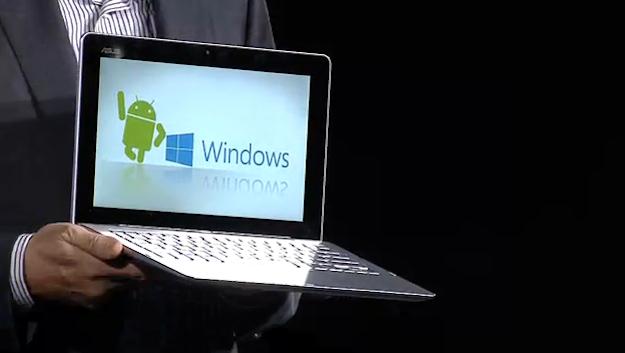
Asus Transformer Book TrioAsus continues to experiment with not only different form factors, but also just how many different experiences it can squeeze into a single machine. The latest device dreamed up by its engineers is the Transformer Book Trio, a three-in-one desktop/laptop/tablet hybrid which runs both Android and Windows 8.

The tablet section, which has an 11.6-inch display with a 1080p resolution, runs Google Android when it’s being used on its own, but dock it with a keyboard and it’s magically transformed into a Windows 8 laptop. However, if you’d rather carry on using Android, the Google OS is a press of a hotkey away. This also works when the tablet is connected to an external monitor, where the Transformer Book Trio becomes a desktop computer.

Recommended Videos

If all this sounds impressive, Asus hasn’t skimped on the specs either, and has taken the welcome step of giving each of its operating systems its own processor. For Windows 8 an Intel Core i7 runs the show, while a second, Intel Atom Z2580 chip takes care of Android. Asus could have got around this by installing Windows RT on the Book Trio, but we’re glad to see it has gone with the full version of Windows 8.

Of course, this dual operating system configuration means users will have access to apps from Google Play, and the Windows Store, so thankfully there is a 1TB hard drive, plus 64GB of flash memory too. Battery life wasn’t stated for the tablet section, but the keyboard dock has its own battery pack inside which should provide an excellent 15 hours of use.

Like Asus’ other new products announced at its Computex trade show press conference, details are scarce, and we don’t know how much the Transformer Book Trio will cost, or when it will be released. We’ll keep you up to date here as soon as the information is made public.

Andy Boxall
Andy has written about mobile technology for almost a decade. From 2G to 5G and smartphone to smartwatch, Andy knows tech.
Snapchat Planets: What’s the order, and what do they mean?
Snapchat Planets turns your best friends list into a solar system, and yes, your orbit says a lot
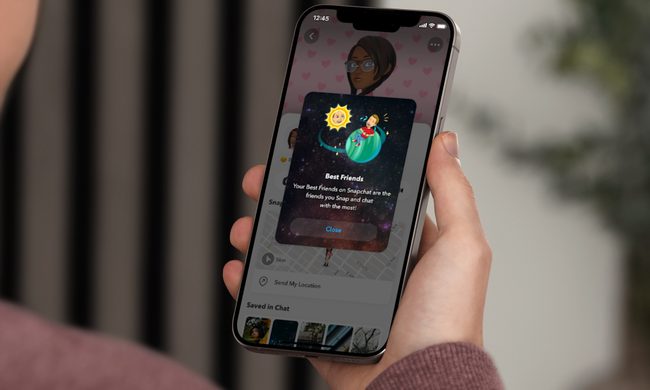
Snapchat Planets being shown on the Snapchat app on iPhone.

Snapchat is already packed with little symbols that can be weirdly hard to decode. You have streaks, emojis, badges, scores, Best Friends, and if you use Snapchat Plus, a tiny solar system that shows where you sit in someone’s closest-friends list.

The feature is called Friend Solar System, though most people just call it Snapchat Planets. It takes your position in a friend’s Snapchat orbit and turns it into a planet. From Mercury to Neptune, these celestial bodies signify how close a person is to you.

Read more
How to use WhatsApp Web
We'll show you how to use WhatsApp on your desktop or laptop
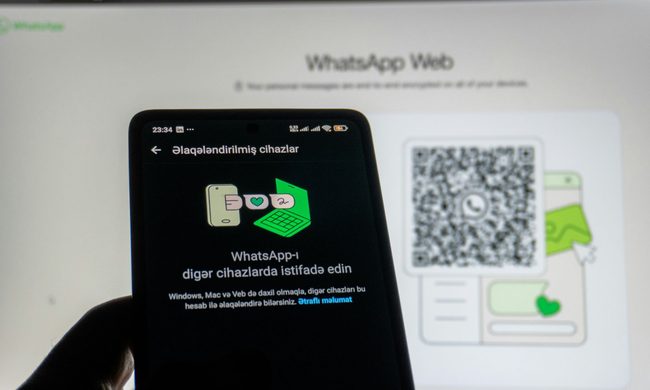
WhatsApp Web

As one of the most popular messaging services, you’ve already heard of WhatsApp. From its humble beginnings in 2009—two years before Apple introduced iMessage—to its acquisition by Facebook (now Meta) in 2014, WhatsApp has become the dominant messaging platform around the globe.

In recent years, it's grown even more potent with new features like video messages, self-destructing voice messages, the ability to edit sent messages, and more. We even finally got an WhatsApp iPad app in May 2025.

Read more
What is WhatsApp? How to use the app, tips, tricks, and more
From setting it up to mastering hidden features, here is your complete guide to WhatsApp.
Electronics, Phone, Mobile Phone

There's no shortage of messaging apps out there. The past decade has given us more options than we know what to do with, largely because smartphones demanded something better than plain old SMS.

Both the App Store and the Play Store are packed with apps that promise to revolutionize the way we communicate. Most of them didn't make it. The truth is, a messaging app is only as good as the number of people using it, and most apps never cross that threshold.

Read more