  1. Home
  2. Computing
  3. News

Apple’s OLED MacBook Pro could get a touch-sensitive screen, after all

Apparently, it was the iPad that inspired Apple to consider a touchscreen for MacBooks.

Add as a preferred source on Google
A person running Steam on the M4 MacBook Pro. Rocket League is up on the screen
Chris Hagan / Digital Trends

Apple has historically shirked the idea of a touch-sensitive MacBook, even though the company pushed the idea of a button-less smartphone into the mainstream. But it seems the winds have changed course, and the highly anticipated MacBook Pro overhaul with an OLED panel will land a touchscreen, after all.

What’s happening?

The prediction comes courtesy of TFI Securities analyst Ming-Chi Kuo, who reports that Apple will enable touch controls on a future MacBook Pro model to enhance productivity and experience. In the Windows ecosystem, touchscreen has been a staple for years on laptops and continues to grow.

Recommended Videos

“The OLED MacBook Pro, expected to enter mass production by late 2026, will incorporate a touch panel using on-cell touch technology,” Kuo mentioned in a post on X.
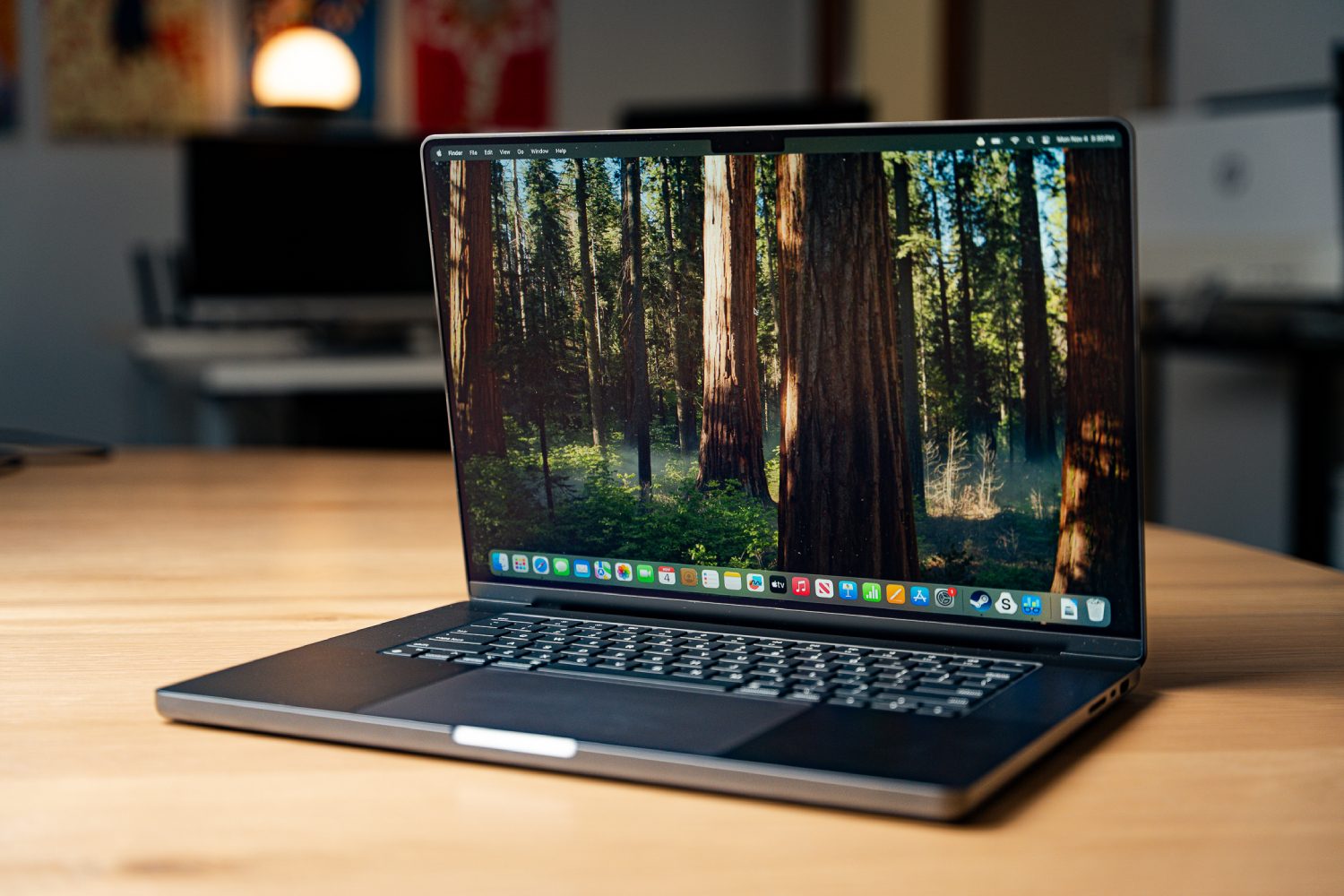
Apparently, Apple was inspired by the behaviour of how iPad users interact with the machine, which offers up to a 13-inch screen and pairs it with a fully decked out keyboard accessory.

Apple’s historical stance

“Touch surfaces don’t want to be vertical. It gives great demo, but after a short period of time, you start to fatigue and after an extended period of time, your arm wants to fall off. It doesn’t work,” Apple co-founder and former CEO Steve Jobs said back in 2010.

Jobs added that touchscreen on laptops is an “ergonomically terrible” idea, and after testing, Apple concluded that it was a terrible idea. Yet, if you look at the iPad Pro and its increasingly macOS-like software approach, you will realize that the idea is not so terrible, after all.

The OLED MacBook Pro is rumored to bring a massive design overhaul, as well. However, it will most likely arrive in 2027, while the M5 generation MacBook Pro models fill the gap next year.


Nadeem Sarwar
Nadeem is the Managing Editor at Digital Trends.
Buying a laptop may soon come with an instant carbon score thanks to AI
Researchers want AI to calculate the environmental cost of your next laptop
Laptop image

When shopping for a new laptop, most buyers compare specifications like performance, battery life, display quality, and price. But a new AI-powered initiative could soon add another metric to that list: carbon footprint.

Researchers are developing AI agents capable of calculating and displaying the environmental impact of consumer electronics in real time, potentially giving shoppers instant access to sustainability information before making a purchase. The effort aims to bring the kind of emissions transparency already available in services like flight booking platforms to the world of consumer technology.

Read more
The US government just hit the brakes on Anthropic’s most powerful AI models
Anthropic disables Fable 5 and Mythos 5 after US government directive
Laptop running Claude Fable

Anthropic’s troubles with the US government do not seem to be easing. The company has now been ordered to suspend access to Fable 5 and Mythos 5 for all foreign nationals, including foreign national Anthropic employees working inside the United States.

Anthropic said it received the directive on June 12 and is disabling the two models for all customers to comply. Other Anthropic models are not affected. The government has not publicly explained the full national security concern, but Anthropic says it understands the order is linked to a reported method for bypassing, or jailbreaking, Fable 5’s safeguards.

Read more
Nvidia’s RTX Spark made me hate content creation a little less
Adobe's AI-powered demos showed me a future where masking, rotoscoping, and scene detection might finally stop being a chore.
NVIDIA RTX Spark for Creators Image Generation Demo Computex 2026

Every video editor has a list of tasks they'd happily outsource to someone else. Exporting isn't one of them anymore because modern laptops are already plenty fast. The real-time sinks are the boring bits: manually masking subjects, finding scene cuts in long recordings, rotoscoping frame by frame, or wrestling with tedious edits that require more patience than creativity.

That's exactly why NVIDIA's RTX Spark demo at Computex 2026 caught me by surprise. I walked into the booth expecting another presentation full of AI buzzwords and benchmark charts. Instead, I walked out thinking that for the first time in years, hardware might actually be changing the editing experience itself, rather than simply making renders finish a little sooner.

Read more