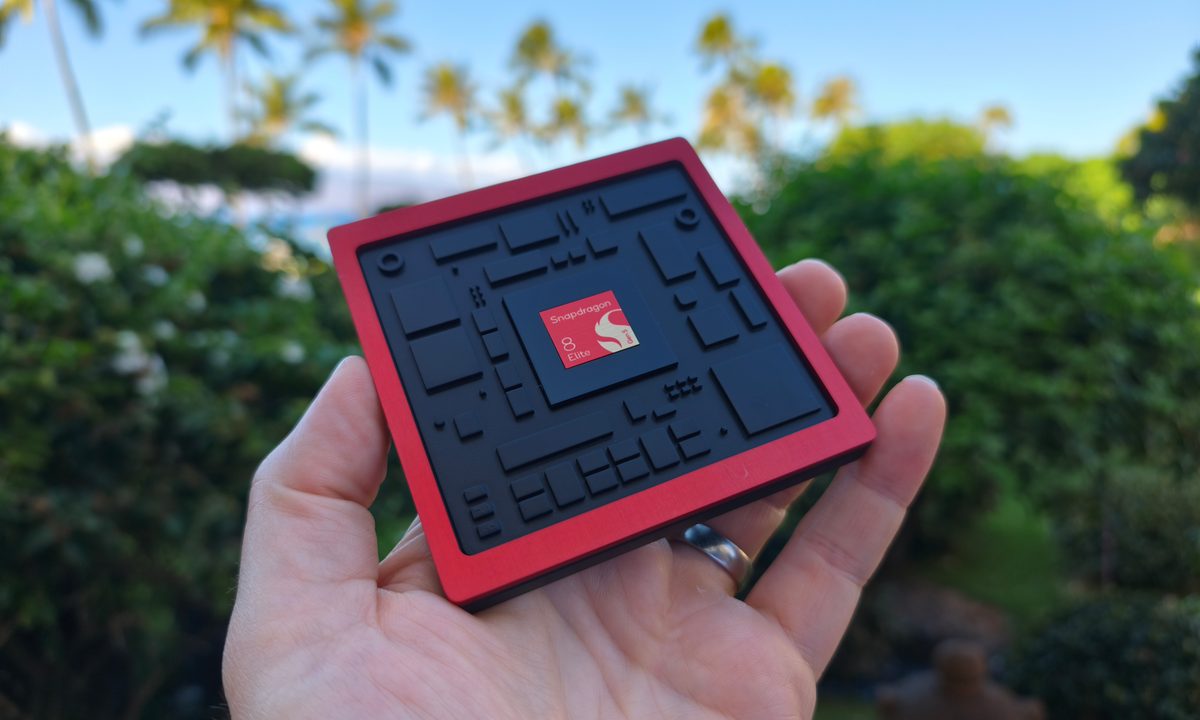
Qualcomm has announced the new hardware that’s going to power many of the best smartphones of 2026.
In a move that’s slightly confusing – but makes perfect sense once you dig into it – Qualcomm has called this new hardware the Snapdragon 8 Elite Gen 5.
“Elite” signifies that this is the top Snapdragon hardware, and puts into context the existence of Snapdragon 8 Gen 5, a separate platform that will be introduced a little later in 2025 in a slightly lower tier (hence the lack of Elite in the name).
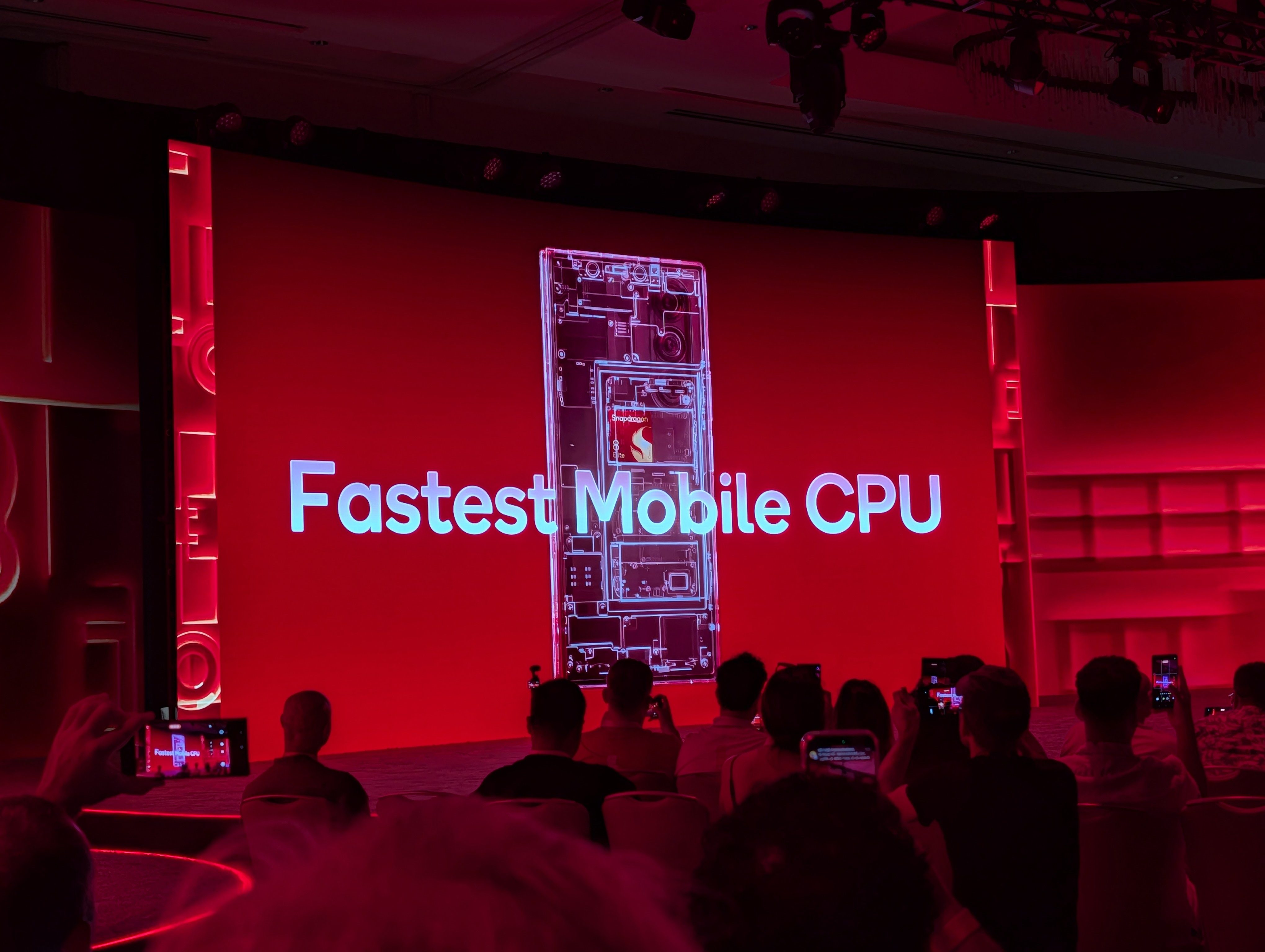
Qualcomm says the third-gen Oryon cores used in the new chip make this the “fastest mobile CPU ever”, which is quite the claim, especially when other brands are throwing out similar achievements for their devices.
The results remain to be seen, but the brand has confirmed that new devices will be announced “in the coming days”, with brands such as OnePlus, Samsung, Oppo and more all signed up to build smartphones powered by Snapdragon 8 Elite Gen 5.
The fastest CPU ever
Qualcomm says that the third-gen Oryon CPU is the world’s fastest mobile CPU. That comes down to a peak speed of 4.6GHz, with ‘performance cores’ running underneath at 3.62GHz.
Key to boosting the experience is the focus on ‘performance per watt’, to ensure that this new power doesn’t just drain the battery.
Qualcomm is sharing impressive benchmarks (which I independently verified on a development device), with single core Geekbench scores of around 3825 and a multi-core score of 12,200, but saying this happens with lower power consumption.
It’s promising a 20% single core improvement and 17% multi-core improvement over the previous generation, which should more battery efficiency in 2026’s range of smartphones.
Faster, better and more vivid photos and videos
With a name like “neural processing unit”, it would be easy to think that the NPU is just about AI.
But the NPU is a companion chip, not only driving AI functions, but moving work off the CPU and GPU to boost both computing and graphics functions, while also unlocking more AI capabilities.
Qualcomm is throwing around big numbers, claiming a 37% performance improvement over the previous offering, with functions like photography and videography getting real benefits.
On the Snapdragon 8 Elite Gen 5, that means per-frame video processing to boost tone mapping and colours – allowing AI enhancement in the same way that photos are handled, but on high-res video.
Qualcomm has also enabled things like artifact removal – for example removing reflections from photos through glass – handled on the NPU, on device, with no need for cloud processing.
That means faster, real-world results, that owners will find useful – if manufacturers take advantage of the capabilities.
Multiple AI models can run on the NPU, to make power advanced AI functions on device in real time.
All this happens with a 16% power improvement, again, ensuring that your phone lasts through the day, without compromising performance.
That includes agentic AI where the phone itself can act on your behalf in certain scenarios, learning from you to handle more complicated interactions and make decisions.
Qualcomm’s example at the event was to show a device recognizing a shirt you see – captured through your smart glasses – finding the shirt online in your size and ordering it for you.
Will 2026 be a big year for smartphone gaming?
Qualcomm has focused hard on beating the performance of the previous chip – the Snapdragon 8 Elite – bringing an overall 23% performance boost, a 25% lift to ray tracing, all while impressively reducing the power demand by 20%.
That means faster games, but hopefully phones that don’t get as hot in the hand (and thus deplete battery).
It’s not just about the GPU, but the new dedicated Adreno High Performance Memory (HPM), which gives an 18MB cache specifically designed to unlock gaming performance in long sessions.
The HPM boosts performance, resulting in fewer frame drops and faster rendering, meaning you can play more demanding games over longer sessions without compromising on the experience.
A wide range of games will take advantage of this, including those using Epic Game’s Unreal Engine.
Disclosure: The cost of this trip was paid for by Qualcomm. All opinions and findings are independent and not influenced by the brand.