
  1. Home
  2. Computing
  3. News

Amazon launches Alexa+ on the web to take on ChatGPT and Gemini

Amazon takes Alexa beyond smart speakers

Add as a preferred source on Google
Amazon launches Alexa+ on the web to take on ChatGPT and Gemini
Amazon

Amazon has begun rolling out a web version of its next-generation Alexa+ assistant, giving users a new way to interact with the AI beyond Echo devices and the mobile app. For some users, Alexa.com now opens into a full chatbot-style interface where Alexa+ can be used through a browser. This move puts Alexa+ closer to how people already use tools like ChatGPT and Google Gemini, making the assistant more useful beyond voice interactions and smart speakers.

What Alexa+ can do on the web and what it still cannot
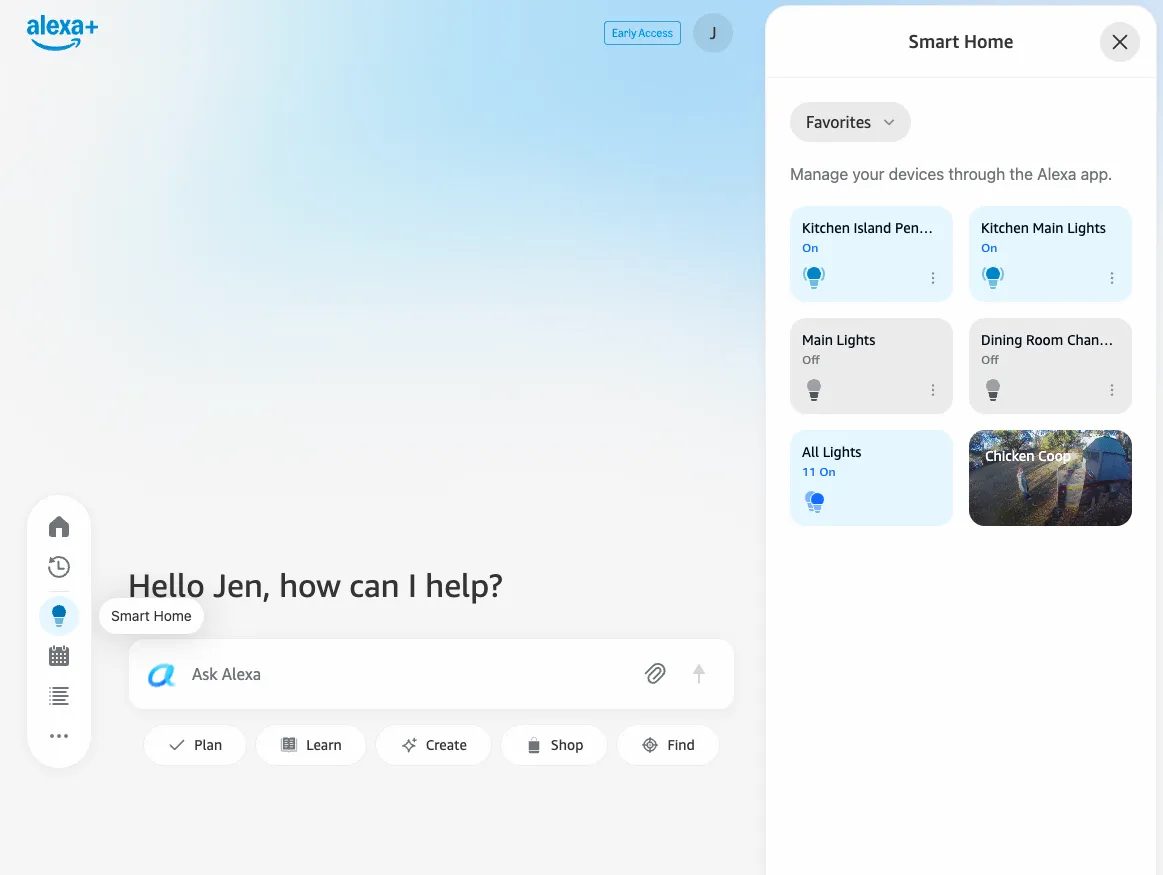
According to The Verge, Alexa+ web interface will feel familiar if you have used ChatGPT or Gemini. There is a large chat box at the center, suggested prompts to get started, and quick ways to copy responses. Users can type instead of talk, upload files for Alexa+ to analyze, and manage things like shopping lists and calendars from a larger screen.

Recommended Videos

The left sidebar also pulls in chat history from Echo devices, basic smart home controls, and access to uploaded documents. These options make it easier to continue conversations across devices without starting over.

Amazon is positioning the web version as a productivity boost. Tasks that were awkward with voice alone, like editing long documents, reviewing files, or copying generated text, are much easier with a keyboard and mouse. You can ask Alexa+ to plan trips, create study guides, write letters, shop, book restaurants, or analyze uploaded files, then quickly reuse the output elsewhere.

That said, the experience is still early. The web interface is more bare-bones than ChatGPT or Gemini, with no advanced tools like custom bots or creative canvas tools, and file support is limited. For now, Alexa+ is free during testing, but Amazon plans to bundle it with Prime later while charging non-Prime users a monthly fee of $20.

Alexa’s evolution is worth paying close attention to as Amazon continues to expand what the assistant can do. At the same time, questions remain about how much autonomy Alexa should have. Even so, putting Alexa+ on the web is Amazon’s strongest move yet to position Alexa alongside leading AI chatbots, not just smart home devices.

Manisha Priyadarshini
Manisha Priyadarshini is a tech and entertainment writer with over nine years of editorial experience.
Spooked by the MacBook Neo, Asus shows off affordable Intel Wildcat Lake laptops
Its new Wildcat Lake laptops bring faster screen specs to Apple’s affordable fight
Computer, Electronics, Laptop

Asus isn’t waiting for Apple’s lower-cost laptop story to settle. Its new Intel Wildcat Lake Vivobook 14SE and 16SE have launched in China, giving Windows laptop makers an early chance to crowd Apple on price and visible hardware.

The sharper threat is the Vivobook 16SE, which starts at CNY 4,599, about $675, with a higher-end display model at CNY 4,999, around $734. That pricier version adds a 16-inch 2560 x 1600 screen with a 144Hz refresh rate, variable refresh rate support, and a 400-nit brightness rating.

Read more
Intel reveals Project Firefly to make cheap Wildcat Lake laptops that rival MacBook Neo
Project Firefly standardizes Wildcat Lake laptop designs so PC makers can chase Apple with lower prices and cleaner hardware
Crowd, Person, Audience

Intel is trying to make budget Windows laptops look a lot less bargain-bin.

Project Firefly, launched in China alongside Intel’s Wildcat Lake laptop chips, gives PC makers a common hardware playbook for thinner, cleaner, lower-cost systems that can take a more direct swing at MacBook Neo. The promise is simple, fewer compromises where budget laptops usually show them most.

Read more
The RAM crisis is about to get uglier, and your new gadgets could pay for it
Nvidia’s next AI monster may squeeze the RAM market even harder
RAM memory chips

The memory market is already in terrible shape, and Nvidia's new Rubin could be kicking it while it's already down. According to a Fast Company report, citing a forecast from Citrini Research, the company's next-gen AI platform could require more than 6 billion GB of LPDDR memory in 2027. With the LPDDR (low-powered memory) primarily being used in phones, tablets, and other portable devices, the price hikes might get even worse.

And if the report is true, Nvidia alone may consume more memory than Apple and Samsung combined.

Read more