
  1. Home
  2. Wearables
  3. News

Apple wants AR glasses that fit you, not the other way around

A forward hinge and a frame-fixed optics housing aim to preserve image geometry while improving comfort.

Add as a preferred source on Google
Representative Image of Smart Glasses
Unsplash

Apple has a practical AR glasses problem to solve before anything feels everyday: the moment you adjust the fit, the image can shift. According to Patently Apple, the new patent lays out a smart glasses structure designed to keep key display parts in precise alignment, even as the arms move like normal eyewear.

The filing describes a rigid electronics housing near the display frame. That fixed section can hold components like projectors, waveguides, speakers, processors, and batteries while maintaining a constant distance and angle between the projector and the transparent display window. Basically, the optics stay put, so the visuals should stay consistent.

Recommended Videos

Apple pairs that with a hinge positioned forward, closer to the frame, where the securement arm attaches. The arms can rotate for comfort and fit without disturbing the optical path, unlike Meta Glasses.

Why AR gets blurry when you refit

Many smartglasses designs put electronics into the arms. That’s an efficient place to stash hardware, but it also means fit adjustments can flex or rotate parts that need to stay precisely positioned for a stable image. Even small shifts can change projection geometry and force recalibration.

Apple’s patent tackles that by separating fit from optics. The arms move, the optics do not.

The hinge placement is the trick

The forward joint is doing more than making the glasses easier to adjust. By putting the hinge near the front housing, Apple can keep the sensitive display system in a rigid module while still letting the arms accommodate different head shapes. Biasing members like springs or cantilever elements can pull the arms inward for a secure fit, without tugging on the aligned components.

What this suggests about Apple’s priorities

This doesn’t confirm a product or a timeline. It does show where Apple is spending design effort: wearability, clean aesthetics, and optics that behave predictably when you make real-world adjustments. If Apple’s AR glasses ever ship, this kind of architecture points toward eyewear-like comfort paired with display alignment that doesn’t drift when you refit the frame.

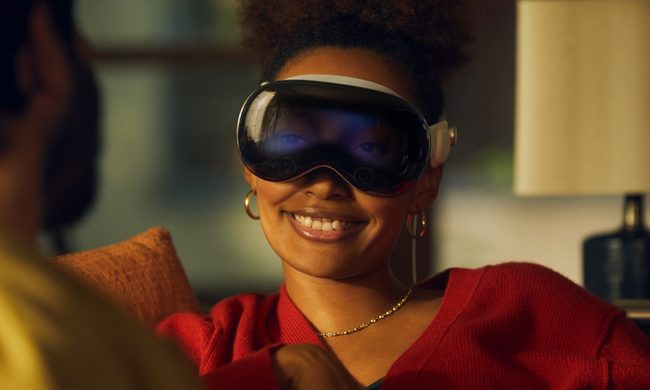
The Apple Vision Pro, released in 2024, could be said to be a precursor of things to come. If Apple learns from the Vision Pro’s rollout, it’s new AR glasses could place it

Paulo Vargas
Paulo Vargas is an English major turned reporter turned technical writer, with a career that has always circled back to…
Apple reportedly slashes its Vision roadmap for smart glasses, and Meta’s lead matters more than ever
Apple is betting it can enter the smart glasses market late and still win on brand and ecosystem.
A woman wearing the Apple Vision Pro headset.

A year ago, Apple analyst Ming-Chi Kuo published a Vision product roadmap featuring seven devices. Now, he has published a new one with just two products remaining. 

The change in the product roadmap, Kuo claims, has been approved by John Ternus, Apple's incoming CEO, who officially takes over on September 1, 2026.

Read more
Google wants you to 3D-print your own Fitbit Air bands
Accessories, Electronics, Wristwatch

For most fitness trackers, customization starts and ends with buying a different strap. Google appears to have a much bigger vision for the Fitbit Air.

The company has published detailed design guidelines, CAD files, and certification information that effectively invite creators, developers, brands, and hobbyists to build their own accessories for the ultra-lightweight health tracker. So, Google doesn’t just want third-party Fitbit Air bands to exist — it wants people to create them. The move is a fascinating departure from the tightly controlled accessory ecosystems that dominate the wearable tech landscape. If Google gets its way, Fitbit Air owners could eventually have access to everything from designer bands and custom housings to niche accessories that would never make sense for Google itself to manufacture.

Read more
Amazfit just made a smartwatch for people who train hard but struggle with recovery
The Balance Ultra smartwatch turns sleep, stress, and training load into recovery guidance
Amazfit Balance Ultimate smartwatch on wrist

Amazfit has launched the Balance Ultra, a new flagship smartwatch meant for users who track their workouts closely but may not always pay the same attention to recovery.

Recovery is one of the most important parts of training, because poor sleep, high stress, and badly timed rest days can directly affect progress. The new smartwatch aims to make that easier to track by combining workout data with sleep, stress, heart rate, HRV, blood oxygen, breathing, and recovery metrics through the Zepp App.

Read more