  1. Home
  2. Cars
  3. News

Toyota just introduced its own robotaxi to tackle Tesla and Waymo

Toyota has officially rolled its first mass-produced robotaxi off the line. Built with Pony.ai, the bZ4X-based vehicle is designed for scale, not spectacle.

Add as a preferred source on Google
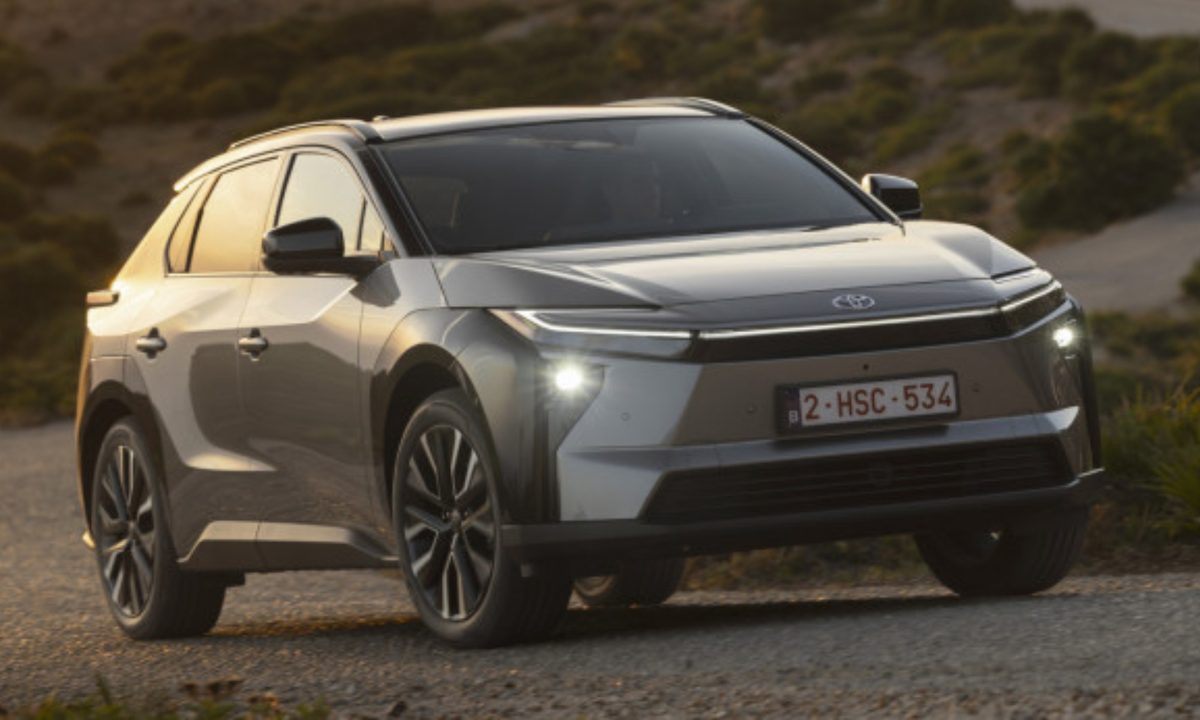
Toyota bZ4X robotaxi.
Toyota

Toyota, along with the Chinese autonomous-driving firm Pony.ai, has announced that its first mass-produced robotaxi, based on the Toyota bZ4X, has rolled off the production line.

The project is a joint venture between Toyota Motor China, GAC Toyota, and Pony.ai, with themanufacturing handled by the latter two. Unlike prototypes that live their life on press stages, the robotaxis are headed for real-world service.

First mass-produced bZ4X Robotaxi, developed in collaboration with Toyota, has officially rolled off the production line, marking a new phase of scaled production and commercial deployment for the https://t.co/jCrY756ajt–Toyota collaboration. 🚘🚀
More: https://t.co/2V5CPNoWzS pic.twitter.com/3fBtKyDoiK

— Pony.ai (@PonyAI_tech) February 9, 2026

From prototype to production

The companies, as mentioned in the official press release, plan to build more than 1,000 Toyota bZ4X robotaxis this year, with gradual commercial deployment across China’s tier-one cities.

Recommended Videos

At the heart of the robotaxis is Pony.ai’s latest, seventh-generation autonomous driving system, which cuts the bill of materials for the self-driving kit by 70% (compared to the previous generation), while using 100% automotive-grade hardware. With this, the firm expects its total robotaxi fleet to exceed 3,000 vehicles by the end of 2026.

Inside, the Toyota bZ4X-based Pony.ai robotaxis offer features that should feel familiar to anyone who has used a modern ride-hailing app: Bluetooth-based automatic unlocking, voice interaction, online music, pre-trip climate control, and smoother braking and acceleration for enhanced comfort and reduced motion sickness.

We’re thrilled to share that https://t.co/jCrY756ajt Gen-7 Robotaxi is a finalist for the 2026 Edison Awards!
We’ll continue shaping the future of autonomous mobility and empowering the next generation of transportation.#Robotaxi #AutonomousDriving #Innovation #EdisonAwards pic.twitter.com/W2DcgI2bvu

— Pony.ai (@PonyAI_tech) February 5, 2026

Scaling fast, the Toyota way

The robotaix are built using the Toyota Production System and adhere to Toyota’s “QDR” principles, which stand for “Quality, Durability, and Reliability.” While Tesla and Waymo often grab attention with cutting-edge software, Toyota is leaning into scale, cost control, and manufacturing discipline.

“Together, these efforts demonstrate a clear pathway for autonomous driving technology to progress from limited-scale validation to large-scale mass production.”

Right now, the U.S. robotaxi landscape looks like a race where some runners already have a head start. Waymo, for instance, is doing extremely well in commercial deployment, operating around 2,500 fully autonomous robotaxis in multiple U.S. cities. Tesla is scaling its service out of Austin with a controlled, well-equipped fleet.

However, given that Toyota’s robotaxis are currently available only in China, they’re competing with local players like Baidu’s Apollo Go, WeRide, and AutoX.

Shikhar Mehrotra
For more than five years, Shikhar has consistently simplified developments in the field of consumer tech and presented them…
Volvo’s parent just launched a $16,000 EV that looks shockingly luxurious
This $15,600 Geely EV has no business looking this premium
Geely Galaxy Starshine 7 Promo Image

Geely, the Chinese auto giant that also owns Volvo, has just unveiled a new RV that really does not look like it belongs anywhere near the budget end of the market.

The company has just kicked off the presales in China for the Galaxy Starshine 7, with its pricing starting at 112,900 yuan or about $16,550. For that money, buyers get a midsize electric sedan with a sleek fastback silhouette, full-width lighting, a richly trimmed cabin, and even an available dual-motor all-wheel-drive setup that can hit 0 to 100 km/h in 5.4 seconds.

Read more
Xiaomi makes dirt-cheap gadgets, but its CEO just ruled out cheap EVs
Xiaomi is staying out of the bargain EV fight
Xiaomi SU7 EV in blue

Xiaomi has been known for building some surprisingly cheap gadgets that still feel a little more premium than they should. But that philosophy apparently does not extend to electric cars.

According to ITHome, Xiaomi CEO Lei Jun said during a livestream for the company's SU7 endurance challenge on April 17 that Xiaomi will not make vehicles priced below 100,000 Yuan. That works out to be just under $15,000. Lei explained that if consumers expect an electric car to deliver strong intelligent features, software, and overall capability, the cost is harder to squeeze down that far.

Read more
The new electric Mercedes C-Class puts its giant screen front and center
Mercedes previews a richer electric C-Class interior with a dash-wide display, upgraded comfort features, and a stronger push to make the cabin feel like the main event
Car, Transportation, Vehicle

Mercedes-Benz is using the cabin to make its first electric C-Class feel like a bigger step than a normal model update. Ahead of the car’s April 20 world premiere, it has shown an interior centered on a sweeping digital display, extra space, and a more upscale finish that leans hard into comfort and theater.

The key visual is the new MBUX Hyperscreen, with Mercedes also offering a Superscreen setup. Both are designed to stretch the digital interface across the front of the car and blend the center console into the instrument panel, giving the dashboard a cleaner and more dramatic shape than the current C-Class.

Read more