  1. Home
  2. Emerging Tech
  3. News

This low-cost orange-sized sensor could be what self-driving cars need to hit public roads

The missing piece for self-driving car safety might be an "extra set of eyes".

Add as a preferred source on Google
waymo self driving car testing
Waymo Self Driving Car Testing Waymo

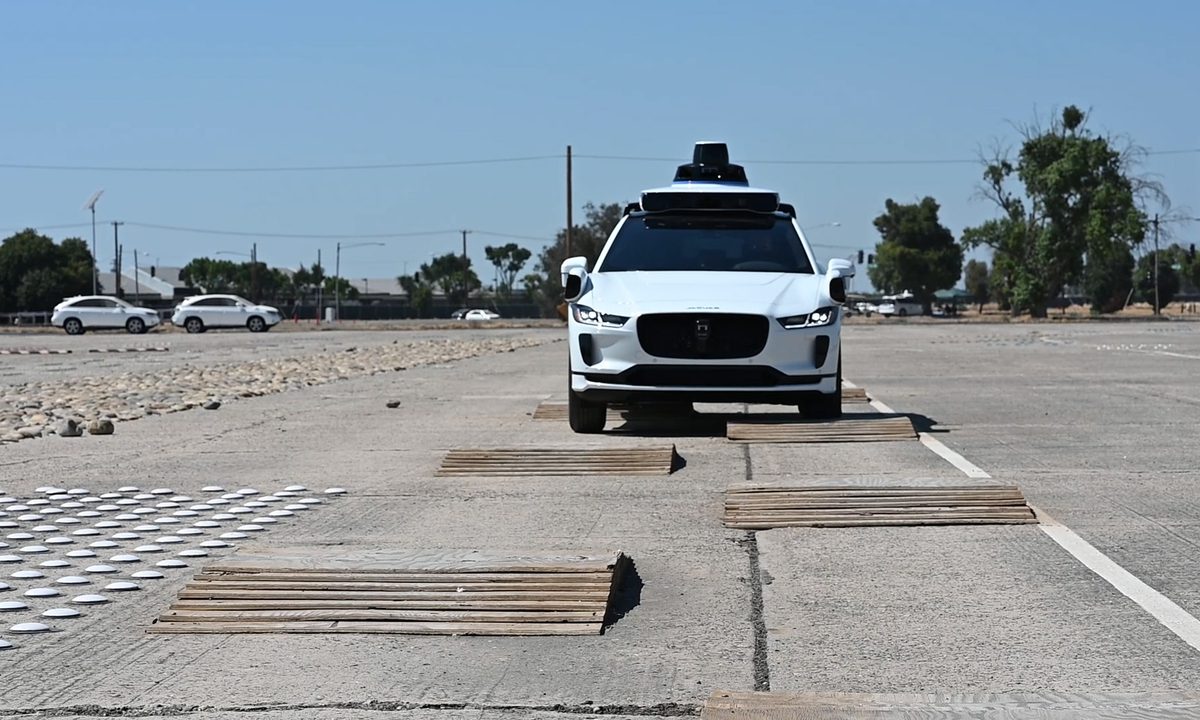
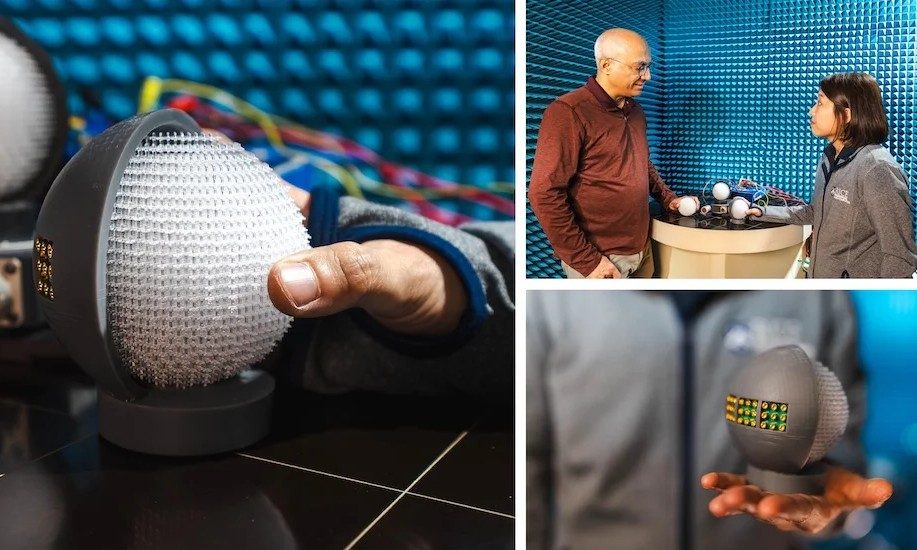
A team of engineers at Rice University has developed a tiny new sensor that could dramatically improve the safety of self-driving cars on public roads. This is a compact, low-power millimeter-wave radar sensor roughly the size of an orange. The new tech, dubbed EyeDar, is designed to work as an “extra set of eyes” by enhancing radar perception in places where a vehicle’s own sensors may struggle, such as blind spots, intersections, or poor visibility conditions.

Why existing sensors fall short

Typically, autonomous vehicles rely on a suite of sensors like cameras, LiDAR, and radar to “see” their surroundings. While cameras and LiDAR can offer detailed spatial information in optimal conditions, they have their limitations in bad weather conditions, such as rain, fog, or low light. So carmakers rely on radar for better visibility in poor weather and lighting conditions.
Though even these have limitations, as much of the signal emitted from the radar simply scatters away. Meaning, stationary obstacles or moving pedestrians that aren’t directly in the detection path can remain hidden until it’s too late. Rather than solely relying on just these sensors, EyeDAR arrives to fill these blind spots.

EyeDAR: How does it work

EyeDAR was introduced by Kun Woo Cho, a researcher leading the project in the lab of Ashutosh Sabharwal, a professor of electrical and computer engineering at Rice University. The key innovation here is how EyeDAR combines simple hardware design with efficient signal detection. Its orange-sized form factor makes it small enough to be mounted across road infrastructure, keeping deployment costs low and coverage high.
It uses millimeter-wave radar that operates reliably in all weather and lighting conditions. EyeDAR’s physical design incorporates a 3D printed Luneberg lens and a surrounding antenna array, which can naturally focus on incoming radar signals onto detection elements.

Recommended Videos

Since the design does much of the direction-finding computation in the hardware itself, it also resolves target directions hundreds of times faster than traditional radar systems. One of EyeDAR’s standout features is its ability to communicate radar information back to self-driving cars. This technology also has wider applications, like robots, drones, and wearable platforms. With its compact design and hardware-level efficiency, EyeDAR could be one of the key pieces in safely putting autonomous vehicles on public roads.

Vikhyaat Vivek
Vikhyaat Vivek is a tech journalist and reviewer with seven years of experience covering consumer hardware, with a focus on…
Edge browser on mobile gets a huge upgrade that makes it a worthy pick over Chrome
Edge mobile gets smarter just before Chrome’s big Gemini moment
Microsoft Edge on a phone

Chrome is still the default browser for many smartphone users, but Microsoft’s latest Edge update gives them a practical reason to try something else.

Microsoft has announced a major Copilot update for Edge across desktop and mobile. The rollout comes ahead of Google’s Gemini-powered Chrome upgrade for Android, which is expected in June, giving Edge a chance to stand out on phones before Chrome’s next big AI push.

Read more
After flubbing with Siri, Apple plans to host AI agents on the App Store
One problem is about money Apple won't commit to not charging. The other is about AI agents Apple can't figure out how to control. WWDC needs to solve both.
Electronics, Mobile Phone, Phone

Apple is currently facing a Siri problem that has nothing to do with Siri at all. With WWDC 2026 just weeks away, The Information reports the company is actively courting developers to integrate their apps with the new Siri coming in iOS 27. 

The mechanism powering the overhauled Siri, App Intents, is an API that lets Siri execute actions inside third-party apps without you actively opening them, which sounds quite useful, I’d say. However, some of the world’s largest developers are dragging their feet on it, not because it’s tough, but because Apple left the door open on charging for it later.

Read more
EV batteries just need some AI top-up nudge, and they get a big 23% life boost, finds research
Charging fast and lasting long seemed impossible. A new AI trick says otherwise.
EV Charging

EV battery charging technology has always had to find the right balance between charging speed and battery longevity. If the charging speed is too fast, it wears down the battery. If the charging is too slow, nobody is happy. 

Researchers Meng Yuan from Victoria University of Wellington and Changfu Zou from Chalmers University of Technology in Sweden may have cracked this long-standing problem using an AI technique called deep reinforcement learning, and the results are pretty encouraging.

Read more