1. Home
  2. Emerging Tech
  3. Health & Fitness
  4. Legacy Archives

Goal-line tech makes history, confirms goal for first time in World Cup

Add as a preferred source on Google

Goal-line technology scored a first at the World Cup Sunday night when it confirmed a goal during France’s group-stage game with Honduras at the Beira-Rio Stadium in Porto Alegre, Brazil.

Made by Germany-based GoalControl, the system kicked into action in the 48th minute when a shot by France’s Karim Benzema hit the inside post before heading straight across the face of the goal to Honduras keeper Noel Valladares.

Recommended Videos

Evidently surprised to see it coming his way, Valladares fumbled the ball in the mouth of the goal before knocking it away. Before this year’s World Cup, it would’ve been left to the visual judgment of the ref and his assistant to determine if the ball had crossed the line – and we all know how that can turn out – but on Sunday night, ref Sandro Ricci only had to look at his watch to see whether it had gone in. After confirming that it had, Ricci ruled in France’s favor, marking the first ever use of goal-line technology in World Cup competition.

However, things didn’t go entirely smoothly as the stadium’s big screen initially showing the words ‘no goal’, causing momentary confusion in the crowd and giving Honduras fans false hope – but the goal stood.

Pressure to introduce goal-line technology had been mounting ever since England’s Frank Lampard had a clear goal (well, clear to everyone except the ref and his assistant) denied against Germany during the 2010 World Cup in South Africa.

For years Fifa president Sepp Blatter resisted calls for the technology to be introduced, concerned that it would slow the game down and strip the sport of its “human aspect.” After the Lampard fiasco, however, Blatter did a one-eighty, leading to the tech’s introduction at this month’s World Cup.

GoalControl’s system

GoalControl’s system uses 14 high-speed cameras – seven for each goal – which begin functioning the moment it detects the ball is close to the goal.

“The cameras are connected to a powerful image-processing computer system, which tracks the movement of all objects on the pitch and filters out the players, referees, and all disturbing objects,” Dirk Broichhausen, managing director of GoalControl, told Digital Trends recently. “The remaining object is the ball – and the system knows its three-dimensional X, Y and Z position with a precision of a few millimeters.”

As it did during Sunday night’s France-Honduras game, when the ball crosses the goal line, a special watch worn by the ref starts vibrating. And just so that he’s absolutely certain about what’s just happened, the message “GOAL” flashes up on the watch face, too.

[Image: TheWorldGame]

Trevor Mogg
Contributing Editor
Not so many moons ago, Trevor moved from one tea-loving island nation that drives on the left (Britain) to another (Japan)…
DeepSeeek V4 is out, touting some disruptive wins over Gemini, ChatGPT, and Claude
An open-source model that beats GPT-5.4 on Codeforces and costs a fraction of Claude isn't just a news story; it's a pricing ultimatum to the entire AI industry.
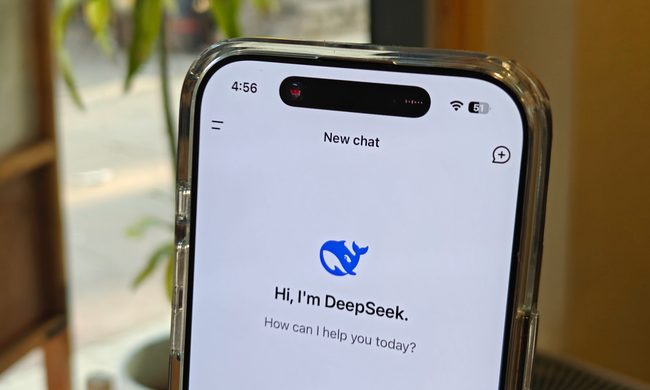
DeepSeek AI chatbot running on an iPhone.

China’s DeepSeek has a habit of showing up, uninvited, to Silicon Valley’s AI party, and this time, it has done so with the long-awaited V4 preview. The Hangzhou-based company has released its latest AI model, which beats popular American models in certain areas. 

DeepSeek has launched two new models: V4-Pro (Expert mode) and V4-Flash (Instant mode). While the former is a massive 1.6 trillion parameter model, the latter is at a more manageable 284 billion parameters. However, both of them have a one-million-token context window. 

Read more
The days of ugly solar panels could finally be over. Say hello to artsy colorful tiles!
These colorful solar panels can blend into almost any building.
ShadeCut-solar-panel

Solar panels are great for the planet, but have long been a headache for architects, homeowners, and historic preservation boards. That tension between sustainability and aesthetics may finally have a real solution.

Researchers at the Fraunhofer Institute for Solar Energy Systems ISE in Germany have developed a technology called ShadeCut, which applies colored, patterned films to solar modules that can convincingly mimic roof tiles, masonry, or even custom logo designs.

Read more
Sony’s table tennis robot made me think about what happens when AI gets a body
Ace starts as a flashy sports demo and quickly turns into a preview of AI moving from screens into factories, hospitals, farms, and homes
Ball, Sport, Tennis

I wanted to dismiss Sony’s table tennis robot as another expensive lab flex. A machine that can rally against elite players is impressive, sure, but it also sounds like the kind of demo built to make executives clap in a room where everyone already agreed to be impressed.

But table tennis is a nastier test than it looks. The ball is small, fast, spinning, and rude enough to change direction the moment it hits the table. Sony’s system faces something less forgiving than calculation. It has to see, predict, and act before the point is gone.

Read more