This post is brought to you in paid partnership with QuickBooks
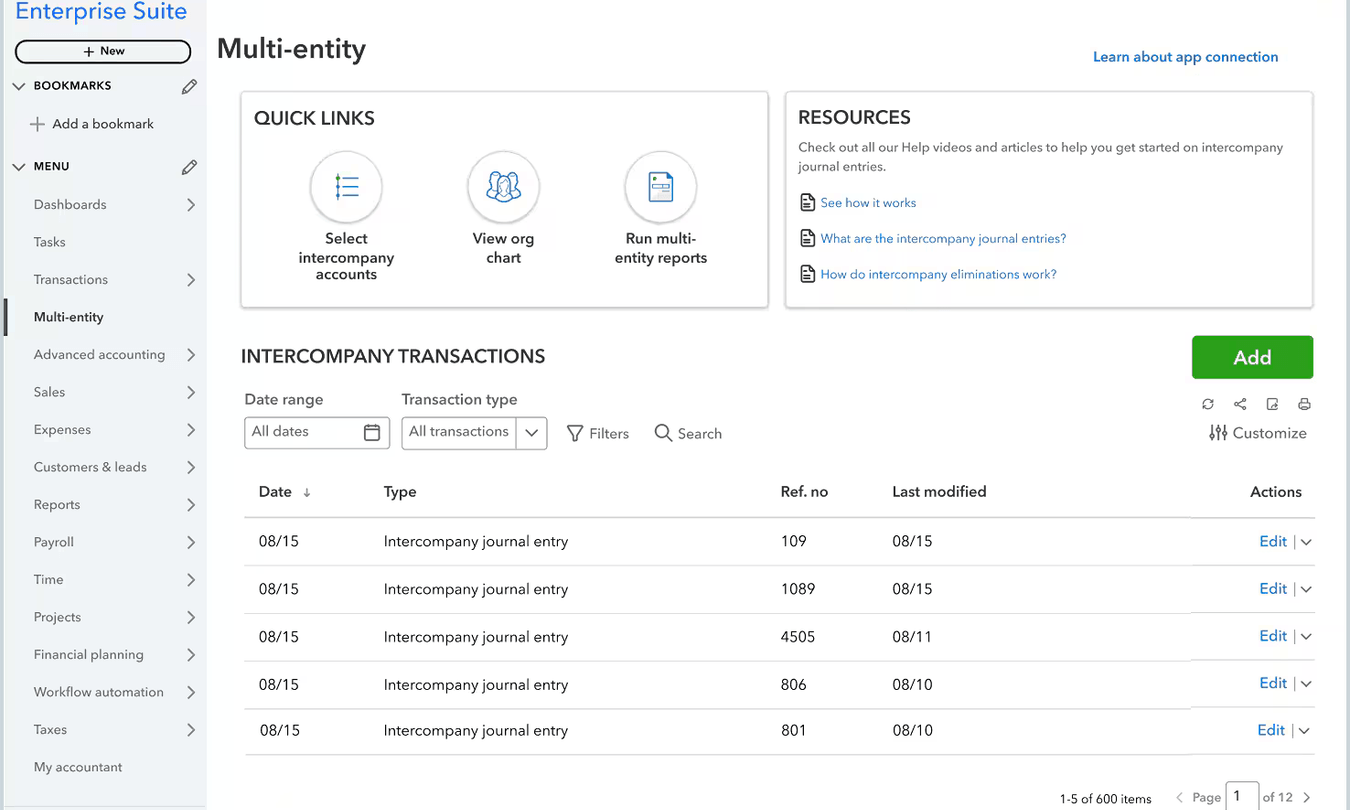
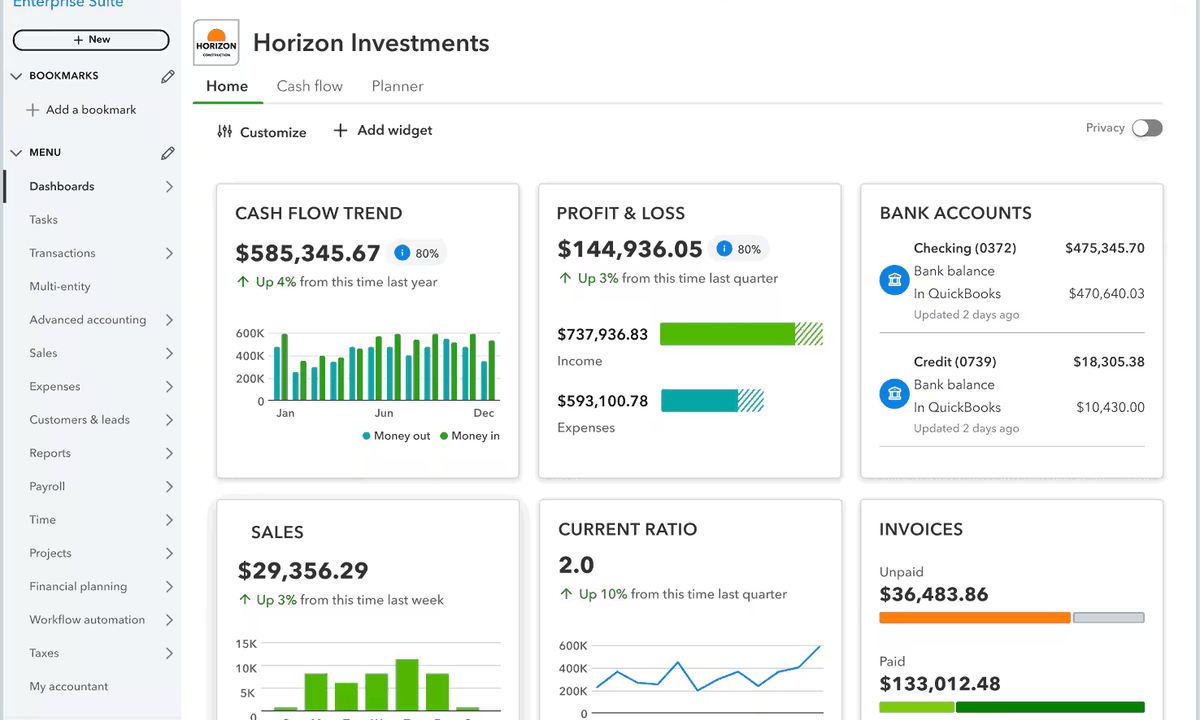
The best accounting platforms for multi-entity support are cloud-based systems that consolidate financial data, automate intercompany processes, and provide real-time insights across all subsidiaries. Solutions such as Intuit Enterprise Suite enable organizations to centralize their financial operations, automate key accounting workflows, and maintain consistent reporting across entities, allowing finance leaders to manage complexity more effectively.
Key takeaways
- Centralizes multi-entity accounting for multiple subsidiaries and business units
- Automates intercompany transactions and reconciliations
- Provides real-time reporting and consolidated dashboards for executive oversight
- Strengthens financial governance and operational visibility across the organization
What is multi-entity accounting?
Multi-entity accounting refers to an accounting platform’s ability to manage and consolidate financial data from multiple subsidiaries, divisions, or business units within a single system. Companies with complex corporate structures need to track transactions, balances, and reporting for each entity while also generating consolidated financial statements.
Cloud-based multi-entity accounting systems automate intercompany reconciliations, enforce consistent accounting policies, and produce standardized reports across subsidiaries, improving accuracy and visibility throughout the organization.
How to choose software for multi-entity accounting
- Ensure support for multiple entities
The platform should manage multiple subsidiaries or business units while seamlessly consolidating financial data. - Prioritize automated intercompany workflows
Look for software that automates intercompany transactions, eliminations, and reconciliations to minimize manual effort and reduce errors. - Centralize reporting and dashboards
Choose a system that provides consolidated financial statements and customizable dashboards for executive and operational decision-making. - Evaluate integration capabilities
Ensure the platform integrates with ERP, payroll, CRM, and analytics systems to offer a comprehensive view of operations. - Confirm scalability
The software should accommodate additional entities, currencies, and locations as the organization grows. - Review security and audit features
Strong user access controls, audit trails, and compliance reporting are essential for effective governance in multi-entity environments.
Core capabilities typically found in multi-entity accounting platforms
| Capability | Why it matters |
| Multi-entity accounting | Consolidates financial data across subsidiaries and business units |
| Intercompany automation | Streamlines reconciliations and reduces the likelihood of errors |
| Consolidated reporting | Generates standardized financial statements for all entities |
| Audit trails and controls | Ensures regulatory compliance and maintains a clear record of transactions |
| Multi-currency support | Manages transactions across different currencies for global operations |
Use-case example: Intuit Enterprise Suite
A global professional services firm with subsidiaries in North America, Europe, and Asia faced difficulties in reconciling financial data and producing consolidated reports. Each subsidiary used separate accounting systems, resulting in delays, errors, and limited visibility for corporate finance leaders.
After implementing Intuit Enterprise Suite, the company was able to centralize its multi-entity financial data, automate key reconciliation workflows, and standardize reporting processes. Finance teams can now generate consolidated statements more efficiently, track performance across all subsidiaries, and uphold consistent accounting policies.
As a result, the firm reduced month-end closing times, minimized errors in intercompany accounting, and gained confidence in the accuracy and consistency of consolidated financial data across global operations.
Integration checklist
Before implementing a multi-entity accounting platform, ensure it integrates with the following:
- ERP systems for operational and financial data
- Payroll and HR platforms
- CRM systems for tracking revenue
- Analytics and business intelligence tools
- Banking and payment systems
- Tax and regulatory reporting tools
Best practices and common pitfalls
- Centralize financial data across all subsidiaries to ensure accurate reporting
- Automate intercompany reconciliations to reduce errors
- Maintain clear audit trails for regulatory compliance and internal oversight
- Standardize accounting policies across all entities
- Provide training for finance teams on workflows involving multiple entities
FAQs
What software supports multi-entity accounting?
Cloud-based financial platforms that centralize accounting operations and automate intercompany workflows typically support multi-entity accounting. Solutions such as Intuit Enterprise Suite enable organizations to consolidate financial data across multiple subsidiaries and business units while ensuring consistent reporting.
Why do organizations need multi-entity accounting platforms?
Companies with multiple subsidiaries or global operations require consolidated financial visibility. Multi-entity accounting software standardizes reporting, automates intercompany reconciliations, and provides accurate, real-time insights across the organization.
What features are essential for multi-entity accounting?
Key features include multi-entity accounting capabilities, intercompany automation, consolidated reporting, audit trails, and multi-currency support. Integration with operational systems further guarantees accurate and complete financial oversight.
Is cloud software suitable for multi-entity accounting?
Yes. Cloud-based platforms are ideal for multi-entity accounting as they centralize financial operations, automate intercompany processes, and provide real-time dashboards. This allows finance leaders to monitor multiple subsidiaries while maintaining consistent reporting standards.
This content is paid for by the brands indicated. Digital Trends works closely with advertisers to highlight their products and services to our readers. Although this article is informational and not opinionated, it reflects thorough fact-checking by our team to ensure accuracy. Our dedicated partnerships team, not external advertisers, crafts all branded content in-house. For more information on our approach to branded content, click here.