  1. Home
  2. Gaming
  3. News

As Nvidia’s DLSS 5 attracts AI slop heat, Jensen Huang says gamers are completely wrong

Nvidia's CEO pushes back against claims that DLSS 5 makes games look like generic AI imagery.

Add as a preferred source on Google
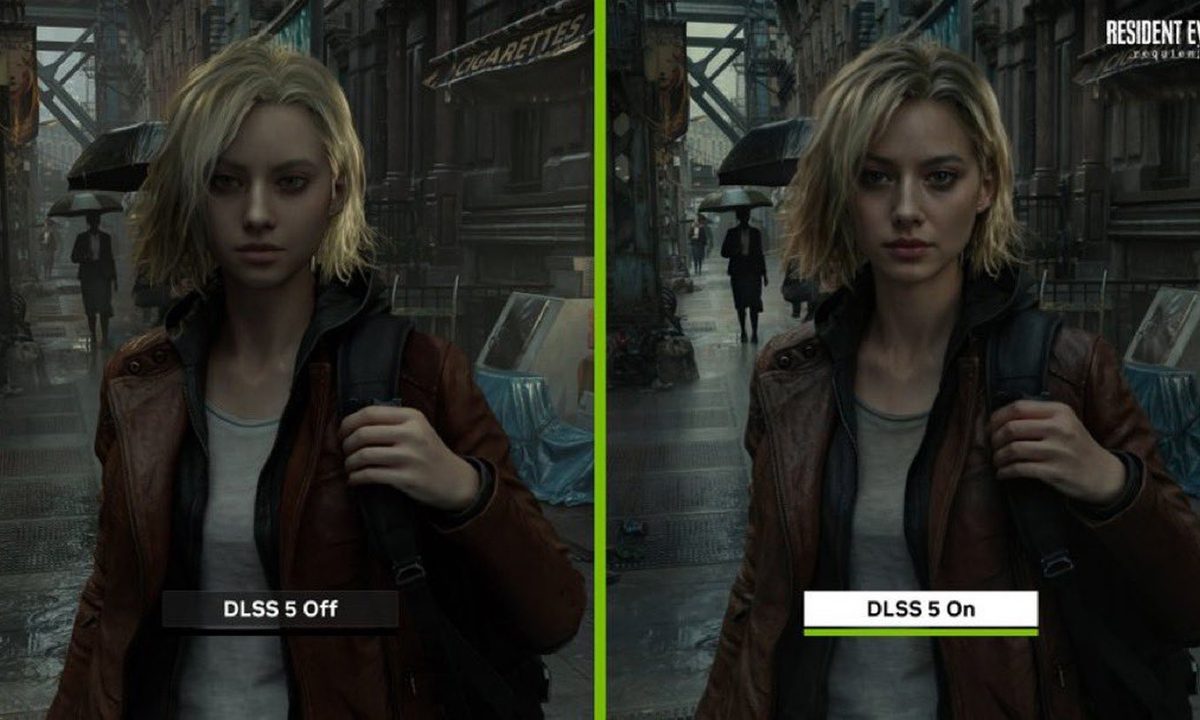
Resident Evil DLSS 5 On and Off
NVIDIA

The DLSS 5 backlash train is still rolling, and now Nvidia‘s CEO has stepped in to address it directly. At a press Q&A during GTC 2026, Jensen Huang told critics they are “completely wrong” about the technology, offering his most direct response to the outcry so far.

What exactly did Huang say?

According to Tom’s Hardware, Huang dismissed the wave of criticism, arguing that DLSS 5 is not a post-processing filter slapped on top of a finished frame. Instead, it’s a generative system that operates at the geometry level and works with a scene’s existing structure rather than overriding it.

He reinforced recent reassurances from Nvidia and Bethesda, saying that developers can fine-tune the generative AI to match their artistic style, and that the technology “doesn’t change the artistic control.” Huang also suggested that developers could use it to create wildly different looks while retaining full control over the final result.

Why are gamers so skeptical?

As we covered earlier, the backlash kicked off almost immediately after DLSS 5 was unveiled. Users on social media have largely argued that the technology produces a generic look that overrides a game’s original art direction. Much of the pushback has focused on how DLSS 5 changed the appearance of characters, with many saying the results looked closer to AI-generated imagery than the intended style.

In other words, the main concern is that the neural rendering technology could give Nvidia too much influence over how games actually look, regardless of what developers want. But Nvidia and developers like Bethesda have already pushed back on that claim, stating that the demos only offer an early look at what the technology can do and not the final implementation. DLSS 5 is set for a fall launch, so it remains to be seen how things will actually pan out.

Pranob Mehrotra
Pranob is a seasoned tech journalist with over eight years of experience covering consumer technology. His work has been…
A new Xbox controller is coming and it’s not what you’d expect
Microsoft’s next Xbox controller may be tiny, rechargeable, and cloud-ready
Xbox Controller

Microsoft apparently has plans for a new Xbox controller. But this one seems different from what we've come to know from the brand. Rather than being a typical refresh, a Tecnoblog report found that Microsoft is working on a compact controller that could be focused on the Xbox Cloud Gaming.

It's not just the design that's getting a touch-up, as the leak documents also suggest improved connectivity for a cloud-first setup.

Read more
AMD is bringing FSR 4.1 upscaling to older GPUs like an elixir of new gaming life
Your older Radeon GPU is about to get a serious visual upgrade, and it won't cost you a thing.
AMD RX 7800

If you own a Radeon RX 7000-series GPU and have been watching Nvidia DLSS users enjoy buttery smooth, sharp gameplay with a hint of envy, your wait is almost over. 

AMD's Jack Huynh, Senior Vice President and General Manager of Computing and Graphics, confirmed in a tweet that FSR Upscaling 4.1 is coming to RDNA 3 GPUs this July, with support for over 300 games right out of the box.

Read more
The Steam Controller will scream if you drop it, and I don’t know how to feel about it
Valve’s new controller does not suffer drops in silence
Steam Controller Top view

Valve’s new Steam Controller has a hidden Easter egg that makes it scream when dropped, which is funny until you remember it costs $99. Users have been sharing clips of the controller playing the iconic Wilhelm scream after being dropped from around three feet while in Big Picture Mode. It does not trigger every time, with one widely shared post claiming it happens roughly once every five or six drops.

How does the Steam Controller scream without a speaker?

Read more