

Somewhere out there is a person who still quietly mourns the death of the physical keyboard. They’ve mostly come to terms with their touchscreen. They’ve adapted, like everyone else. But every now and then, mid-fumble on a glass slab, the feeling comes back. The Clicks Communicator is being built for that person, and after months of dummy units and carefully managed hype, it finally has a timeline worth taking seriously.
The BlackBerry faithful never really left
The Clicks Communicator is born from grief, the specific lingering grief of people who genuinely loved physical keyboards and watched the entire industry abandon them without a second glance. The team behind it has been loud about that nostalgia, and there’s something both endearing and slightly mad about betting real money on it. They showed up to CES in January with dummy units, phones that looked the part but couldn’t do anything, and a promise to ship before the year was out.

What’s changed now is that there’s a real schedule attached to the ambition. Working units are expected to be in hand by June, which, in the world of hardware startups, is the moment when everything either feels legitimate or starts to unravel. May brings software demos and interface previews, essentially the team making their case for why this thing is worth caring about beyond the keyboard’s novelty.

The second half of the year is where it gets tricky. Certifications and regulatory testing are the quiet graveyard of promising hardware projects. It’s slow, expensive, and completely outside a company’s control once the process begins. The Clicks team knows this. Scheduling it honestly into Q3 rather than glossing over it — that’s the right call. If all of that holds, devices start shipping to reservation holders in Q4. Which, for a phone announced at the start of the year with no working prototype, would be an impressive turnaround.
So, who actually wants this thing?
At $500, the Clicks Communicator is not a budget experiment; it’s a considered purchase. And what you’re getting for that money is a mid-range Android phone whose main distinguishing feature is its physical keys. The specs aren’t going to make anyone’s jaw drop. The integration with Niagara Launcher is a nice touch, but it’s not exactly a killer feature.
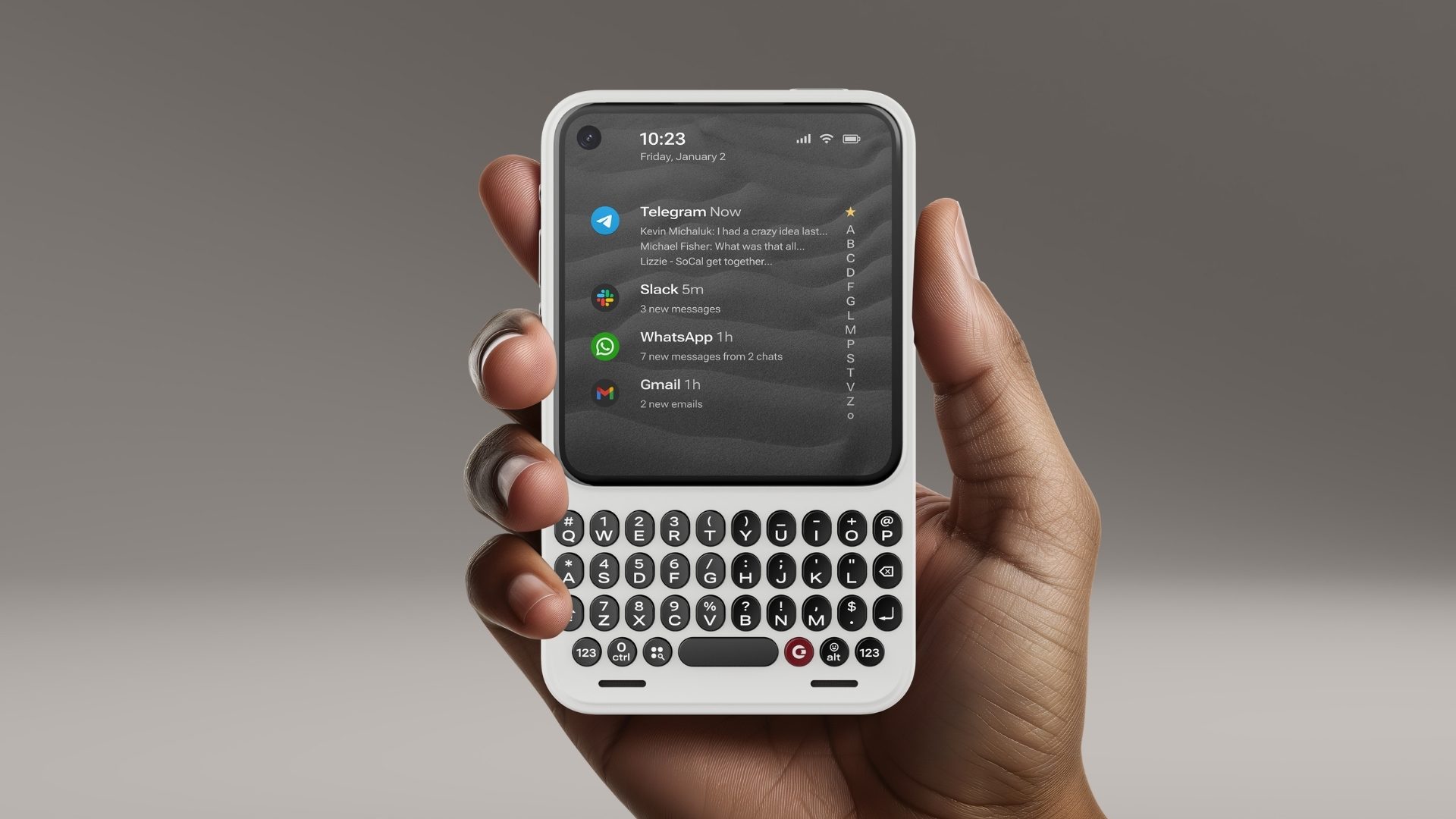
The pitch, as best summarized, is this: maybe your main phone is exhausting. Maybe the infinite scroll and the glass slab and the invisible keyboard are all doing something to your attention span that you’d rather not think about too hard. The Communicator offers a kind of deliberate downgrade, a secondary device you pick up when you want to type something real, reply to a message properly, feel like you’re doing something rather than just reacting. It has a SIM slot, so it can function as a standalone phone if you want. But the soul of it is as a companion, something you reach for instead of your main device when the stakes are low enough.
A weird product for a very real feeling
The easiest thing to do is laugh a little at this phone. Physical keyboard on a $500 Android device in 2026, aimed at people mourning a form factor that the market definitively moved on from over a decade ago. It’s an odd pitch. But there’s also something refreshing about a piece of hardware that doesn’t pretend to be the future. It doesn’t have AI baked into every corner. It’s not trying to replace your laptop or project holograms onto your kitchen counter. It just wants to let you type with your thumbs on something that pushes back.

Whether that’s enough to justify the price and the wait is a question only the people with one on reservation can really answer. But at least now there’s a date on the calendar. For the QWERTY faithful, that’s more than they’ve had in a long time.


