  1. Home
  2. Emerging Tech
  3. News

KitKat has a special chocolate wrapper that cuts off your phone from the outside world

KitKat turned its iconic slogan into a signal-blocking chocolate wrapper!

Add as a preferred source on Google
kitkat-break-mode-wrapper-faraday-cage
Ogilvy Colombia / KitKat

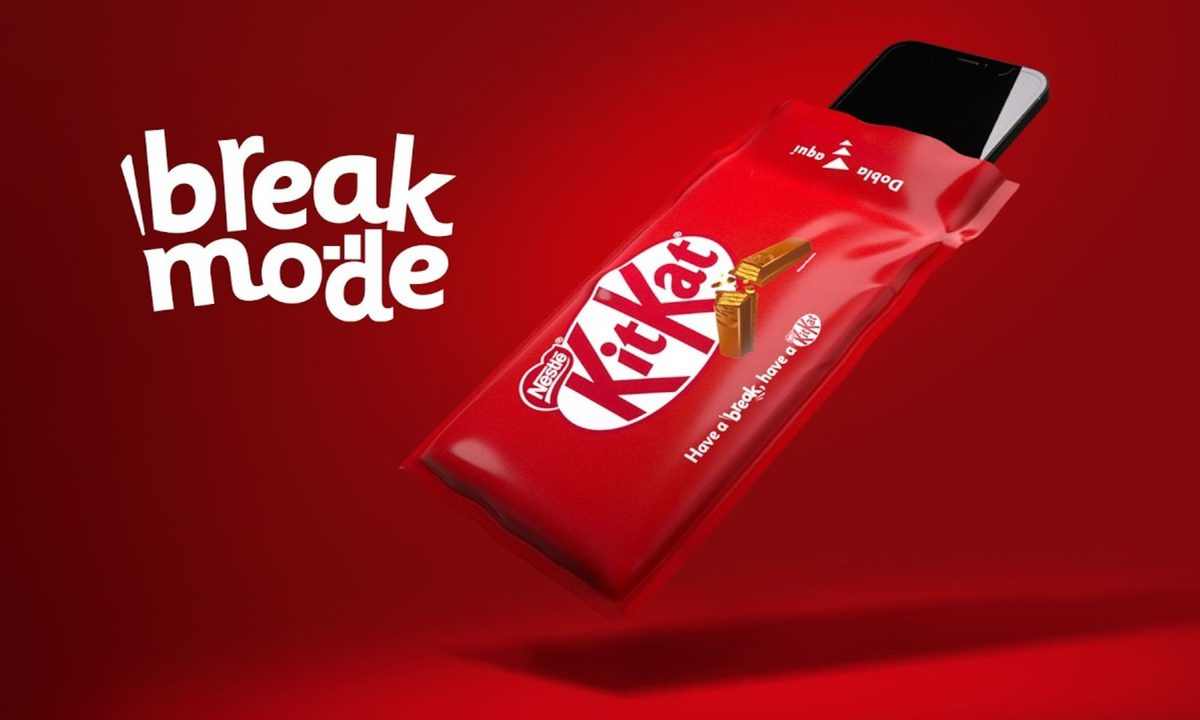
You know that feeling when you really need a break, but your phone keeps buzzing anyway? KitKat heard you. The chocolate brand, in collaboration with creative agency Ogilvy Colombia, has unveiled something called Break Mode, a KitKat wrapper that doubles as a Faraday cage for your phone.

A Faraday cage, for the uninitiated, is a conductive enclosure that blocks electromagnetic signals. The technology has traditionally lived in medical labs and data security facilities. Now it lives in a red chocolate wrapper, which is honestly something nobody saw coming.

How does KitKat’s Break Mode wrapper actually work?

The wrapper looks like an oversized KitKat envelope where you can put your phone. Once it is in there, all signals are completely cut off, including calls, 4G and 5G connectivity, Bluetooth, and GPS.
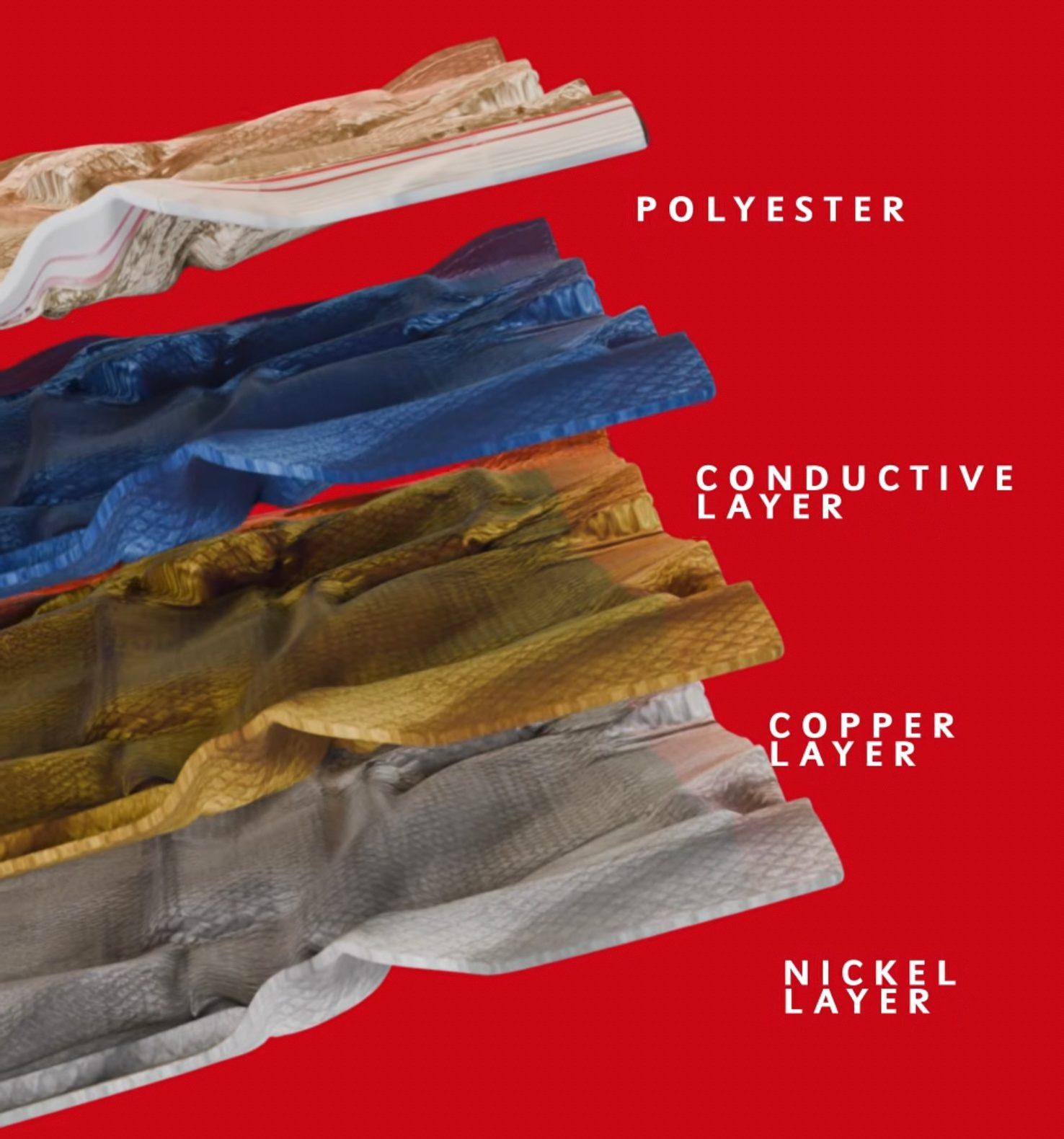
The magic happens in the layers of the wrapper. Copper serves as the primary conductive material, polyester layers give it structural integrity, a polypropylene outer coating handles durability, and a precision-engineered sealing mechanism makes sure no signal sneaks through.

Recommended Videos

Ogilvy tested it under rigorous conditions, including RF signal attenuation, cellular signal strength, and electromagnetic isolation checks, confirming 100% effectiveness. The packaging is also built to last around a year, and its materials can be separated and recycled responsibly afterward.

Can you actually buy the KitKat Break Mode wrapper?

Not quite yet. Break Mode was introduced at Panama’s Expo Tech conference, a concert, and a university campus, giving people a taste of the experience directly. Its commercial viability is still being evaluated. So for now, it remains a very clever marketing concept.

The food-tech crossover is clearly becoming its own genre, and KitKat is not the first brand to blur the line between food and technology. A lollipop that plays music directly in your head when you bite it made headlines at CES 2026 for exactly the kind of wild reason you would expect. Meanwhile, researchers have also explored using ChatGPT to evaluate the sensory qualities of food like chocolate brownies.

Manisha Priyadarshini
Manisha is a Writer at Digital Trends, covering the latest in tech, science, AI, gaming, and entertainment. As a Computer…
Every call you make is drawing a map of your city — here’s who watching
Apple Maps Suggested Places screenshots.

You don’t actually need to share your location for your city to figure out where you are. Every call you make and every message you send, quietly connects to a nearby network antenna. Now multiply that across millions of people doing the same thing every day, and what you end up with isn’t just data — it’s a living, moving picture of how a city really works. That’s exactly what researchers at the University of Córdoba have managed to tap into with a new tool designed to interpret those patterns.

The tool that watches without really watching

Read more
Snapchat’s new ad format makes AI chatbots sound like salespeople
Snapchat is letting brand sponsored chatbots move into the Chat tab
Snapchat

AI chatbots have spent the past few years handling refunds, tracking orders, resetting passwords, answering banking questions, booking appointments, and helping brands trim support teams. Now, Snapchat’s AI Sponsored Snaps suggest their next stop could be sales.

Snap has introduced AI Sponsored Snaps, a new ad format that brings brand-run AI agents into Snapchat Chat. Users can open these ads, ask questions, get suggestions, explore services, and move toward actions such as app installs or purchases without leaving the conversation.

Read more
This tiny brain implant could treat depression at home
A tiny brain implant and a baseball cap might be the future of treating depression.
Motif brain implant with cap

Nearly 3 million Americans suffer from treatment-resistant depression, meaning antidepressants simply don't work for them. Motif Neurotech wants to change that with a tiny brain implant, and the FDA has just greenlighted a human trial to test it.

As reported by Wired, the Houston-based startup has developed a tiny device that sits in the skull, just above the brain's protective membrane. It targets the part of the brain responsible for high-level thinking that tends to go quiet in people with major depressive disorder. The implant delivers precise electrical pulses to wake that network back up.

Read more