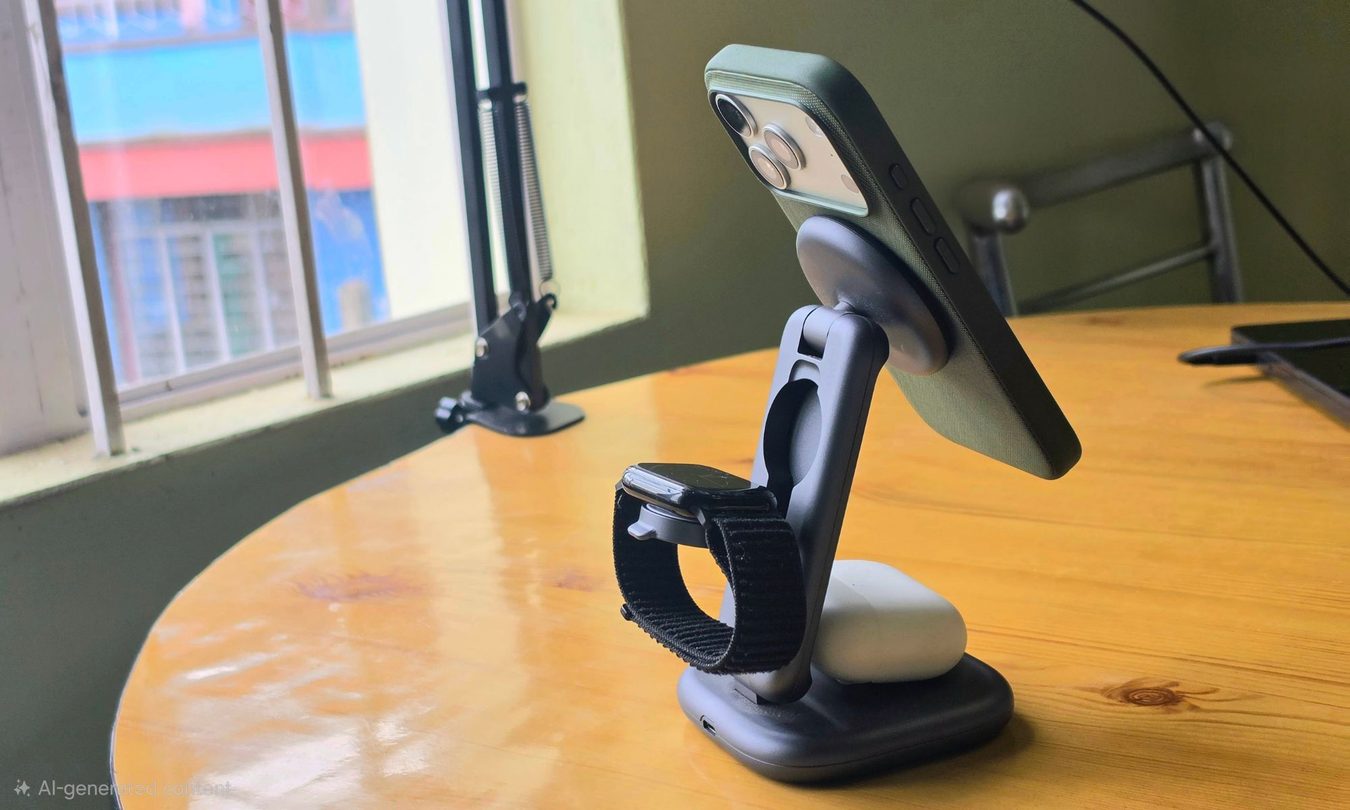

“Satechi's folding charger takes its own route to speedy convenience, and it's an appealing concoction for the right wireless charging audience.”
- Qi 2.2 charging at 25W output
- Convenient foldable design
- Solid build and mounting stability
- 45W charger comes bundled
- You'll feel its heft
- Asking price is premium
- Squarely targeted at Apple gear
Quick Take
Wireless charging gear has been out in the market for years, but finding one that strikes the right balance between portability and power has usually been a tale of functional compromises. The Satechi 3-in-1 Foldable Wireless Charging Stand (with Qi2 25W) is one of those rare products that can meaningfully rid you of the cable mess. And if you’re knee deep in Apple’s ecosystem, this one deserves a place in your backpack or desk.
The state of Qi2 charging has been pretty haphazard in terms of adoption, and before the gadget-makers could fully deploy it, Qi2.2 happened. Apple was already there, and among the peripheral makers, Satechi was among the first to lap up the progress. The result is a 3-in-1 multi-device wireless charging stand that matches the 25W speeds previously locked behind Apple’s proprietary MagSafe walls.
It isn’t the smallest charger of its kind, but it’s arguably the most rewarding one. It stands taller than most chargers of its kind that I have tested so far, and its folding design makes it practical to carry in your backpack for daily commutes. It’s not quite a steal deal at $129.9, but if you’re willing to pay for top speeds, uncompromised build quality, and a carry-around design, this one is a solid pick.
Satechi 3-in-1 foldable charging stand specs: What you get?
| Main Wireless Charging | Qi2 Certified (Up to 25W Fast Charging for iPhone) |
| Apple Watch Charging | Up to 5W Fast Charging |
| AirPods Charging | Up to 5W |
| Input Power | 45W USB-C Power Adapter (Included) |
| Design | Foldable with vertical stand |
| Adjustability | Supports Portrait and Landscape viewing; 160° viewing angle |
| Materials | Soft silicone cushioning for device protection |
| Dimensions | 3.5 in x 3.5 in x 6.2 in (8.9 cm x 8.9 cm x 15.8 cm) |
| Weight | 398.9 g |
| Global Ready | Includes interchangeable international plug adapters (US, EU, UK) |
| Model Number | MN25STI02 |
Satechi 3-in-1 foldable charging stand design and build quality: The real winner
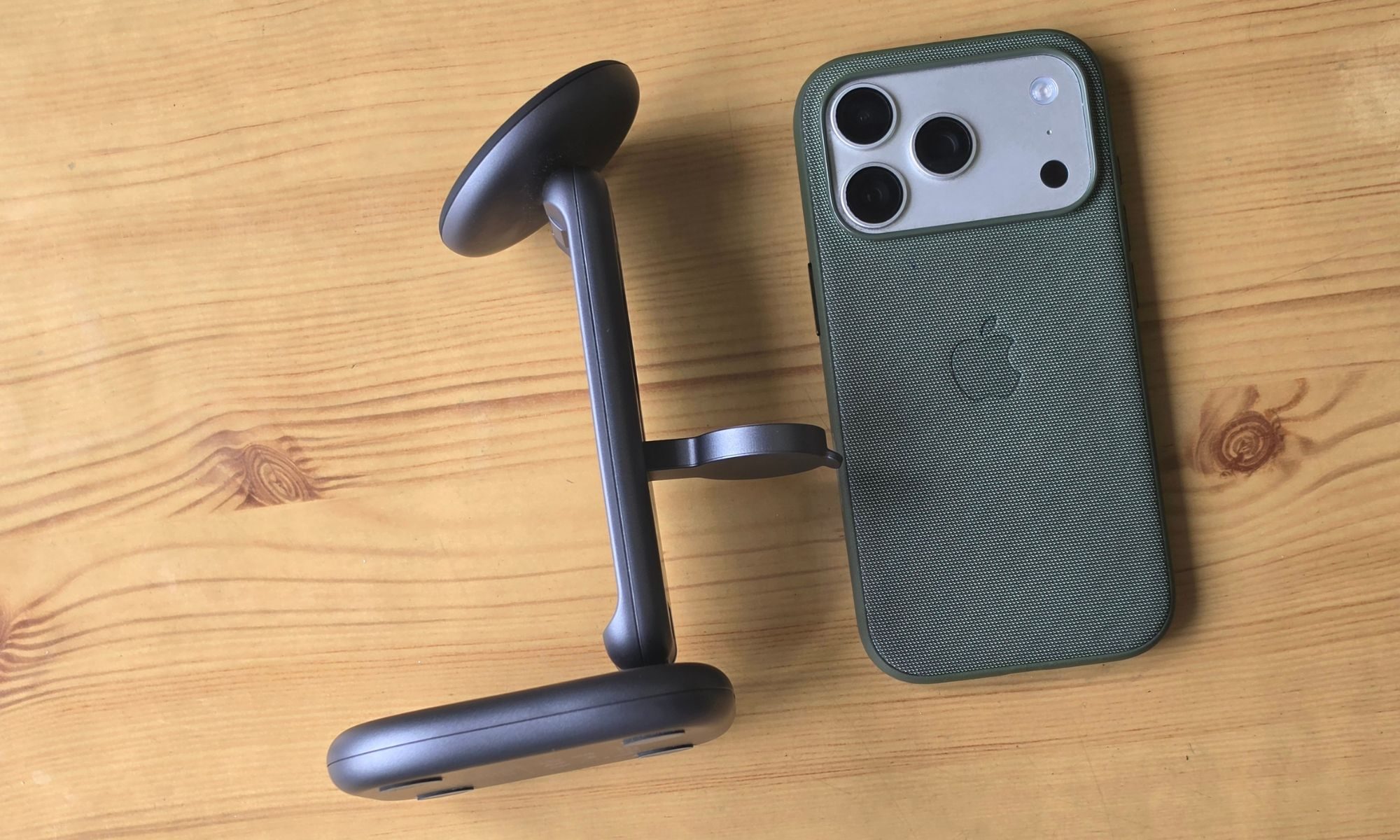
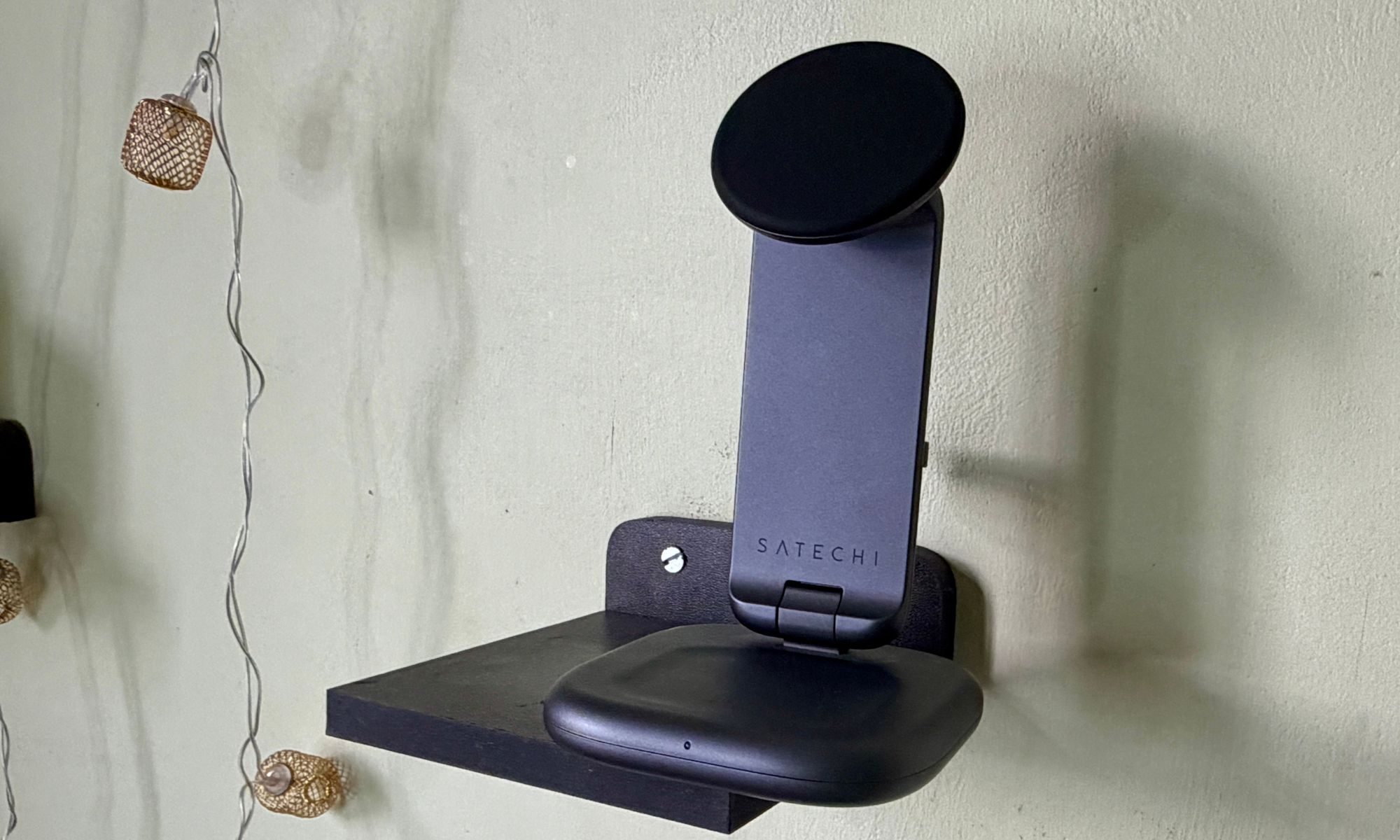
In the wireless charger space, Satechi has always been the brand that looks like it belongs in an architect’s office rather than next to your gaming chair. This 3-in-1 stand continues that streak with a gunmetal-gray finish that complements the titanium of a modern iPhone and the brushed aluminum of a MacBook better than most plastic-made rivals I’ve tested.
The matte texture resists fingerprints in a way I’ve come to appreciate after years of wiping greasy thumbprints off glossy chargers. The edges are chamfered just enough to feel deliberate but not so much that they look fussy. And yeah, they look and feel every bit as premium as you would expect from a $129.9 charger.
What I’m not a huge fan of is the heft. At 399 grams, this one feels like a tank compared to a bunch of folding wireless chargers currently eating dust in my cabinet. While companies like ESR and Kuxiu are racing to make their chargers as light as a stack of credit cards, Satechi went the opposite direction, and after a few weeks of daily use, I’m convinced they made the right call.
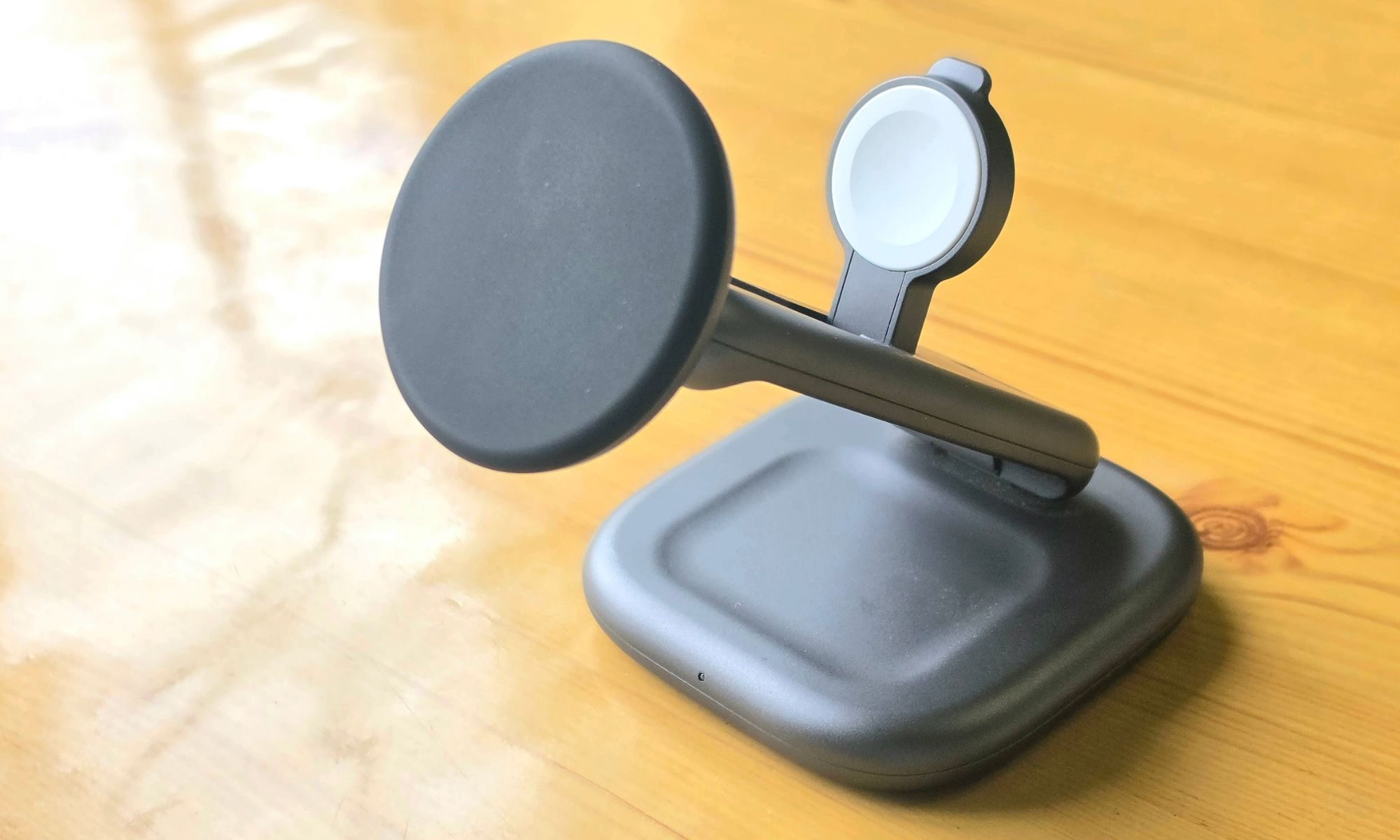
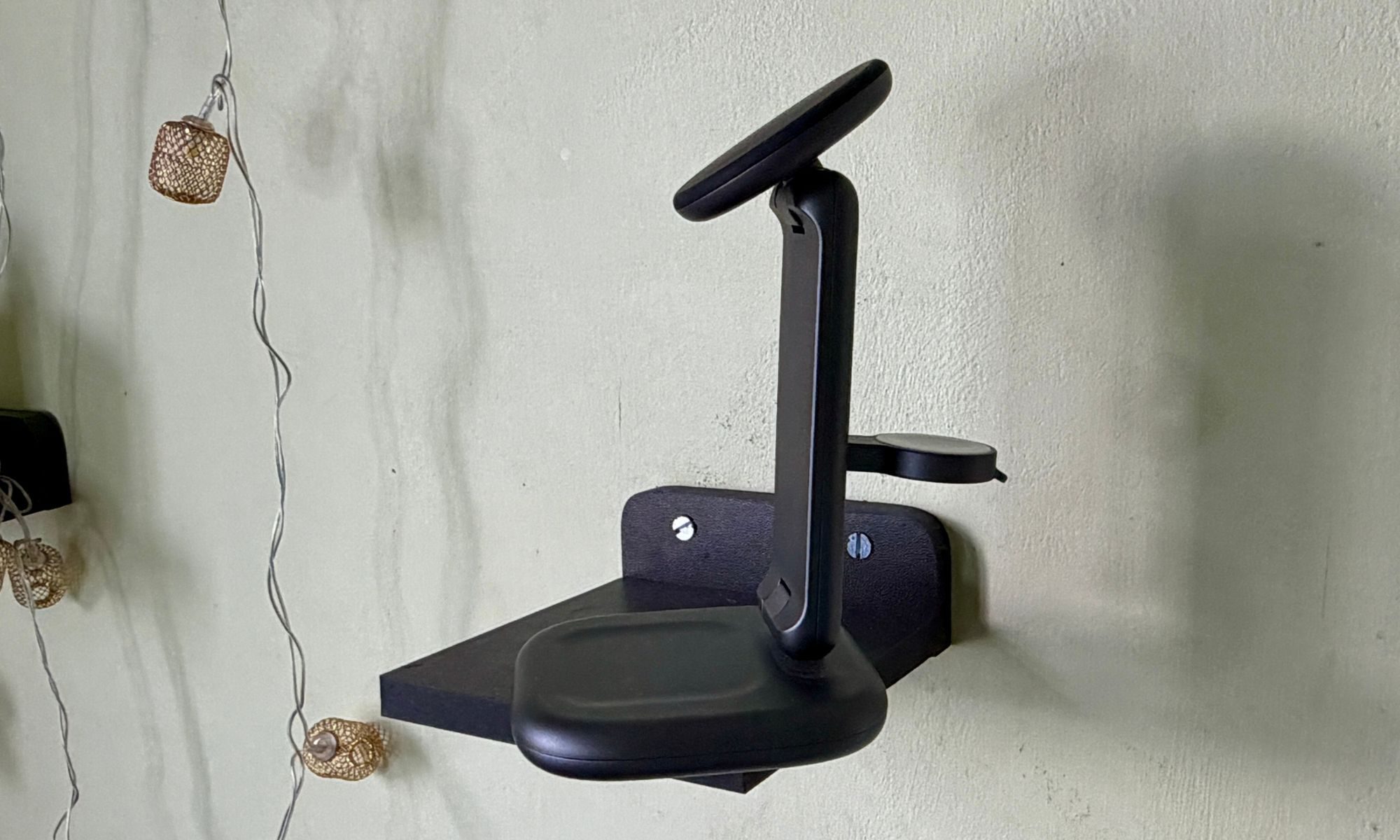
There’s a specific satisfaction in the weighted hinges here. When you adjust the viewing angle, the stand stays exactly where you put it. It doesn’t drift, it doesn’t sag overnight, and it doesn’t betray you with a sudden flop when you reach for your phone in the morning. More importantly, it doesn’t tip over when you tap the screen.
I tested this with a one-handed FaceTime call, frantically tapping at the screen to mute and unmute, and the stand didn’t budge. Ounces matter more than grams, and Satechi’s charging stand is a fantastic exhibit of this engineering choice.
Where this design really wins is the elevation. Most foldable chargers sit low, forcing you to crane your neck downward to read a notification or check the time. This one lifts the phone high enough that it sits roughly at eye level for a seated adult. This might sound like a trivial design element, but once you’ve spent eight hours hunched over your desk, you’ll feel the ergonomic benefits firsthand.
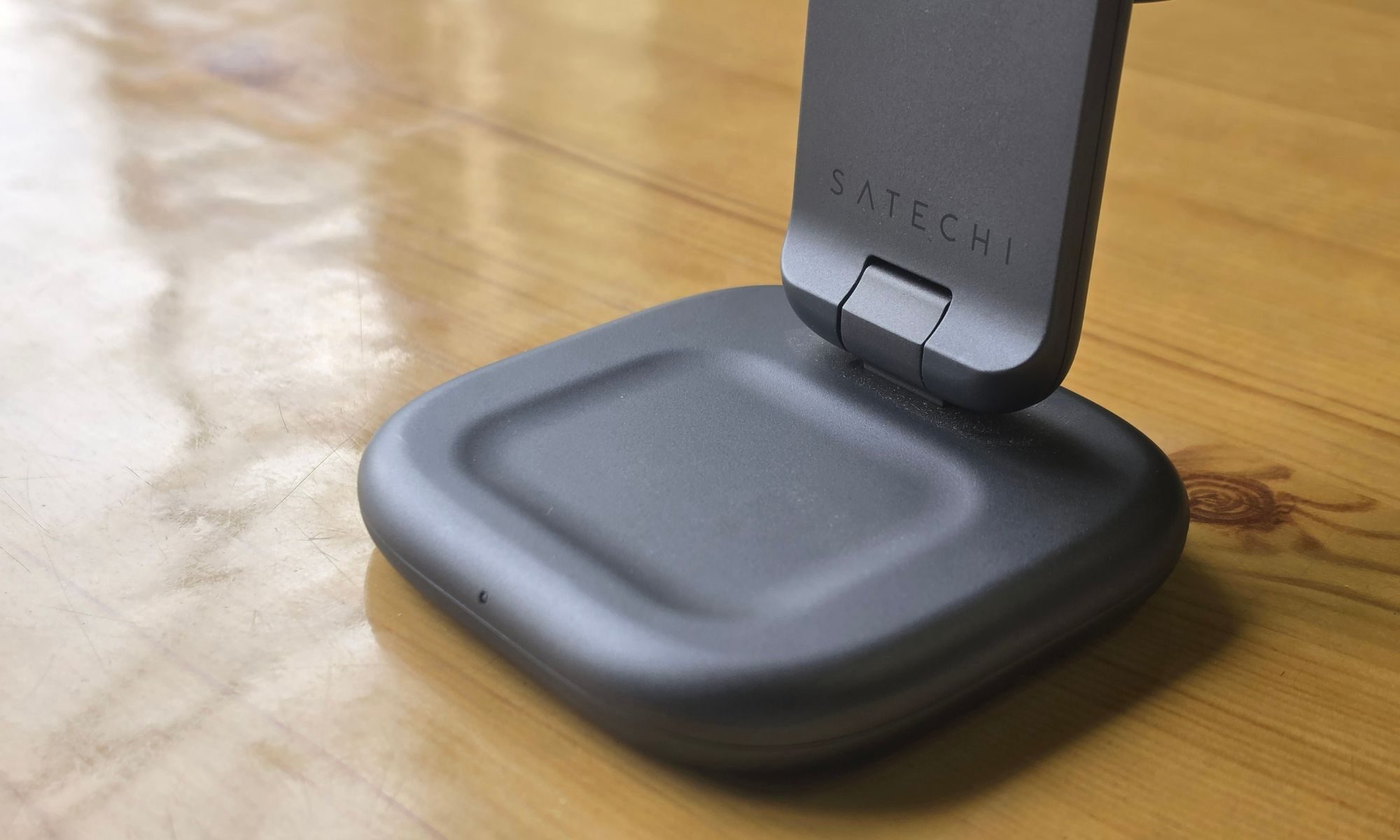
The magnetic pad also features a 160-degree tilt, which gives you a substantial range for dodging glare from a window or hitting the perfect angle for a video call. I’ve been using it as my standby mode display while working, and the combination of height and tilt means I can glance over and read a calendar reminder without breaking my flow. It’s the kind of ergonomic detail you don’t notice on a spec sheet but feel within an hour of use.
Satechi 3-in-1 foldable charging stand performance: The surfaces make sense
Satechi didn’t just iterate on the look. They completely overhauled the internals to support the Qi2.2 standard. The result is a charger that competes with (and in some cases, beats) Apple’s own first-party offerings.
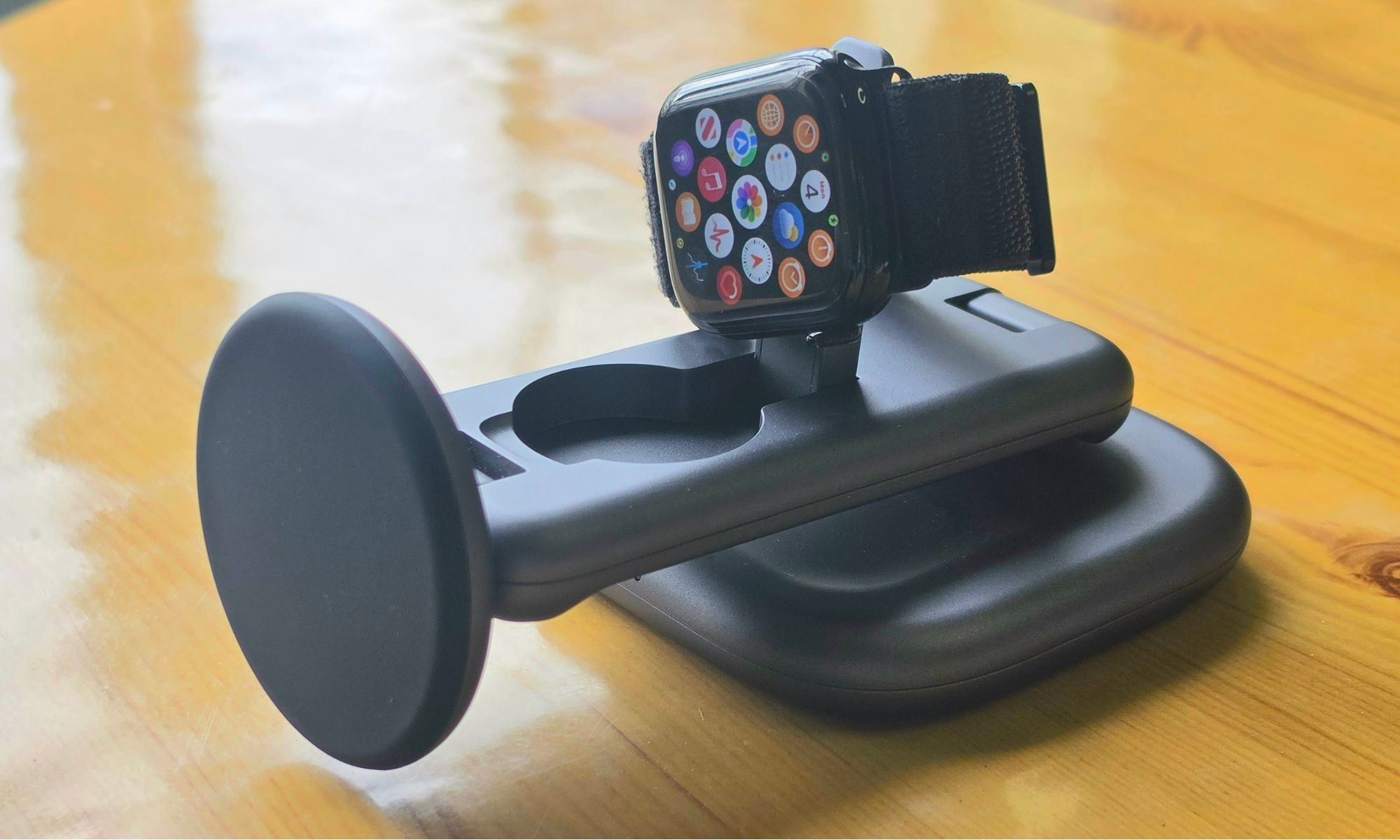
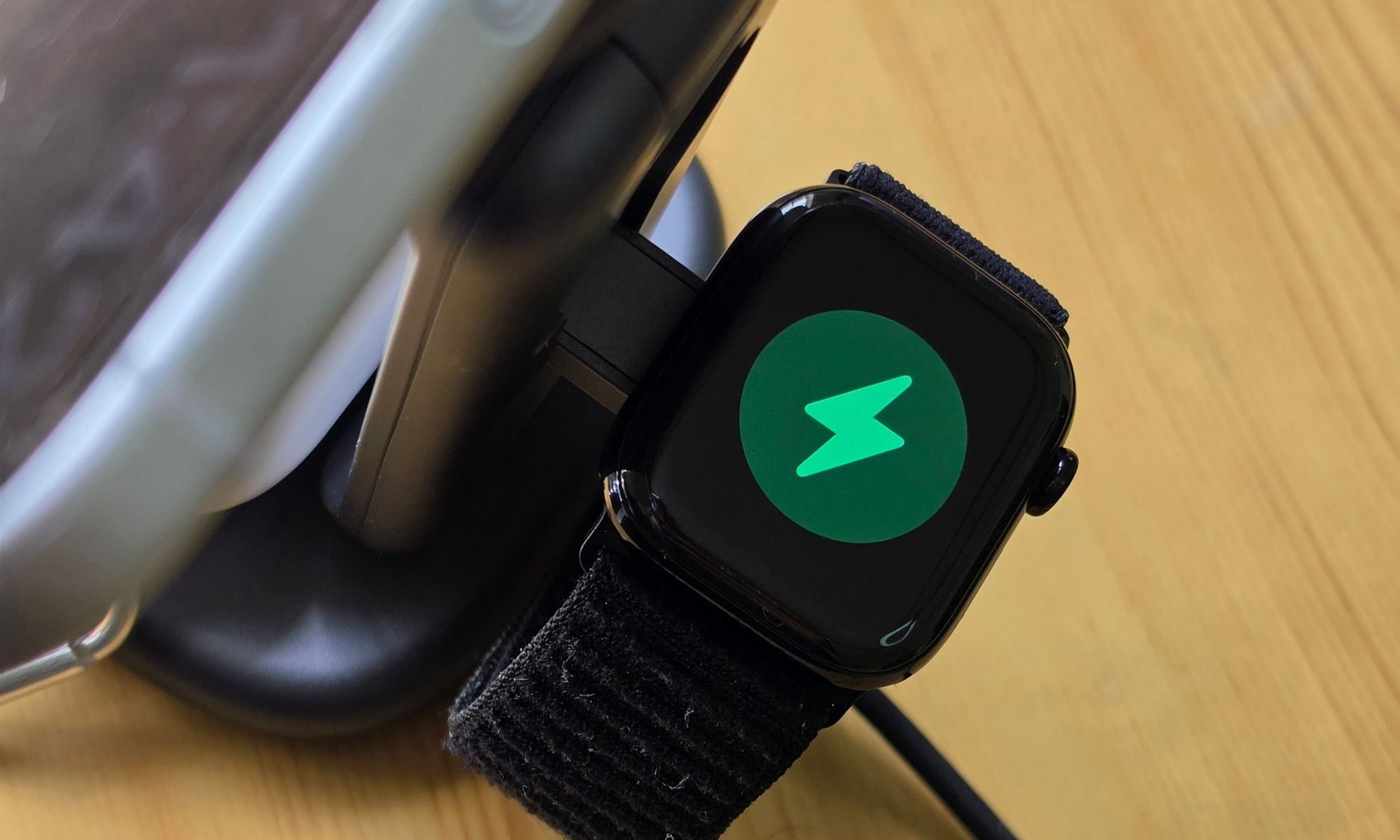
For years, wireless charging was a polite euphemism for slow. If you weren’t using an official Apple puck, you were capped at 7.5W and watching your battery percentage tick up at an excruciatingly slow pace. This stand breaks that ceiling, delivering 25W wireless top-up power to the iPhone, 5W to the Apple Watch, and 5W to the AirPods.
In practical terms, that’s enough power to take a phone from 20% to roughly 60% over a lunch break. Tucked behind the main stem is a fold-out module for the Apple Watch. It’s a clean bit of engineering that stays out of sight when you don’t need it and pivots forward when you do. I appreciate that it doesn’t add visual clutter when I’m only charging my phone.
The magnets here are remarkably strong. I tested it with several MagSafe-compatible cases, including one from Apple and the other one courtesy of Spigen. In each case, you feel the satisfying magnetic lock as the phone snaps into place confidently. It isn’t going to slide off if your desk gets bumped, and it doesn’t require the surgical precision that some weaker magnetic chargers demand.
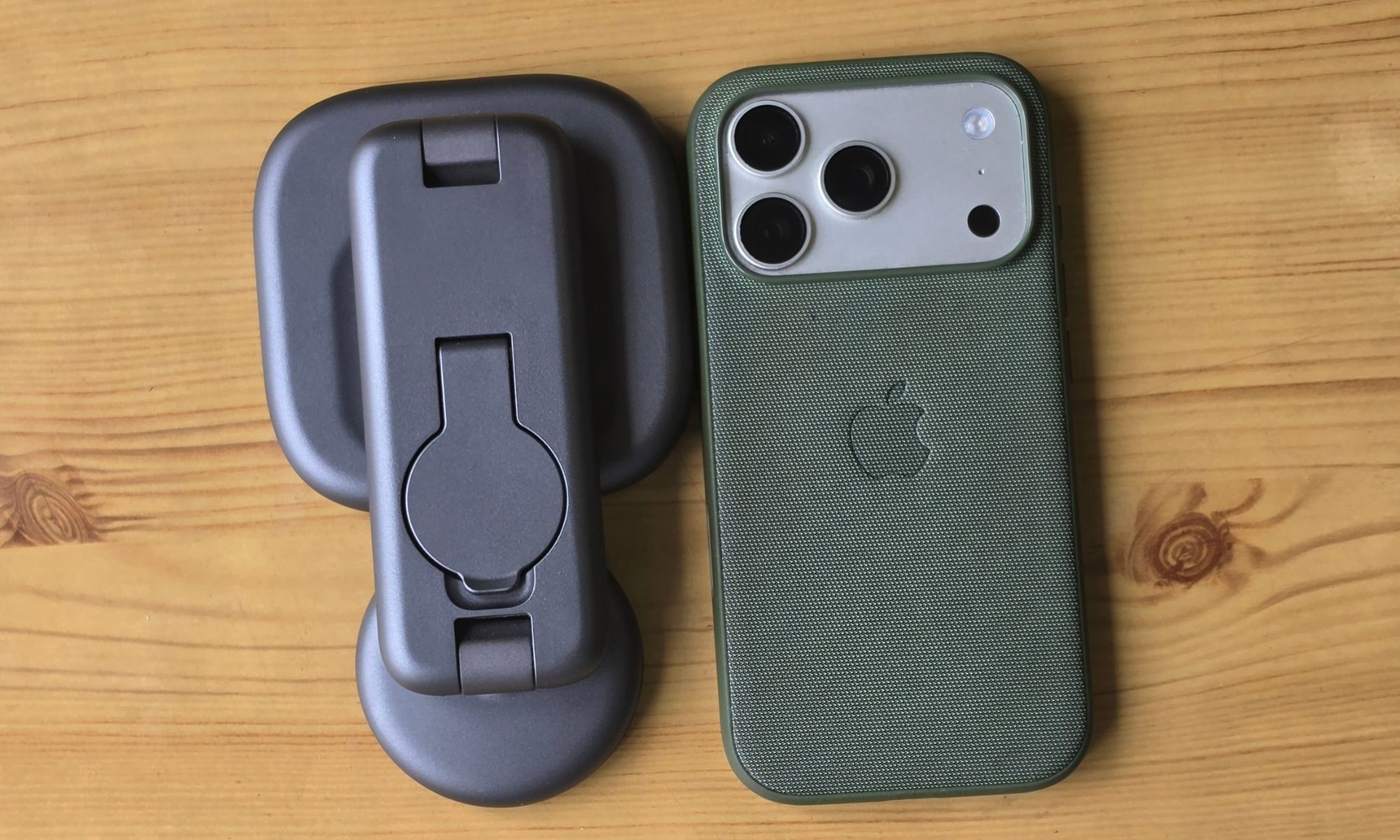
The stand intelligently distributes power across all three pads. Plug in just the phone, and it gets the full 25W. Add the watch and AirPods, and the charger balances the load without throttling the phone’s uptake dramatically.
Satechi 3-in-1 foldable charging stand performance: Doesn’t overshoot, doesn’t underwhelm
In my testing, this is the closest you can get to wired-like speeds without fumbling with wires and bricks. I ran a series of tests with my iPhone starting at exactly 10% battery, and the Satechi stand consistently brought it to 50% in roughly half an hour. For comparison, a 7.5W Qi puck will usually take no less than 90 minutes to achieve that top-up level.
The difference is huge, and it almost changes your perception about wireless charging.
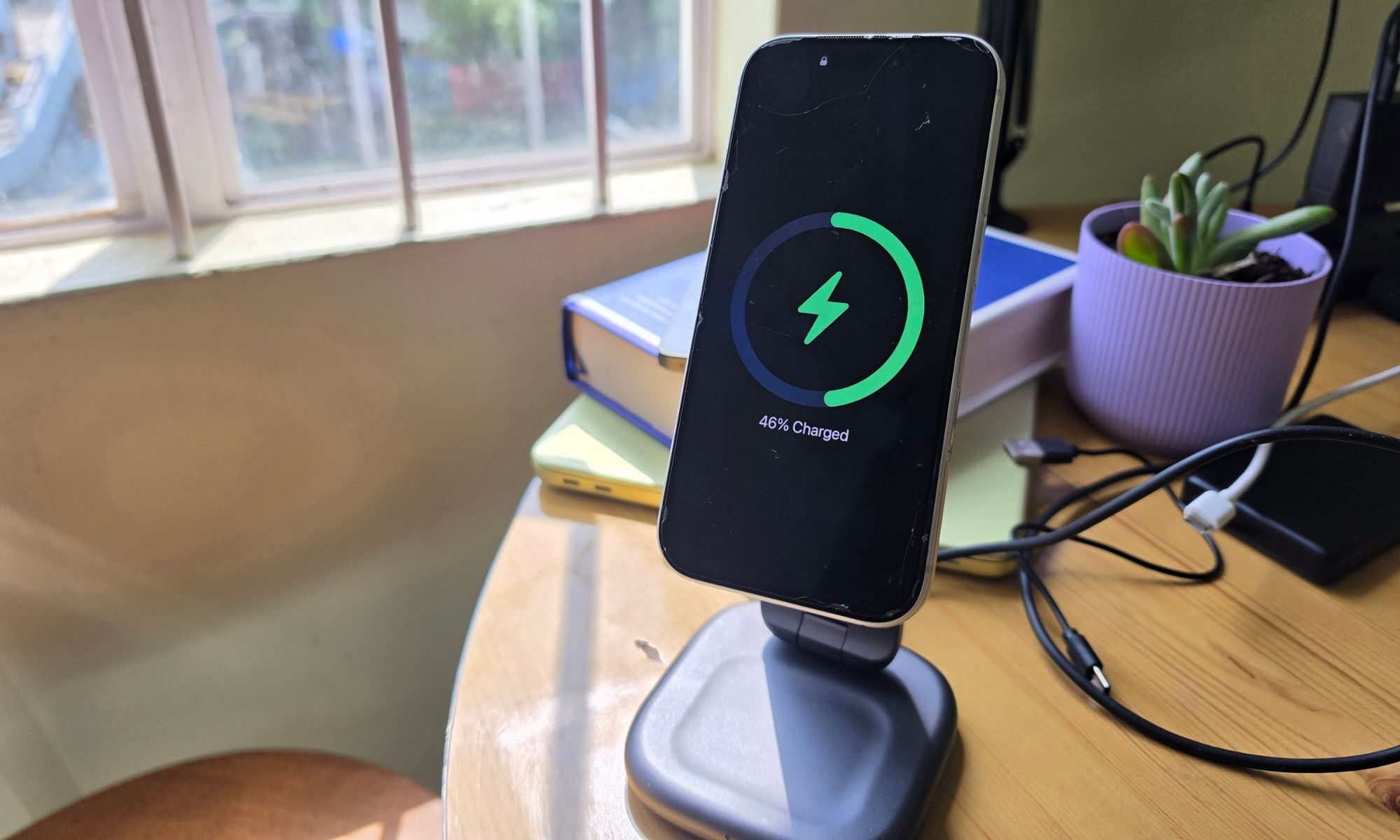
It’s enough to top off an iPhone significantly during a 30-minute lunch break, which was previously impossible with standard Qi chargers. For anyone who’s ever frantically searched for a Lightning cable in a coffee shop with a depleting battery, this is a meaningful lift.
One of the biggest engineering hurdles for 25W wireless charging is heat. Satechi has balanced the power draw well. While my iPhone got noticeably warm during full-speed sessions, I didn’t run into any on-screen cool-down warning messages while using it.
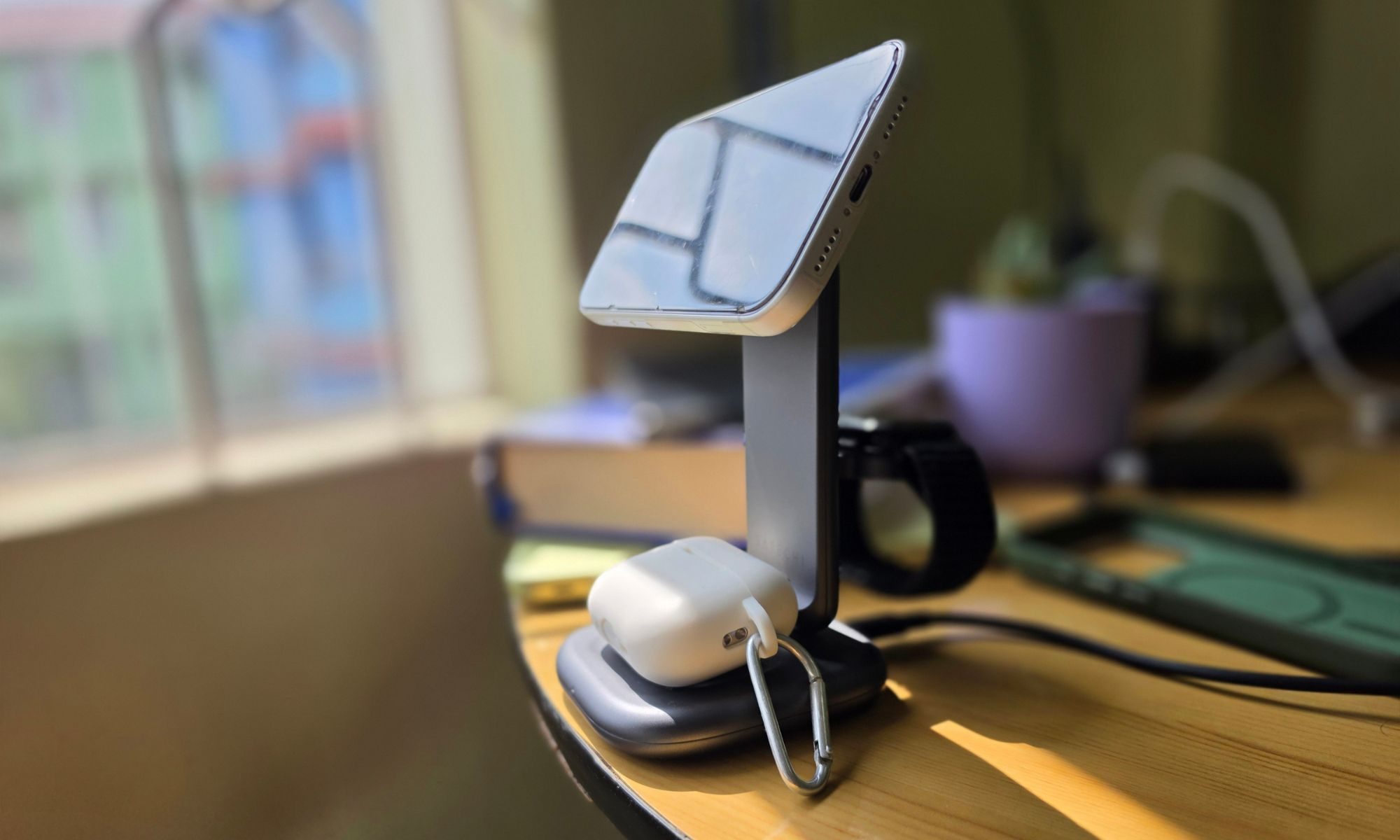
I’d still recommend popping a thicker case off if you’re trying to hit those peak speeds in a warm environment, but that’s a physics problem, not a Satechi problem. The internal heat management here feels well-tuned. Interestingly, the Samsung Galaxy S26 Ultra ran cooler (with a transparent magnetic case applied on top) than the iPhone 17 Pro during the charging process.
That charging brick comes bundled. Yay!
A major pet peeve of mine is when companies sell a 3-in-1 charger and then ship it with no wall adapter, expecting you to source your own power brick. It’s the Apple scenario all over again. Satechi mercifully avoids this.
In the box, you get a 45W AC power adapter and a sufficiently long USB-C cable. I’m utterly vexed by short bundled cables that force my charger to live within arm’s reach of the power outlet. Satechi, thankfully, avoided that frustration. It’s a small product decision, but somehow feels like a luxury in a sea of aggressive cost-cutting measures across the segment.
Should you get the Satechi 3-in-1 wireless charging stand?
If you’re someone who lives deep in the Apple ecosystem and values a clean, intentional workspace, the answer is a confident “yes.” This stand is for the person who wants their iPhone to be a functional part of their desk setup and desires a nightstand to feel as organized as their home office.
If you’re, however, a “travel light” enthusiast who’s iffy about the weight in your small backpack, you might want to skip this one. At nearly double the heft of its closest competitors, the Satechi is a deliberate choice that prioritizes stability over portability. There are smaller, lighter, cheaper options that will absolutely get the job done
It’s a choice between weight and on-desk stability (and phone height), for the most part. Personally, I’ll take the extra half-pound for a stand that doesn’t wobble when I’m trying to frantically hit the snooze button on an early morning alarm.
There’s also the matter of the ecosystem to consider. If you’re not running an iPhone with MagSafe, an Apple Watch, and AirPods, you’re paying for redundant power. Android users with Qi2-compatible phones can still benefit from the 15W charging on the main pad, as long as you have a Google Pixel 10 series phone, or slap a magnetic case on the rest.
Why not try
If the Satechi wireless charging stand doesn’t quite fit the budget, there are a few well-rounded and more affordable options worth considering. Take a look:
Kuxiu X40 Turbo 25W: If portability is your North Star, this is the one. It folds into a tiny 64mm square and weighs only 148g, which is essentially “I forgot it was in my bag” territory. It lacks the desk-presence and ergonomic height of the Satechi, but for digital nomads and frequent travelers, it’s the better fit. Also, it’s significantly cheaper at $100.
ESR CryoBoost Foldable 3-in-1: Another $100 alternative that undercuts its Satechi rival. It’s lighter, considerably cheaper, and includes active cooling tech that gives it a slight edge in sustained charging sessions. It sits much lower to the desk, though, which makes it better suited for a nightstand than a primary work setup.
Belkin BoostCharge Pro 3-in-1: If you don’t care about folding and just want some aesthetic oomph on your desk, this one is a terrific choice. It’s a fixed-position stand with a curvy aesthetic and an Apple-inspired industrial design with plenty of shiny metal to ogle at. The output is capped at 15W, though, and it costs $110, by the way.
How we tested
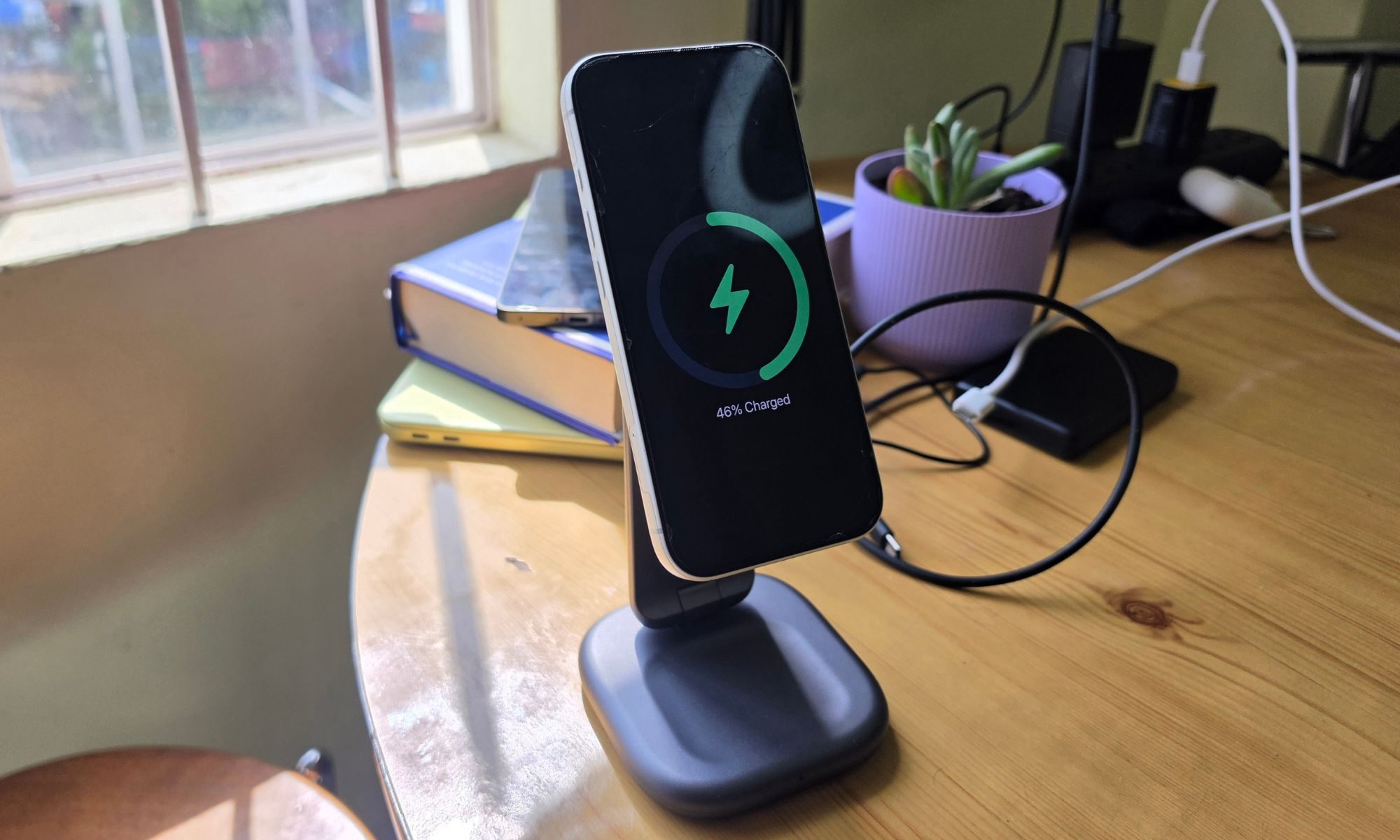
I carried the Satechi 3-in-1 Foldable Wireless Charging Stand Qi2 with me for over a month. In that spell, it spent a couple of weeks perched atop my workstation. For the rest of the test duration, I traveled with it extensively, carrying the supplied charging brick and occasionally using my own 100W charger.
As far as devices, I used the Satechi device to charge my iPhone 17 Pro, Samsung Galaxy S26 Ultra (with a Spigen magnetic case applied), Apple AirPods Pro (3rd generation), and Apple Watch Series 11. In that spell, the charging stand was used in places with dramatically different climates.
At home, the ambient temperatures stayed close to 38 degrees Celcius (roughly 100 degrees Fahrenheit), while my travel destinations usually hovered around 18 degrees Celcius (approximately 64 degrees Fahrenheit). The heat generation behavior described in this review is a broad estimation across all testing conditions.