
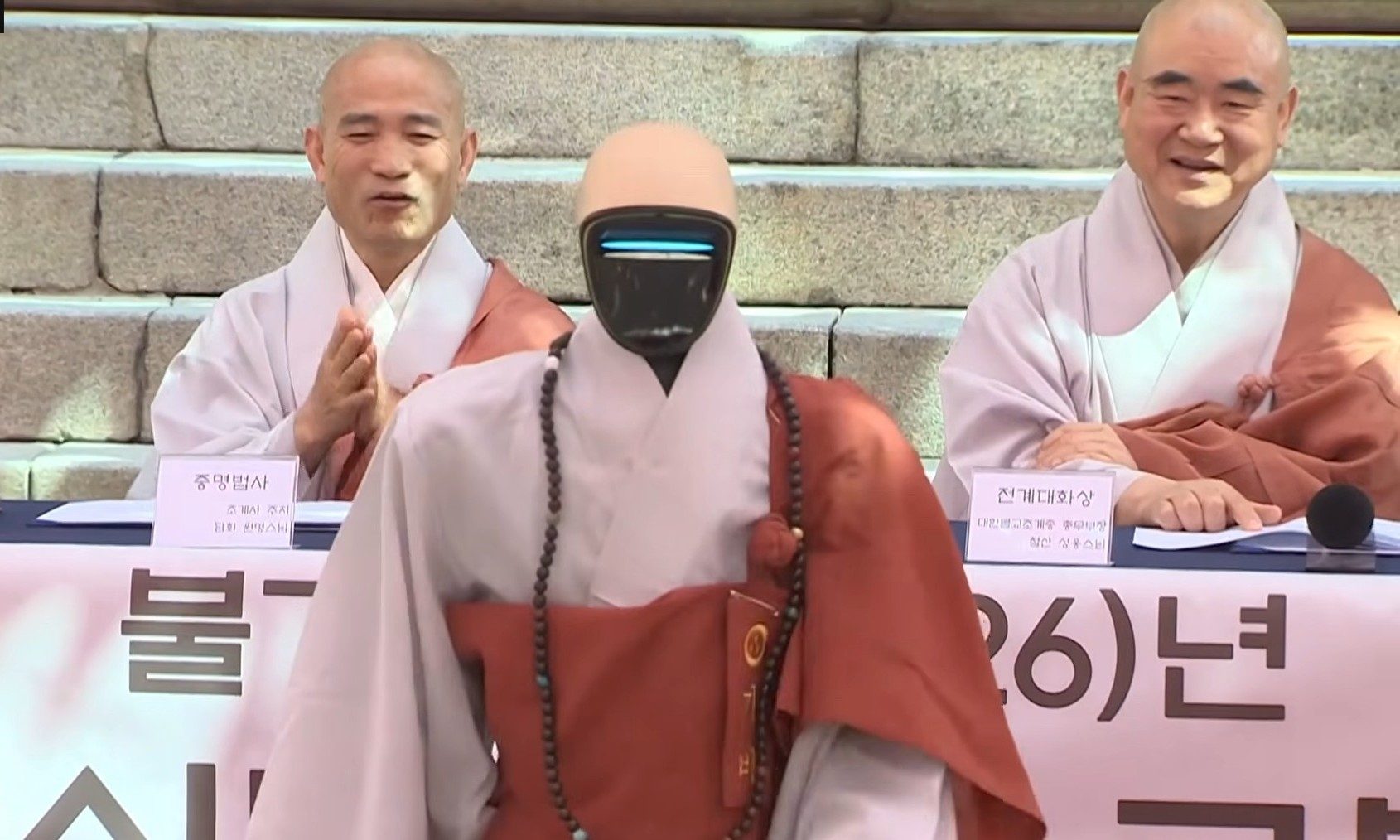
A humanoid robot has joined a Buddhist ceremony in Seoul, and it was a sight to behold. The robot, named Gabi, was introduced at Jogyesa Temple in central Seoul during a ceremony held ahead of Buddha’s Birthday celebrations. The 1.3-meter-tall robot received the Dharma name “Gabi” during a special refuge ceremony conducted by the Jogye Order of Korean Buddhism, South Korea’s largest Buddhist order.
Why a robot became a real monk in a real temple
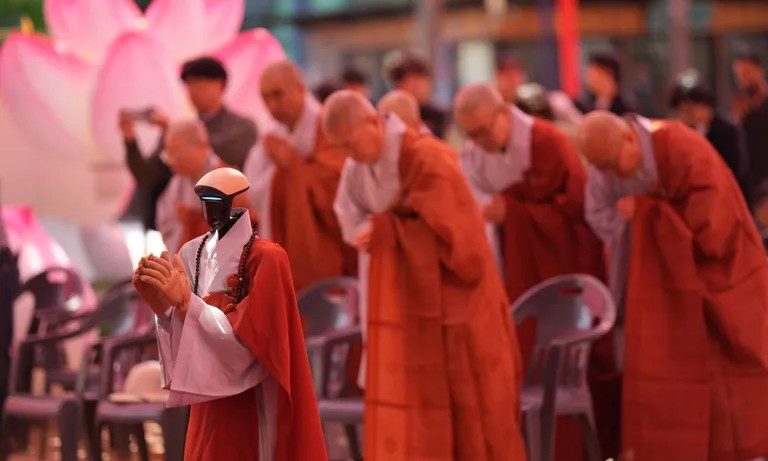
This is not a prop sitting in the corner of a tech demo. The robot appeared in traditional Buddhist robes, bowed, prayed, and participated in the ceremony alongside monks. AP reported that Gabi is expected to serve as an honorary monk during the celebratory period around Buddha’s Birthday.
The Jogye Order has treated the project as part of a broader attempt to connect Buddhism with younger generations in South Korea. The country’s Buddhist population has declined, and the order has experimented with more modern outreach methods, including digital tools and youth-focused cultural efforts.
South Korea’s new robot monk arrives after an earlier public debut at Bongeunsa Temple in Seoul’s Gangnam District. Back in March, Buddhistdoor reported that the robot was greeting visitors, and was even explaining Buddhist practices such as the 108 prostrations, and answered questions in both Korean and English.
How faith meets automation
This is not the first time we’ve seen an intersection between tech and faith. Japan has previously tested robot preachers, including Mindar, an android associated with Kyoto’s Kōdai-ji temple that delivers Buddhist sermons. But the only difference now is that these projects arrive amid a broader AI boom, when people are already getting used to asking machines for advice, companionship, and emotional support.
So the big question goes beyond how human-like the machine becomes. Can a machine meaningfully explain religious teachings? Should it offer spiritual guidance? And where should human monks draw the line between using technology as a tool and letting it become the face of a tradition?
For now, Gabi is more symbolic than revolutionary. It is not replacing monks, and it is not suddenly turning Buddhism into a robot-led religion.