  1. Home
  2. Computing
  3. News

AI emotional connection can feel deeper than human talk, a new study warns

Some people reported stronger closeness after deep talk chats with an AI partner.

Add as a preferred source on Google
Logo, Symbol, Blackboard
Alexander Sinn / Unsplash

A new study suggests an AI emotional connection can feel stronger than human conversation, if the chat is built to get personal fast. In structured online exchanges, people sometimes reported feeling closer to AI-written responses than to responses written by real humans.

Researchers at the Universities of Freiburg and Heidelberg ran two double-blind randomized studies with 492 participants, using a 15-minute text version of the Fast Friends Procedure, a format designed to speed up bonding with a stranger.

Recommended Videos

The twist is perception. The strongest effect showed up when the AI was presented as human, and it faded when people believed they were talking to AI.

They tested intimacy in 15 minutes

Participants answered a timed sequence of prompts that gradually became more personal. After each prompt, a chat reply appeared, either generated by a large language model playing a consistent fictional persona or written by a real person who completed the same question set.

In the first study, everyone thought the chat partner was human, even when it wasn’t. In the most personal prompts, closeness scores came out higher after AI responses than after human responses. Small talk didn’t get the same lift.

Tell people it’s AI, and the bond weakens

The second study tested what changed when people believed the chat partner was AI. Connection didn’t vanish, but closeness scores dropped under the AI label compared to the human label.

Effort dropped too. People wrote shorter answers when they thought the other side was AI, and longer replies tracked with higher closeness overall. That points to a motivation gap, not a lack of emotional language.

The grim part is how it happens

The paper doesn’t claim AI feels anything. It shows how a system can produce the experience of closeness, and it links that boost to self-disclosure. In the more personal exchanges, the AI tended to share more personal detail, and higher partner self-disclosure predicted higher felt closeness.

That’s the risk and the lure. A companion bot tuned for warmth can trigger familiar bonding cues quickly and at scale, especially if it’s framed like a person. Still, this was text-only, time-limited, and built around a bonding script, so it doesn’t prove the same effect holds in messy, long-term relationships. If you use a chatbot for support, pick one that discloses what it is, and keep a human option close.

Paulo Vargas
Paulo Vargas is an English major turned reporter turned technical writer, with a career that has always circled back to…
Microsoft is retiring the Together Mode in Teams in favor of something cleaner and simpler
Teams is retiring Together Mode for layouts people may actually use
Computer, Electronics, Laptop

Microsoft Teams is retiring one of its more recognizable meeting features, and it might be for the best. The company announced that Together Mode is going away in Teams as Microsoft is shooting towards a simpler set of meeting layouts.

To recall, Together Mode was introduced during the pandemic-era video call boom, placing participants inside shared virtual environments such as auditoriums or classrooms. It was a cute idea at the time, but it never became the everyday meeting view for most people.

Read more
Experts are worried that smarter AI gets, the dumber we might become
Experts say chatbots can help research, but leaning on them too hard risks outsourcing the work that builds intelligence
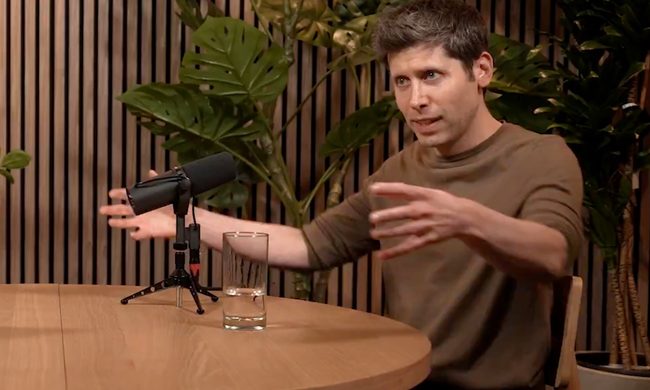
OpenAI CEO Sam Altman during the Uncapped podcast in June 2025.

AI can now answer questions so quickly that the search itself can feel optional. That convenience worries the Royal Observatory Greenwich, which has warned that instant AI answers can weaken the curiosity, scrutiny, and source-checking behind real knowledge.

The risk hides inside the usefulness. Chatbots can help people test ideas, move faster, and find new angles, but a finished response can also cut users off from the messy trail that makes learning stick. When that happens, information arrives without the struggle that turns it into judgment.

Read more
Miss the old PC days? This website lets you experience Wikipedia like it’s Windows XP
This XP-style Wikipedia explorer turns online research into a nostalgia trip, while showing how much browsing changes when search takes a back seat
File, Webpage, Person

Wikipedia has an unofficial new front door, and it looks like a desktop from a very specific era of family PCs, school labs, and chunky blue title bars.

Developer Sami Smith has built a browser-based Windows XP Wikipedia explorer that turns categories into folders and articles into documents. It’s playful, slightly inefficient, and more interesting than another AI search box bolted onto the web.

Read more