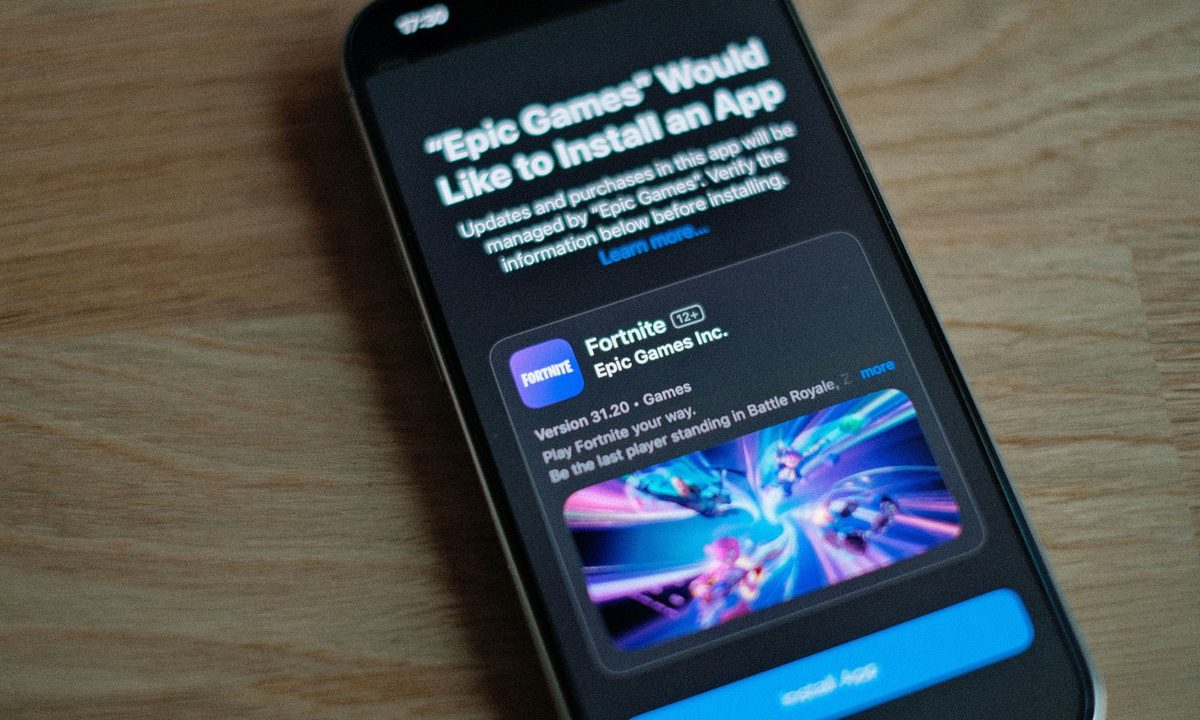
After years of legal battles, platform bans, and public clashes over app store fees, Fortnite is officially returning to Apple’s App Store worldwide. Epic Games announced the move on Monday, calling it part of the “final battle” in its long-running fight against Apple’s App Store policies.
The return marks one of the biggest reversals in modern app store history. Fortnite was originally removed from Apple’s App Store in 2023 after Epic Games introduced its own payment system inside the app to bypass Apple’s commission fees, which can reach up to 30 percent. That decision triggered a years-long legal conflict that quickly became one of the most important antitrust battles in the tech industry.
Epic says global pressure is finally working
In its latest statement, Epic Games argued that increasing regulatory scrutiny around the world is forcing Apple to loosen its control over app store payments and alternative marketplaces. The company specifically pointed to growing pressure from regulators in regions such as the European Union, Japan, and the United Kingdom.
Epic claims Apple’s current app store model relies on what it calls “junk fees” and restrictive rules around payment systems and third-party app stores. According to the company, Fortnite’s return signals confidence that future rulings and regulations may further weaken Apple’s ability to enforce those restrictions globally.
The timing is also notable because Apple recently faced renewed criticism from US courts over how it implemented earlier injunctions tied to app store competition. A federal judge previously ruled that Apple violated portions of a court order requiring more flexibility around app downloads and payment systems.
Why this matters beyond Fortnite
This is bigger than just one game returning to iPhones. The Epic vs Apple dispute has effectively become a larger fight over how much control Apple and Google should have over mobile ecosystems. Developers have long argued that app store fees are too high and that platform owners unfairly restrict alternative payment methods and competing marketplaces.

The outcome affects not only games like Fortnite but also streaming apps, subscription services, AI apps, and digital marketplaces that rely heavily on mobile payments. Epic has already secured major concessions from Google earlier this year, leading to Fortnite’s return to Google Play worldwide after Google reduced fees and expanded billing flexibility on Android.
For users, this could eventually mean lower prices, more payment options, and greater freedom over how apps are installed and purchased on mobile devices.
What happens next
Despite Fortnite’s return, the broader legal and regulatory battle is far from over. Epic says it will continue challenging Apple’s restrictions around alternative app stores and competing payment systems. Meanwhile, regulators globally are still examining how companies like Apple and Google manage app distribution, fees, and platform control.
At the same time, Epic appears to be expanding its own ecosystem ambitions. The company continues growing the Epic Games Store on mobile devices, which is already available globally on Android and in select iPhone regions.
For Apple, Fortnite’s return may close one chapter of the dispute, but it also signals something larger: the era of tightly controlled mobile ecosystems is increasingly facing pressure from courts, regulators, and developers worldwide.