  1. Home
  2. Computing
  3. Phones
  4. News

Android will now warn you if someone is using AI to fake your contact’s voice on a call

Google's fake call detection is the first time a phone platform has built a real-time cryptographic defense against AI voice cloning scams.

Add as a preferred source on Google
Android fake call detection featured.
Google

Yes, advancements in AI help people from different walks of life, but they have some cons. One of the most exploited con has been AI voice cloning. Over the years, it has reached the point where most people can no longer tell a deepfake voice from a real one. 

Scammers already know this, and they’ve been spoofing users’ contacts, cloning their voice, and committing financial frauds for quite some time. Android’s new fake call detection is designed to stop that exact scenario before it costs you.
How does fake call detection actually work?

Fake call detection is an industry-first feature. It identifies when a caller is not who they claim to be, even when the caller ID looks legitimate and the caller’s voice sounds familiar.

Recommended Videos

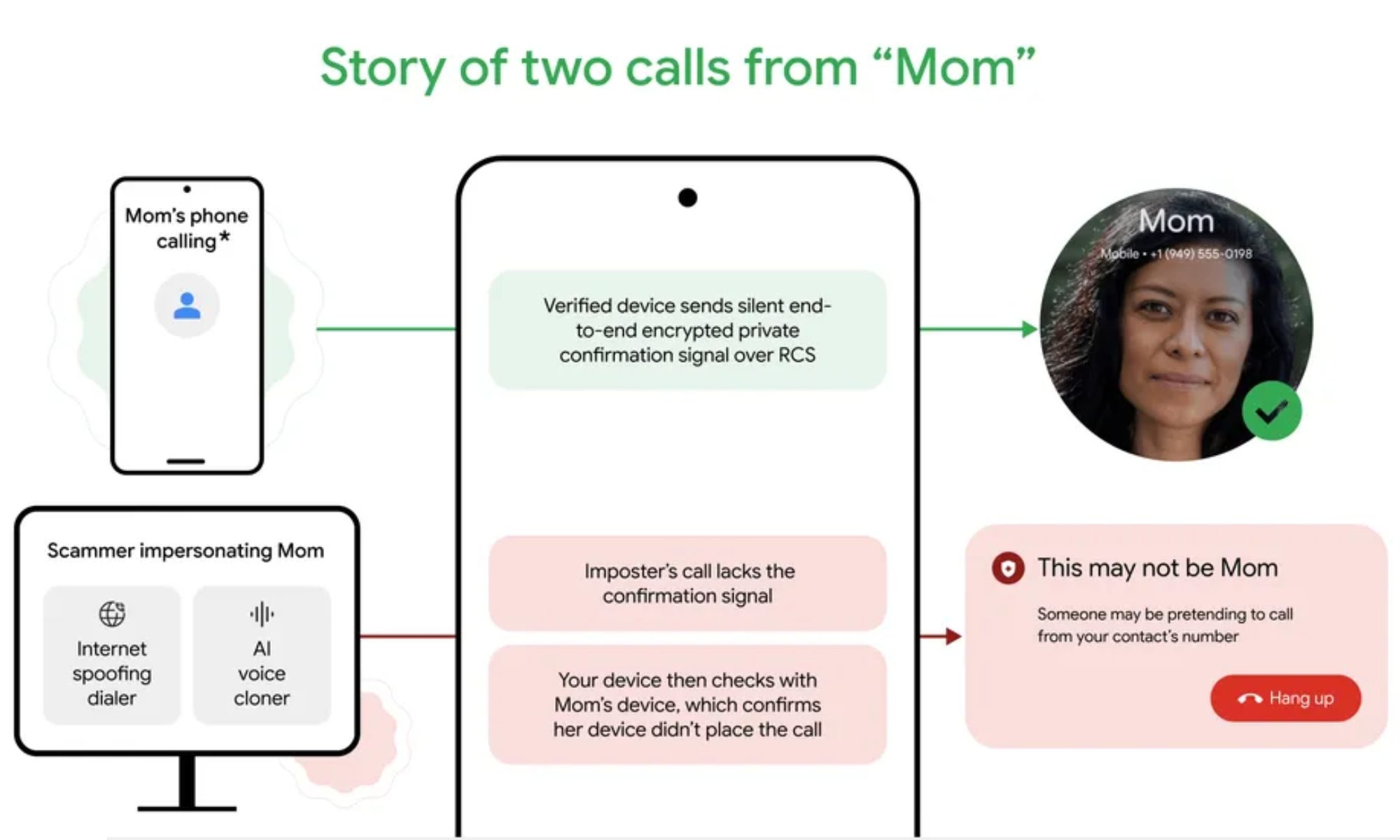
Without any action required from you, the feature operates silently in the background. When a contact calls you, and both of you are using Google’s Phone app, the caller’s device sends an encrypted confirmation signal to your device, functioning like a digital handshake, verifying that the call is coming from that person’s phone. 

This handshake is built on end-to-end encrypted RCS technology; the verification is completely private. When a scammer spoofs your contact’s number, the signal will be absent, and your device immediately pings your contact’s actual phone to check whether they are making a call.

Does the feature work for all Android phones?

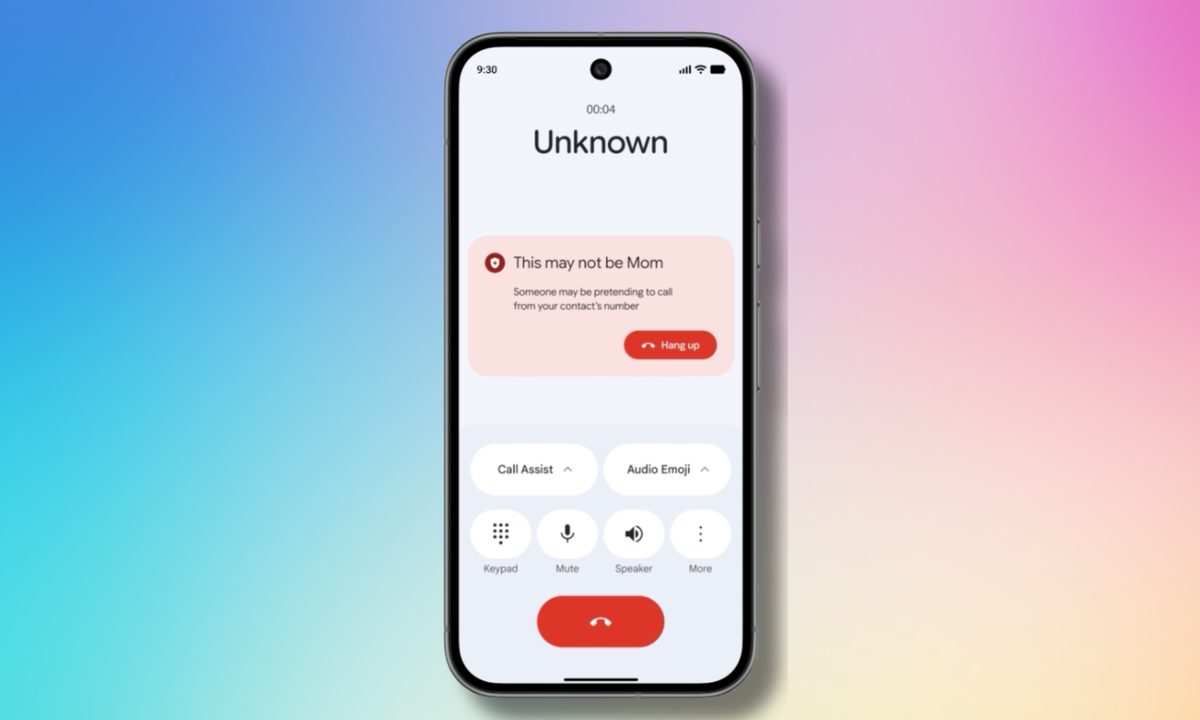
When their real device confirms it is not making a call, a warning appears on your screen, telling you the call may be fake and that you should immediately hang up. The entire process happens instantly, before the scammer has had a chance to manipulate you.

Fake call detection is enabled by default. It is rolling out globally in Phone by Google this month, starting with Pixel devices, running on Android 12 and above. The only catch is that both the caller and the recipient must be using Phone app and the recipient’s device also needs RCS enabled in Google Messages

Shikhar Mehrotra
For more than five years, Shikhar has consistently simplified developments in the field of consumer tech and presented them…
Qualcomm’s Snapdragon X2 Elite finally lands in a mini PC, and it looks like Windows’ answer to the Mac mini
Qualcomm Snapdragon X2 Featured Image Render

For the past two years, Qualcomm's Snapdragon X series has largely been confined to notebooks. The chips delivered impressive battery life and surprisingly competitive performance, but they never got the chance to challenge compact desktop machines like Apple's Mac mini or even the more powerful Mac Studio. The Ascent QN10 changes that.

Packing the 18-core Snapdragon X2 Elite processor alongside Qualcomm's integrated Adreno GPU, the tiny desktop also becomes the world's first mini PC to offer 80 TOPS of AI performance through its dedicated Hexagon NPU. So, ASUS is introducing a new form factor for Qualcomm's most powerful PC silicon.

Read more
Amazon announces Prime Day sales date and it’s happening a tad earlier this year
Amazon moved Prime Day to June for the first time, quietly positioning it ahead of the back-to-school season.
Electronics, Computer, Tablet Computer

Amazon Prime Day is back, it is four days long again, and, for the first time in Prime Day’s history, it’s kicking off in June rather than July. 

So, if you spent last summer waiting until mid-July to buy that thing at a discounted price, you now have about two fewer weeks to make up your mind.

Read more
Google Photos is finally making backups and exports a tad less vexing
Incremental exports can save time and storage, though setup requires a Photos-only Takeout schedule.
Art, Collage, Plant

Google Photos backups are getting a little less wasteful for people who use Takeout to keep their own copy of a photo library.

This is aimed at Google Photos users who don’t want Google to be the only place their photos live, especially anyone keeping a second archive on an external drive, NAS, or another cloud service. Google says Incremental Takeout for Photos will make recurring downloads faster and more efficient once the initial archive is complete.

Read more