  1. Home
  2. Phones
  3. News

Apple’s new AI photo tool can literally change where the camera was standing

Spatial Reframing uses Apple Intelligence to reposition shots after they’ve already been taken

Add as a preferred source on Google
Apple WWDC 2026 Spatial Reframing
Apple
Promotional logo for WWDC 2023.
This story is part of our complete Apple WWDC coverage

We’ve all taken a photo that would’ve been perfect if only the camera had been positioned a little differently, right? Well, Apple now wants to fix that with Spatial Reframing, a new Apple Intelligence feature that can virtually reposition the camera after the shot is taken while using AI to naturally fill in the missing parts of the scene.

Spatial Reframing uses AI to virtually move the camera after the shot

According to Apple, Spatial Reframing combines on-device spatial models, built using technology developed for Apple Vision Pro, with its image generation models running on Private Cloud Compute. Users can simply drag around a photo during editing, and the perspective shifts as though the camera itself had been moved while capturing the original scene.

Apple says only the newly exposed portions of the image are generated by AI, while the original content remains untouched. The company demonstrated the feature by repositioning a family photo, moving the framing lower to create a more balanced composition while naturally filling in the missing background around the edges.
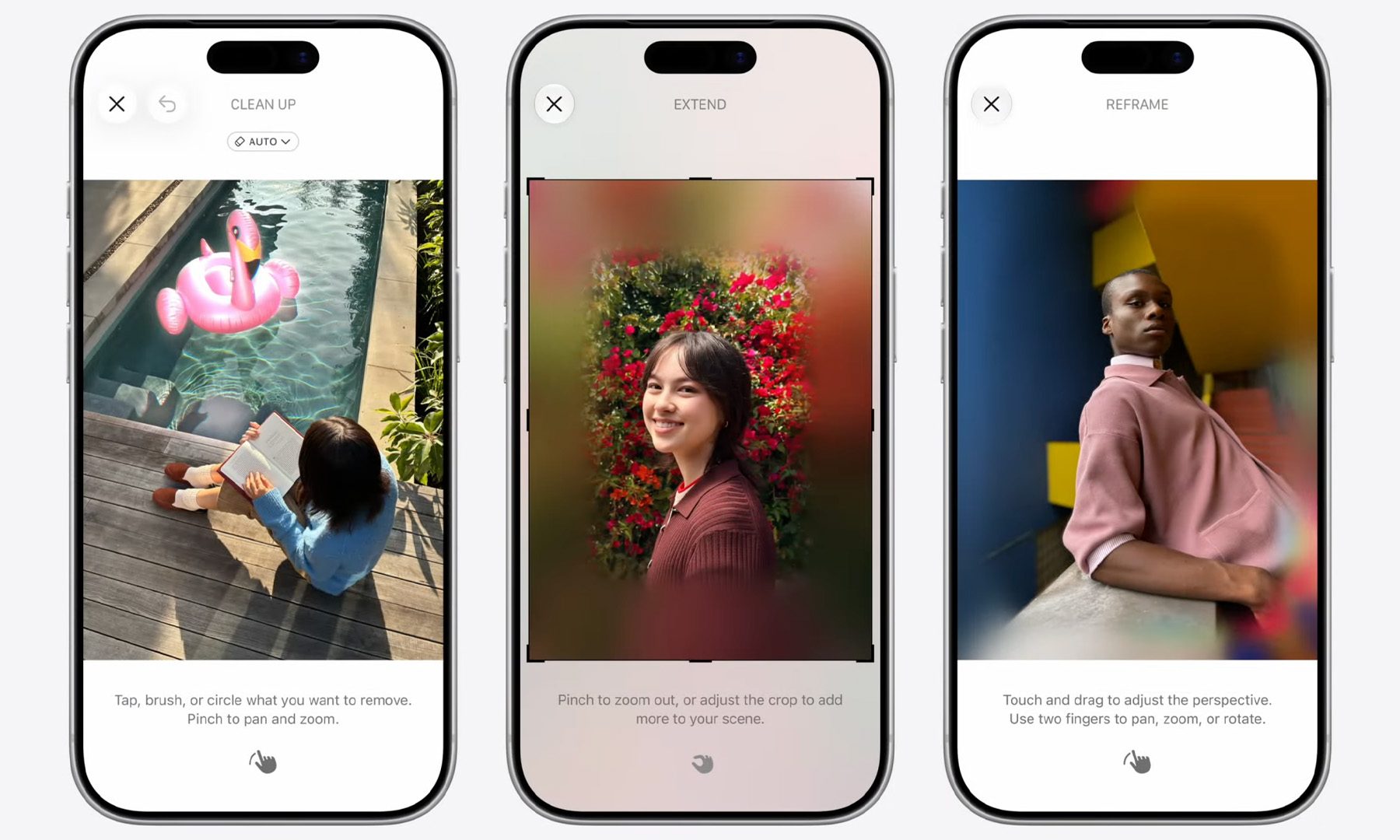
Alongside Spatial Reframing, Apple also announced an upgraded Extend tool that can expand images to create more breathing room or straighten horizons without aggressively cropping the original shot.

This might be the closest thing to a photographic time machine yet

Unlike traditional AI photo editing that simply adds or removes objects, Spatial Reframing tries to recreate a shot you never actually took. That’s a far more ambitious idea, because it asks AI to understand the three-dimensional layout of a scene before generating only the missing pieces needed to support a new perspective.

If it works as well in the real world as it did on stage, this could easily become one of the most useful Apple Intelligence features announced so far. After all, everyone has taken a badly framed photo at some point, and Apple is essentially promising a second chance without asking anyone to go back in time.

Varun Mirchandani
Varun is an experienced technology journalist and editor with over eight years in consumer tech media. His work spans…
Finding photos is so much easier with Siri AI in iOS 27 that I no longer scroll
Natural language photo search in iOS 27 is the kind of feature that quietly becomes essential.
Electronics, Phone, Mobile Phone

My camera roll has crossed 8,000 photos, and it got there by capturing random moments (only to forget them later). The problem, however, starts when someone asks me to share something specific. It could be their portrait from last weekend or the food pictures they snapped using my phone.

Finding those pictures usually means scrolling through my seemingly endless camera roll. If the photo is a month or two old, I end up scrolling past hundreds of other images to find it, and that gets old fast.

Read more
WhatsApp clears that usernames won’t leave you open to scammers
New safeguards include username keys, rate limits, and anti-impersonation protections.
Whatsapp Usernames Whatsapp Username

WhatsApp's long-awaited username feature is now officially rolling out to users. But almost as soon as it was announced, many began asking an obvious question: won't this make it easier for scammers to message strangers? Now, WhatsApp has stepped in to explain why it believes that won't happen.

WhatsApp says usernames aren't as open as Telegram's

Read more
Forget Apple’s AirTag, Motorola’s new Android tracker lasts over 500 days and costs less too
Moto Tag 2 could be the AirTag Android users actually buy
Moto Tag 2 with car keys

Motorola is finally bringing out its second-generation Android smart tracker. While Apple's AirTag has been hogging the limelight, the Moto Tag 2 is the new rival in town, arriving in North America starting June 30. It brings UWB (Ultra Wideband) tracking support, Bluetooth Channel Sounding, and Google Find Hub support in a compact tracker built for keys, bags, luggage, camera gear, and anything else people keep misplacing.

The real headline, though, is the battery life. Motorola claims that this is its longest-lasting smart tracker yet, with more than 500 days of battery life from a replaceable CR2032 battery.

Read more