  1. Home
  2. Emerging Tech
  3. News

A chemical bath could bring your old EV battery back to near-full strength

Cornell researchers have developed a recycling process that restores spent lithium-ion cells to 95% of their original capacity while cutting recycling costs by more than half.

Add as a preferred source on Google
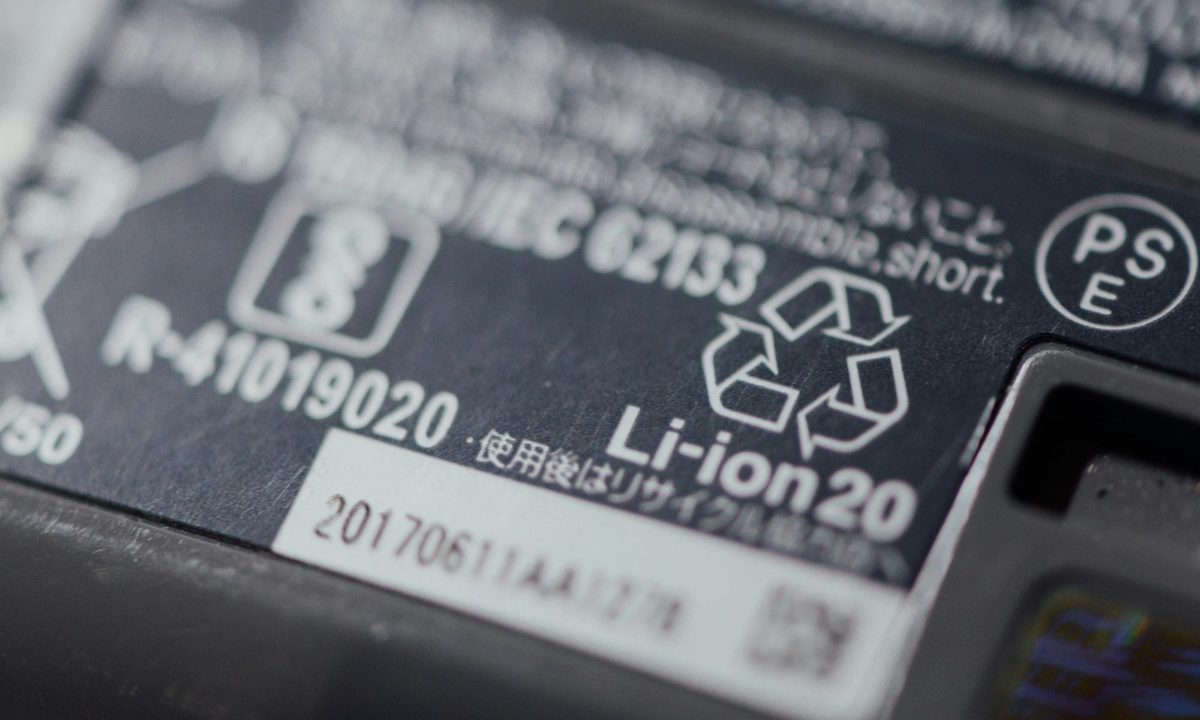
Li-ion battery close up showing recycling symbol
Unsplash

Your next phone or EV could run on a recycled battery that performs nearly as well as a new one. Cornell University researchers have developed a new recycling technique that restores spent lithium-ion cells to up to 95% of their original capacity, while cutting recycling costs by 56%.

A bath instead of a shredder

Current battery recycling techniques are largely destructive. Spent cells are either smelted at extreme temperatures or crushed into a powder and processed with harsh acids to extract usable materials. The recovered components then have to be rebuilt from scratch before they can go into a new battery.
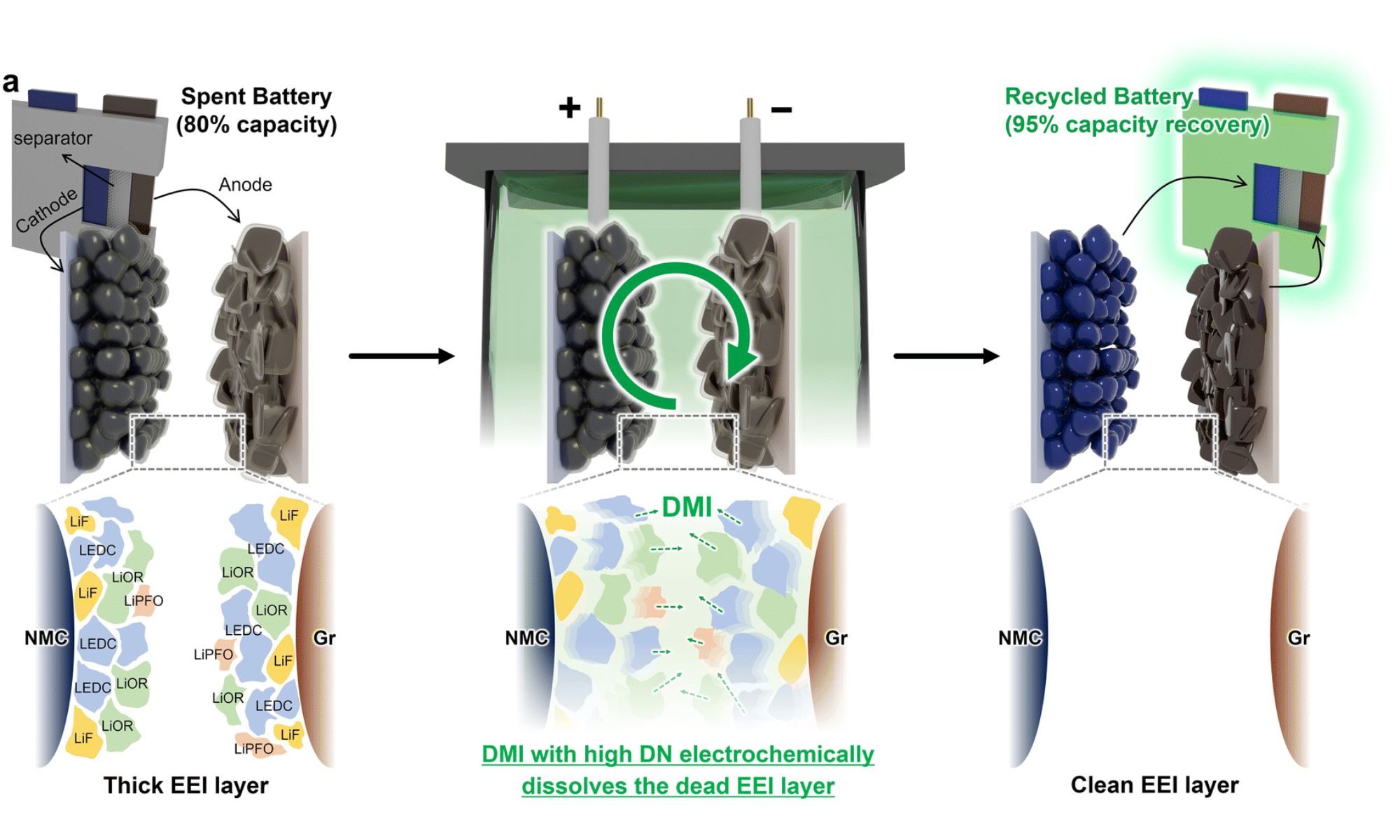
Cornell’s method, as reported by TechXplore, skips all of that. The direct electrode-to-electrode regeneration (DEER) method involves removing a spent battery’s electrodes and soaking them in an electrochemical solution that dissolves the insulating layer responsible for capacity loss. The cleaned electrodes can then go straight into a new cell without being broken down first.

Why it matters beyond the lab

The US relies heavily on imported nickel and cobalt to manufacture lithium-ion batteries, and domestic recycling infrastructure is limited. A process that shortens the recycling loop and keeps more material in circulation addresses both cost and supply chain vulnerabilities.

Recommended Videos

The Cornell team also found that DEER reduces harmful air pollutants and water use compared to conventional recycling methods. The researchers currently target batteries at 70 to 80% of their original capacity, which is the typical condition of an EV battery pack at the end of life. Next steps include testing the process on industrial-scale batteries and tackling other forms of degradation, such as lithium loss.

If the technique scales, it could mean cheaper batteries, less mining pressure, and fewer spent cells ending up in landfills.


Pranob Mehrotra
Pranob is a seasoned tech journalist with over eight years of experience covering consumer technology. His work has been…
China’s UBTech unveils eerily lifelike companion robots, and yes, they want to move in with you
UBTech's new humanoid robots are built for companionship, using emotion-aware AI, long-term memory, and humanlike expressions to become part of your everyday life.
UBTech Uworld U1 series robot launch

A humanoid robot designed to live in your house, learn your habits, and pick up on your mood without being prompted is no longer science fiction. Shenzhen-based UBTech Robotics unveiled its Uworld U1 series this week, introducing three robots built for companionship rather than factory work or household chores.

A body that moves like yours, and a brain that reads how you feel

Read more
This $249 LED sign wants to fix your work-life balance
My productivity isn't worth $249... or is it?
Flipper Busy Bar

Flipper Devices has built a reputation among hackers and hardware enthusiasts with the Flipper Zero, a pocket-sized gadget capable of interacting with RFID, NFC, Bluetooth, and other wireless protocols. Now, the London-based company is taking a very different approach.

Its latest product, the Busy Bar, is a desktop productivity display designed to help users stay focused, signal their availability, and automate parts of their workflow. After being teased last year, the device is finally going on sale on July 14. While the concept is genuinely clever, its starting price of up to $249 may make many buyers think twice.

Read more
FAA clears the runway for Mach flights that could cut travel times nearly in half
New regulations could dramatically reduce travel times while keeping sonic booms under control.
Supersonic Flight Time

The dream of flying faster than the speed of sound just took a major step forward. The Federal Aviation Administration (FAA) has announced a proposed rule that would create the first noise-based certification standards for a new generation of supersonic passenger aircraft, removing one of the biggest regulatory hurdles standing in the way of commercial Mach 1+ flights.

The goal is simple: fly faster without the boom

Read more