  1. Home
  2. Social Media
  3. News

Facebook now has an answering genie for all your burning questions, just like Google Search

Meta's new AI Mode answers your questions using real posts from Facebook Groups and Reels instead of generic search results.

Add as a preferred source on Google
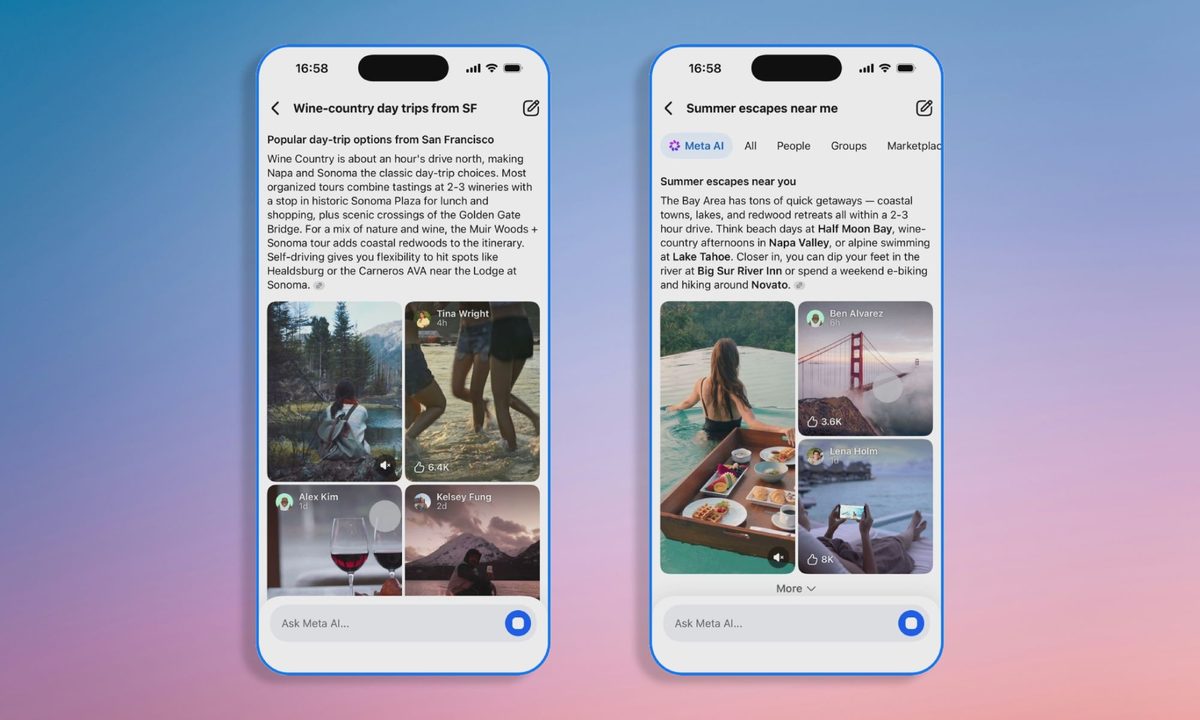
Screenshots showing Facebook's new AI-powered Search results
Meta

Facebook has rolled out a batch of AI-powered features, with the headliner being AI Mode, a new way to get answers to questions directly inside the app using Meta AI.

An AI layer on top of Facebook Search

In a blog post, Facebook explains that the new AI Mode works from both the Feed and the search bar, pulling answers from public content across Meta’s apps, including Groups and Reels, to surface what real people are saying rather than returning a list of links. The feature is powered by Meta AI, which runs on the company’s Muse Spark model.
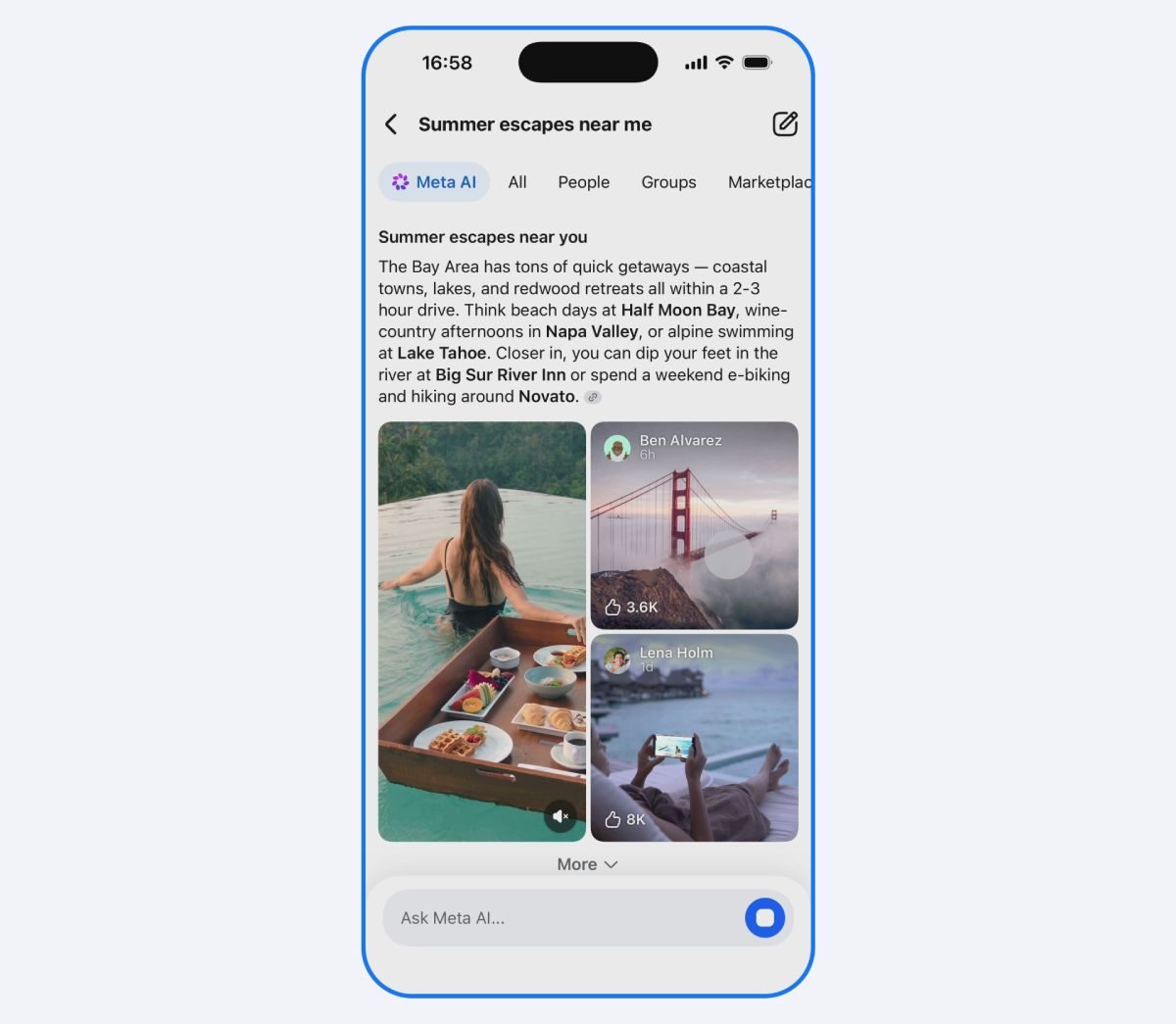
The approach puts Facebook in more direct competition with Google’s AI search tool with the same name, which uses AI to synthesize answers from across the web. The key difference here is that Facebook’s answers draw from its own ecosystem of social content rather than the broader internet.

AI photo and video editing round out the update

Beyond search, Meta also introduced a set of AI-powered creative tools, including updated camera roll suggestions that now include collage templates based on recent moments and transition effects for video montages. A new Wear It feature lets users virtually swap their outfit in photos using AI presets, with an option specifically for sports fans to don their team’s jersey.
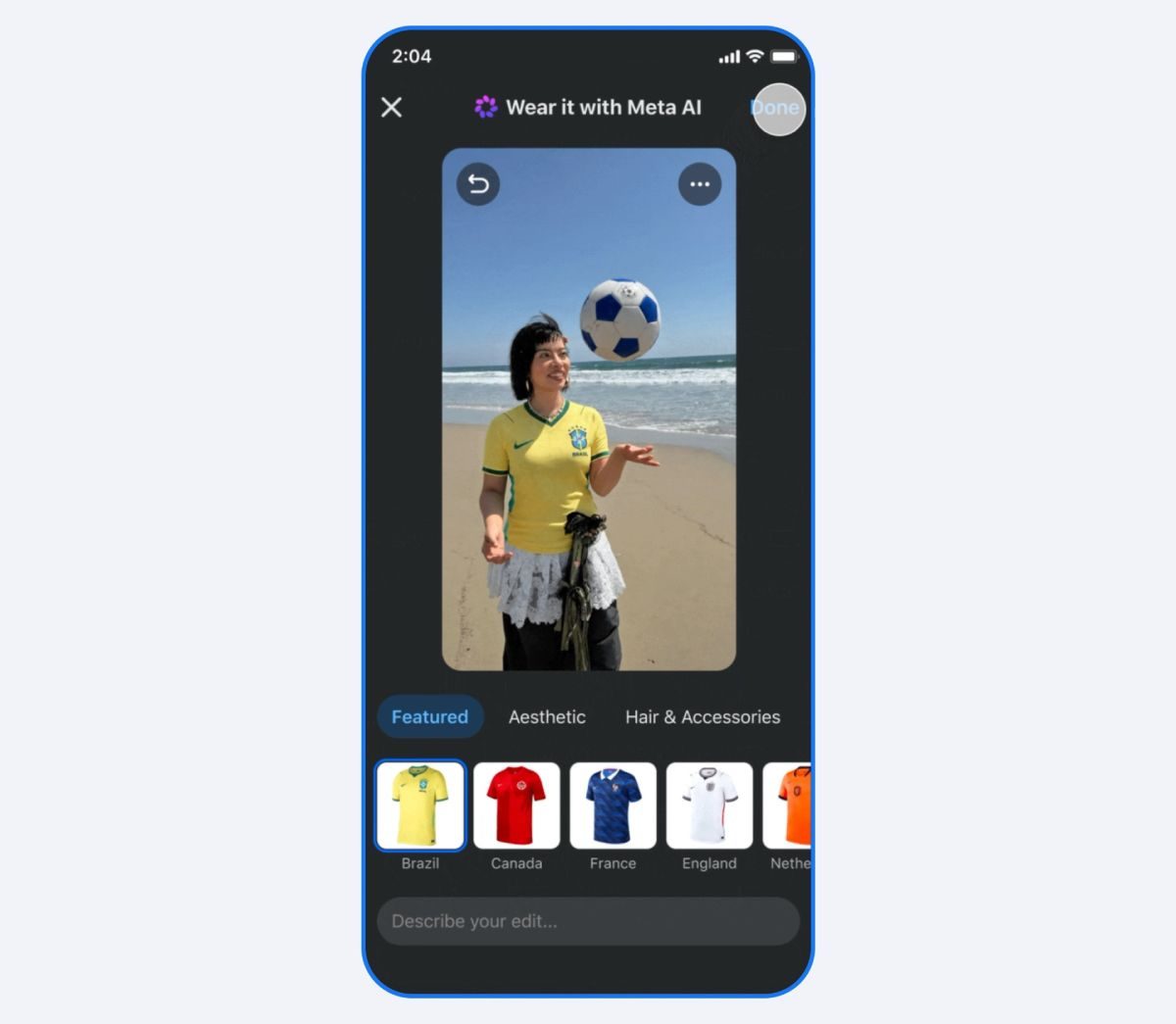
Facebook’s push to embed AI more deeply into its core experience mirrors moves by Google, which already offers similar features in Search and Google Photos. For Facebook’s massive user base, AI Mode could meaningfully change how people use the platform to find information, assuming they trust the answers it surfaces.

Pranob Mehrotra
Pranob is a seasoned tech journalist with over eight years of experience covering consumer technology. His work has been…
Yet another study finds too many kids are seeing harmful content on social media
Despite the UK's Online Safety Act coming into force last year, a new study found that harmful content is still reaching a third of teenagers and nearly half of all girls on social media every week.
a boy using iPhone

A year after the UK's Online Safety Act came into force, a new study has found that harmful social media content is still reaching teenagers at nearly the same rate as before the law took effect. Research by the Molly Rose Foundation (via The Guardian) found that a third of all UK teenagers and nearly half of all girls encountered suicide, self-harm, depression, or eating disorder content on social media in the span of just one week.

What the data shows

Read more
Facebook and Messenger outage sparks logout panic as Meta services stumble
Downdetector reports spiked as users said Facebook and Messenger kicked them out, with Instagram also affected.
Meta featured image

Facebook and Messenger users were briefly knocked offline Friday morning, with many saying they had been logged out and couldn’t get back in. The Facebook and Messenger outage sent users to X, Reddit, and other platforms to check whether the problem was widespread or tied to their own accounts.

Downdetector showed the first visible surge in Facebook complaints around 9:52 a.m. ET.

Read more
The social media scrolling habit is more harmful than you think, especially for teens
Decade-long study reveals teen scrolling may come with a mental health cost
A person seated at a table scrolls through their instagram timeline.

A new Australian study is adding more weight to the argument against social media. And it's even revealing how just how much social media is too much for teenagers. Research led by the Murdoch Children’s Research Institute found that adolescents who spent at least two hours a day on social media were more likely to experience depressive symptoms and poorer wellbeing one year later than those who used social platforms for less than one hour a day.

The study does not prove that social media directly caused those mental health problems. But the link is notable because the research followed young people over time instead of just relying on data from a short-term study.

Read more