  1. Home
  2. Emerging Tech
  3. News

SoftBank’s ’emotional’ Pepper robot sells out in just 60 seconds

Add as a preferred source on Google

If early indications are anything to go by, Pepper the “emotional” robot is going to be a seriously big hit with consumers in Japan. Maker SoftBank said it took just one minute to sell its first batch of 1,000 Pepper robots when it went on sale Saturday morning. Judging by the intensity of the 60-second sales rush, there’ll be no shortage of interest in the next batch either, which should be ready later this month.softbank pepper robot
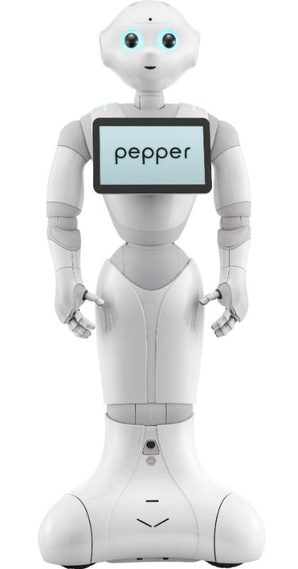
SoftBank partnered with French robotics company Aldebaran SAS to create Pepper and is working with tech manufacturing giant Foxconn to manufacture it. The humanoid bot, which cost each of the 1,000 buyers 198,000 yen (about $1600), is expected to go on sale in the U.S. and Europe some time next year.

Recommended Videos

Standing 120 cm tall and tipping the scales at 29 kg, Pepper has been designed to understand human emotions by making sense of characteristics like facial expression, body language, and tone of voice, and then responding accordingly.

Speaking at a special event near Tokyo last week to launch the latest version of the unique robot, SoftBank boss Masayoshi Son said Pepper could comfortably act as a friendly companion and entertainer in the home thanks to its ability to sing, dance, and even tell jokes.

Businesses, too, will be able to use the bot to meet and greet customers, while schools and retirement homes are also expected to find applications for it.

Pepper was revealed to the world last year though has undergone many changes since then. Although the robot has always been able to understand the emotions of humans to a greater or lesser degree, the original Pepper was unable to respond with any emotion of its own. With an array of on-board sensors and newly developed software, however, that’s all changed.

Indeed, as the robot becomes increasingly familiar with the personality of its owner, its own personality will change over time, meaning no two Peppers will behave the same.

“People describe others as being robots because they have no emotions, no heart. For the first time in human history, we’re giving a robot a heart, emotions,” Son said when Pepper was first shown off to the public.

Trevor Mogg
Contributing Editor
Not so many moons ago, Trevor moved from one tea-loving island nation that drives on the left (Britain) to another (Japan)…
The best new ChatGPT feature is one most people will never use
Logo, Emblem, Symbol

For years, the biggest conversation around AI has been what these tools can do. They can browse the web, analyze documents, connect to your apps, conduct research, and increasingly act on your behalf. But as AI systems become more capable, another question has become harder to ignore: what happens when an AI assistant is tricked into handing over information it shouldn’t?

OpenAI’s new Lockdown Mode is its latest answer to that problem. Available across all ChatGPT account types, Lockdown Mode is an optional security setting designed for people and organizations handling sensitive information. The trade-off is that you get stronger protection against certain forms of data theft, but you lose access to some of ChatGPT’s most powerful features.

Read more
An app that lets anyone control a robot from their phone, no coding required
Sounds cool, right? Forget doomscrolling, now your phone can operate a robot arm instead
Representative Image

A team of researchers at Georgia Tech has developed a new smartphone-based system that could dramatically simplify how people interact with robots. Called COBALT, the platform allows users with little to no computing experience to remotely control robot arms from virtually anywhere in the world using just a phone and an internet connection.

The project, developed at Georgia Tech’s People, AI & Robotics (PAIR) Lab, transforms smartphones into motion controllers for robotic arms. Users simply move their phones in different directions, and the robot mirrors those movements in real time. Basic tasks such as grabbing, moving, and releasing objects can be performed through simple on-screen controls, making the experience feel more like playing a mobile game than operating industrial machinery.

Read more
Coursera wants users to learn through shorter, faster content
Coursera wants online learning to feel more like TikTok
Coursera

Online learning platform Coursera is taking a page straight out of TikTok’s playbook. The company has launched a new AI-powered feed designed to serve short-form educational content in a scrollable, personalized format, signaling a major shift in how digital learning platforms may try to keep users engaged.

The feature introduces bite-sized video lessons, clips, and explainers curated through artificial intelligence based on a user’s interests, learning habits, career goals, and previous course activity. Instead of committing to hour-long lectures or full certification programs upfront, users can now discover short educational snippets designed to make learning feel more casual, accessible, and addictive.

Read more