
For years, the biggest conversation around AI has been what these tools can do. They can browse the web, analyze documents, connect to your apps, conduct research, and increasingly act on your behalf. But as AI systems become more capable, another question has become harder to ignore: what happens when an AI assistant is tricked into handing over information it shouldn’t?
OpenAI’s new Lockdown Mode is its latest answer to that problem. Available across all ChatGPT account types, Lockdown Mode is an optional security setting designed for people and organizations handling sensitive information. The trade-off is that you get stronger protection against certain forms of data theft, but you lose access to some of ChatGPT’s most powerful features.
This new security feature makes ChatGPT a homebody
Lockdown Mode primarily exists to reduce the risk of data exfiltration from prompt injection attacks. Prompt injection has emerged as one of the most difficult security challenges in the AI era. Instead of attacking software directly, malicious instructions are hidden inside documents, websites, spreadsheets, emails, or other content that an AI system might process. If the model follows those hidden instructions, an attacker may be able to manipulate its behavior.
OpenAI is careful to point out that Lockdown Mode does not stop prompt injections from appearing in content. A malicious instruction could still exist inside an uploaded file or cached webpage. What Lockdown Mode aims to prevent is the final, potentially most damaging step: getting sensitive information out. To accomplish that, OpenAI dramatically restricts what ChatGPT can communicate with outside its own environment.
Once enabled, live web browsing is essentially shut down. ChatGPT can only access cached content, which means search results may be limited, outdated, or unavailable altogether — Deep Research disappears, Agent Mode is disabled, and network access through Canvas-generated code is blocked. ChatGPT also loses the ability to download files for analysis.
While users can still upload images and create AI-generated visuals where supported, ChatGPT won’t be able to fetch images from the web or display them in normal responses. So, Lockdown Mode turns ChatGPT from a highly connected AI assistant into something much more isolated.
A feature most people will never need
That’s not a criticism. In fact, one of the most interesting things about Lockdown Mode is how openly OpenAI acknowledges that it isn’t designed for everyone. But security professionals have long accepted that stronger protection usually comes at the expense of convenience. The closest comparison is probably Apple’s “Lockdown Mode,” introduced several years ago. Apple built it for people at risk of highly sophisticated cyberattacks, not average iPhone owners. OpenAI appears to be taking a similar approach here.
For users dealing with highly sensitive information, limiting network requests can be worth the sacrifice. If an AI system cannot freely interact with external services, there are simply fewer opportunities for confidential information to leave the environment. The move also reflects a broader shift happening across the AI industry. Earlier conversations centered around whether AI could access more data and more services. Increasingly, companies are asking how much access these systems should have in the first place.
That question becomes especially important as AI assistants gain the ability to browse websites, connect to business software, read internal documents, and perform actions across multiple services. OpenAI’s answer isn’t to eliminate those capabilities. Instead, it’s offering users a choice.
The rise of AI security controls
Lockdown Mode is perhaps most notable for what it says about the future of AI products. For years, software security has largely focused on protecting people from malicious programs. AI introduces a different challenge: protecting AI systems from malicious information.
That’s a much messier problem. A prompt injection can be hidden in a webpage, embedded inside a document, or disguised as normal text. Detecting every possible attack is difficult, which is why OpenAI describes prompt injection as an ongoing research challenge rather than a solved problem.
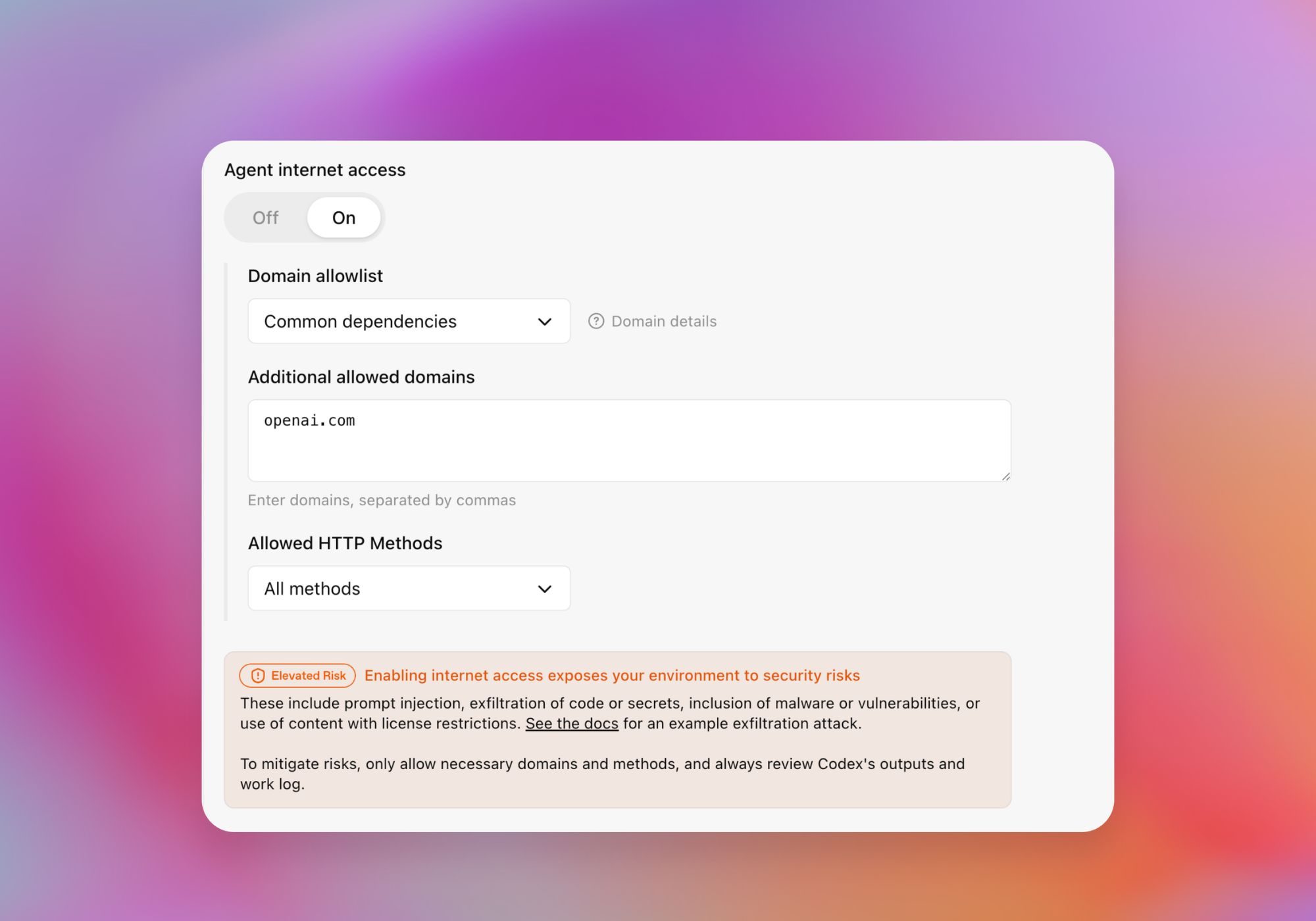
Lockdown Mode acknowledges that reality. Rather than claiming complete protection, it reduces the potential damage if something slips through existing defenses. For enterprise customers, the feature becomes even more granular. Workspace administrators can create custom Lockdown Mode roles, restrict apps and connectors, and carefully decide which actions employees are allowed to perform. OpenAI also recommends limiting write-enabled integrations, since they create opportunities for information to leave trusted environments.
In many ways, Lockdown Mode feels like a sign of where AI security is heading. The more powerful AI assistants become, the more users will need tools to dial back their powers when the situation demands it. That may not be as exciting as a new reasoning model or an AI agent that can book your flights. But for organizations handling sensitive information, it could be far more important. Sometimes the smartest AI isn’t the one that can do everything. It’s the one that knows when not to.


