1. Home
  2. Computing
  3. News

Mushkin’s new M.2 SSDs are kind to your wallet and your system footprint

Add as a preferred source on Google

If you need to pack SSD performance into a small form factor, like a compact desktop or ultrabook, you need an M.2 SSD. The only issue is that these drives have tended to cost a bit more than your standard 2.5″ SATA SSD – until now. Mushkin’s new Atlas Vital SSDs are available in a variety of capacities, and at prices that mirror the more common 2.5″ SATA SSDs.

The M.2 interface is a fairly new one, designed as a replacement for mSATA. There are a number of advantages to M.2 that have led to fast adoption in a range of applications. The port allows for small cards, in the case of the Atlas Vital, 22mm wide and 80mm long, to access SATA 3.0, USB 3.0, and up to four lanes of PCIe 3.0.
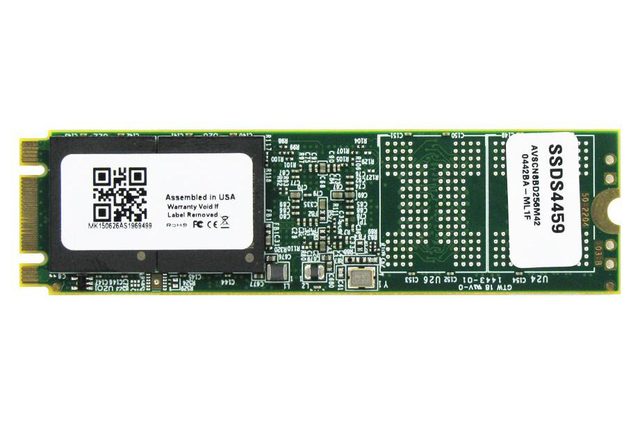
MushkinAtlasVital-2
Image used with permission by copyright holder

Mushkin actually manufactures its own NAND wafers, which enables it to get the price a lot lower than other supply chains. The read and write speeds are quoted at 550 MBps read and 540 MBPs write, which is on the mid-to-high range of speeds for 2.5″ drives.

Recommended Videos

At the smallest end, the 120GB Mushkin Atlas Vital will only set you back $79.99, but it gets better. Even at the top end, the 480GB drive is only $189.99, which sets it right in the middle of comparable 2.5″ SATA drives price-wise. There’s also a 250 gigabyte version in the middle of the range for $115.99, and the entire line offers a standard three-year warranty.

The Mushkin drives are still 6 Gbps SATA, so you won’t see the massive read and write speed increases that are a result of PCIe connectivity. However, the manufacturer is planning a series of SSDs in the near future that will boast four lanes of PCI connectivity.

Brad Bourque
Brad Bourque is a native Portlander, devout nerd, and craft beer enthusiast. He studied creative writing at Willamette…
A new technology teaching drones to feel pain could stop your self-driving car from harming itself
Drones first, autonomous cars next. A pain-sensing system that detects failure before it happens has real stakes for self-driving vehicles.
Transportation, Vehicle, Car

When you sprain your ankle in the middle of a run, your body sends a pain signal to your brain, forcing you to stop. Essentially, the ability to sense pain stops you from pushing through the injury and causing further self-harm.

Researchers at Delft University of Technology and Wageningen University have applied this exact concept to drones, giving them a digital equivalent of a nervous system that recognizes a faulty part and triggers a pain-like warning signal. What's even more interesting is that the technology could find use in self-driving cars.

Read more
Claude Fable 5 is leaving subscriptions, but maybe not for good
High demand is pushing Claude Fable 5 out of subscriptions for now
Claude Fable 5 and Claude Mythos 5 Official Render

Anthropic’s most advanced publicly available Claude model is still leaving standard subscription access after July 7, but the company is now trying to calm fears that the move is permanent.

Fable 5 recently returned to Claude after drawing scrutiny from the U.S. government. Anthropic said it would be included on Pro, Max, Team, and select Enterprise plans for up to 50% of weekly usage limits through July 7. After that date, the model is set to move to usage-credit billing, meaning users will pay for access outside their regular plan limits.

Read more
Yet another research breaks the hype bubble for AI browsers serving serious security flaws
Four popular AI browsers can be exploited to steal your data from other open tabs.
ChatGPT Atlas browser on a MacBook.

AI browsers are being sold as the next big thing. They can summarize pages, book trips, and even make purchases for you. But a new study from the University of Washington found that four of the seven most popular ones come with a security risk serious enough to let malicious websites steal data from other sites you have open. The more capable the browser, the bigger the risk turns out to be.

The 30-year security rule that AI browsers are breaking

Read more