
The potential benefits of fully autonomous cars have echoed through the automotive industry for years. They’re often safer than human-driven cars, they can reduce congestion in the world’s most crowded cities, and they can help commuters maximize the time they spend stuck in traffic. The impact they could have goes beyond traffic management, and a new study explores how they will affect tourism — and maybe even the sex industry.
The 19-page study is called “autonomous vehicles and the future of urban tourism.” Written and published by researchers Scott Cohen and Debbie Hopkins, it argues the deployment of privately owned and shared autonomous cars will disrupt nearly every actor in the tourism world, including car rental companies, hotels, restaurants, bars, and even brothels.
The authors envision autonomous shuttles replacing traditional rental cars. This model has pros and cons. Travelers will no longer need to worry about hopping in a car after traveling for 32 straight hours, and they won’t need to drive on the opposite side of the road in England or weasel their way into the anarchic roundabout Paris’ Arc de Triomphe is built on. Seeing a new city in an autonomous car is a novelty many tourists would happily pay extra for, but it could boost overtourism — which is already a growing problem in many European cities — and increase traffic congestion. It would also spell bad news for the hop-on-hop-off tour bus industry.
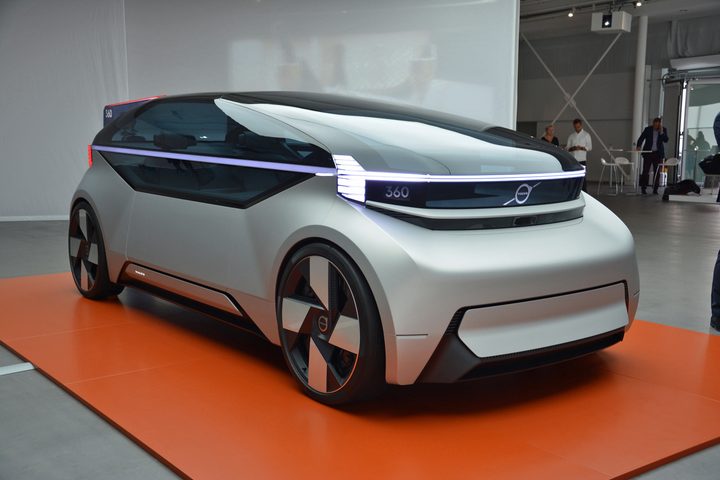
Strategically located hotels stand to take a hit, too. Tourists may not be willing to pay more for a room close to a town’s main attractions if they know they can rely on an autonomous shuttle to safely and reliably take them back to a hotel that’s cheaper because it’s a few miles out of town. But, as Volvo argued with its 360c concept (pictured), who needs a hotel room when you can sleep in an autonomous car? Properly configured, the shuttles could become moving hotels, restaurants, or both.
The possibility of sleeping in an autonomous shuttle means these vehicles will likely replace so-called “by-the-hour” hotel rooms, Cohen and Hopkins predict. “Private [autonomous cars] may also be put to commercial use, as it is just a small leap to imagine Amsterdam’s Red Light District ‘on the move,'” they write. Alternatively, and less controversially, Ikea’s research arm envisioned ways they could be used to sell fresh produce or coffee.
The study also suggests autonomous cars could allow partiers to embark on more geographically impressive drinking binges. The shuttles “could move drunken revelers across greater distances between drinks in the urban night, perhaps even crossing multiple cities,” the researchers write. We’re not sure that we would want to hop in that exact same shuttle at 6:30 a.m. to get to work, but some companies — including General Motors — have already started looking into ways to make self-driving cars self-cleaning, too.
Cohen and Hopkins add the aforementioned effects are contingent on car and technology companies rolling out 100 percent autonomous vehicles, meaning shuttles never require any kind of human input, even in emergency situations. Google’s Waymo has reliably tested this type of technology on public roads for years, albeit with a human safety driver behind the wheel, and Volvo aims to launch a driverless car during the 2020s.


