1. Home
  2. Cars
  3. Legacy Archives

BMW ActiveAssist system lets self-driving cars get sideways and keep you on the road

Add as a preferred source on Google

Car and tech companies are working hard to prove that autonomous vehicles are safer and more responsible than humans. BMW apparently didn’t get that memo.

At the 2014 Consumer Electronics Show, BMW unveiled ActiveAssist, a limited autonomous-driving system that can take control of a car in adverse situations. That means the BMW 2 Series ActiveAssist prototype just might be the world’s first self-drifting car.

Recommended Videos

However, the goal of ActiveAssist isn’t to make robotic cars as irresponsible as the humans they’ll replace, it’s to make driving at the limit safer.

BMW says the system can intervene in situations like hard cornering, abrupt lane changes, and hydroplaning to bring the car back into line, while driver presumably holds on for dear life.

In that respect, ActiveAssist may just be the next logical step beyond today’s electronic driver aids, which already take a lot of the work away from the driver. It might also be easier to sell autonomous driving as an emergency-only backup to skeptical humans.

Like other semi-autonomous systems currently on the market or in testing, ActiveAssist relies on hardware and sensors that are already available.

For speed control, ActiveAssist can brake individual wheels, which also has the effect of nudging the car back into line. The system can also steer a car, including counter steering and plying brake force to counteract oversteer and avoid spins.

BMW did not say when ActiveAssist will be offered on a production car, but it did say the system was in the late stages of development, and that it could form a stepping stone to a fully-autonomous car.

If the system does make it to showrooms, it could provide drivers with a wider safety net, all while getting people used to the idea of a car that drives itself. In the future, BMW may still make the “Ultimate Driving Machine”, but with an emphasis on the machine.

Stephen Edelstein
Stephen is a freelance automotive journalist covering all things cars. He likes anything with four wheels, from classic cars…
Waymo’s robotaxis keep finding new things to drive into, and construction zones are the latest
Thirteen construction zone incidents, one fleet recall, and a passenger who thought the end was near.
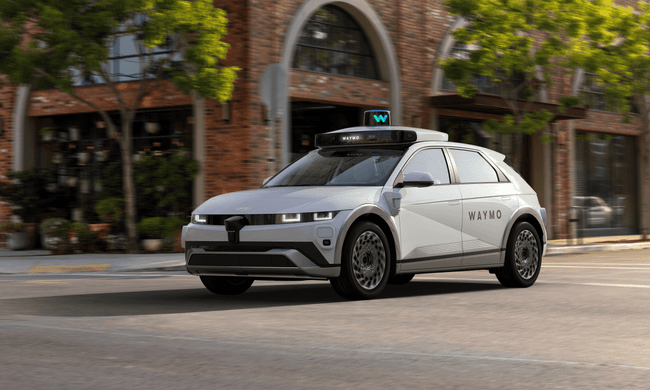
A Hyundai Ioniq 5 is equipped as a robotaxi.

Waymo has recalled its entire fleet of nearly 4,000 robotaxis to prevent them from driving on highways after identifying at least 13 instances where its vehicles drove straight into highway sections closed for construction. 

This is the company's sixth recall in under a year, and follows separate incidents involving flooded roads, telephone poles, chains and gates, towed trucks, and school buses.

Read more
BYD’s Great Tang eSUV offers 10-minute charging and a 590-mile range starting at $40,000
Spectacular specs, record preorders, and not a single one headed to America.
Car, Transportation, Vehicle

BYD just launched the Great Tang, a full-size electric SUV that offers the range of a regular gasoline-powered car and takes only slightly longer to refuel (read: recharge). 

The company's flagship eSUV starts at around $35,500 and gives most American electric SUVs a serious run for their money.

Read more
BMW is taking orders for the i3 way ahead of schedule, and it’s got a happy problem to blame
Too much demand, too good a car to make people wait until fall.
Bumper, Transportation, Vehicle

BMW planned to open order books for the new i3 sedan this fall, but now, the automaker is opening them this week instead. The reason is the kind of happy problem every automaker wishes they had.

As it turns out, too many people want to buy the car, and the automaker decided it would be rude to make them wait.

Read more