  1. Home
  2. Cars
  3. Smart Home
  4. Legacy Archives

Federal authorities will soon require black boxes in U.S. automobiles

Add as a preferred source on Google

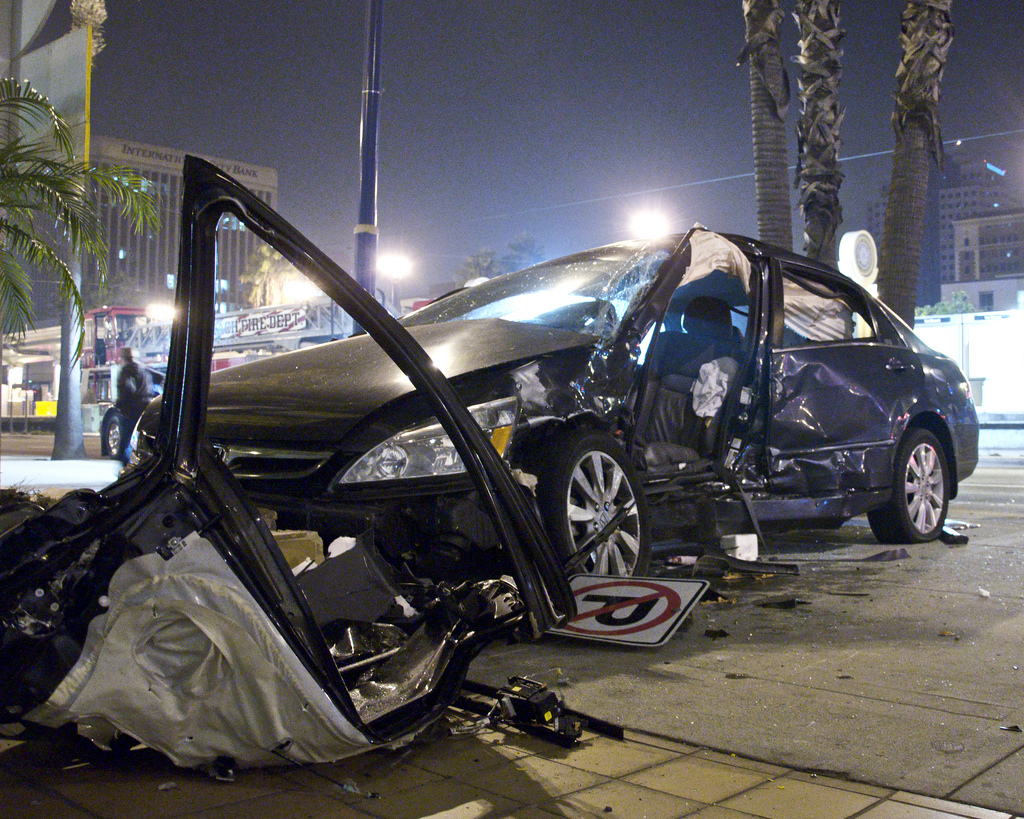
car crash by stevelyon via FlickrThose of you scared of Big Brother will have a little more to be paranoid about when you hop into your car. In a month, federal officials (NHTSA) will require every automobile to contain a black box; similar to the device carried in airplanes. The automotive black box is an event data recorder which will monitor your driving habits and provide a snapshot of the final moment of impact if the car crashes.

According to Wired’s Autolog, cars with airbags may already have proprietary black box devices installed in them, but there is no across the board standard at this point with regards to use of the gleaned data. There are 37 states that have no statutes with regards to disclosure of the data. In some cases the black box information is admissible in court, and since no federal laws govern access to the data there may be no limits to what other parties can access.

Recommended Videos

This type of information would be helpful to law enforcement, insurance companies and manufacturers in determining fault—whether of driver or manufacture. General Motors, a company that has pioneered much of the data recorder technology, says it uses the data it has acquired to study crash severity and understand how the system was function right before the accident. The data helps them with recalls and problems with safety devices such as airbag deployment. Conversely, the data could be used by insurance companies in determining how to assess claims.

The push is for a standard on who gets access, and how much. According to Tom Kowalick, chair at the institute of Electrical Electronic Engineers, “This lack of standardization has been an impediment to national-level studies of vehicle and roadside crash safety.” Implemented standards would also quell privacy concerns and prevent data tampering.

Jeff Hughes
Former Digital Trends Contributor
I'm a SF Bay Area-based writer/ninja that loves anything geek, tech, comic, social media or gaming-related.
Volvo’s parent just launched a $16,000 EV that looks shockingly luxurious
This $15,600 Geely EV has no business looking this premium
Geely Galaxy Starshine 7 Promo Image

Geely, the Chinese auto giant that also owns Volvo, has just unveiled a new RV that really does not look like it belongs anywhere near the budget end of the market.

The company has just kicked off the presales in China for the Galaxy Starshine 7, with its pricing starting at 112,900 yuan or about $16,550. For that money, buyers get a midsize electric sedan with a sleek fastback silhouette, full-width lighting, a richly trimmed cabin, and even an available dual-motor all-wheel-drive setup that can hit 0 to 100 km/h in 5.4 seconds.

Read more
Xiaomi makes dirt-cheap gadgets, but its CEO just ruled out cheap EVs
Xiaomi is staying out of the bargain EV fight
Xiaomi SU7 EV in blue

Xiaomi has been known for building some surprisingly cheap gadgets that still feel a little more premium than they should. But that philosophy apparently does not extend to electric cars.

According to ITHome, Xiaomi CEO Lei Jun said during a livestream for the company's SU7 endurance challenge on April 17 that Xiaomi will not make vehicles priced below 100,000 Yuan. That works out to be just under $15,000. Lei explained that if consumers expect an electric car to deliver strong intelligent features, software, and overall capability, the cost is harder to squeeze down that far.

Read more
The new electric Mercedes C-Class puts its giant screen front and center
Mercedes previews a richer electric C-Class interior with a dash-wide display, upgraded comfort features, and a stronger push to make the cabin feel like the main event
Car, Transportation, Vehicle

Mercedes-Benz is using the cabin to make its first electric C-Class feel like a bigger step than a normal model update. Ahead of the car’s April 20 world premiere, it has shown an interior centered on a sweeping digital display, extra space, and a more upscale finish that leans hard into comfort and theater.

The key visual is the new MBUX Hyperscreen, with Mercedes also offering a Superscreen setup. Both are designed to stretch the digital interface across the front of the car and blend the center console into the instrument panel, giving the dashboard a cleaner and more dramatic shape than the current C-Class.

Read more