  1. Home
  2. Cars
  3. News

General Motors to manufacture self-driving cars in Michigan starting next year

Add as a preferred source on Google

California’s Silicon Valley may be the face of self-driving cars in the U.S., but the first state to pass comprehensive autonomous vehicle regulations lies about 2,400 miles to the east. Michigan Governor Rick Snyder signed the SAVE Act legislation into law last week, and one automaker is already taking advantage.

General Motors announced today that it will begin autonomous vehicle production in The Wolverine State next year, starting with a fleet of self-driving Chevrolet Bolt EVs. Testing is already underway around the brand’s Technical Center campus in Warren, but after the holiday season subsides, the next generation of driverless vehicles will hit the streets, packing Lidar sensors, cameras, and a bevy of other autonomous hardware. According to GM, the future is just around the corner.

Recommended Videos

“Revolutionizing transportation for our customers while improving safety on roads is the goal of our autonomous vehicle technology, and today’s announcement gets us one step closer to making this vision a reality,” said General Motors CEO Mary Barra. “Our autonomous technology will be reliable and safe, as customers have come to expect from any of our vehicles.”
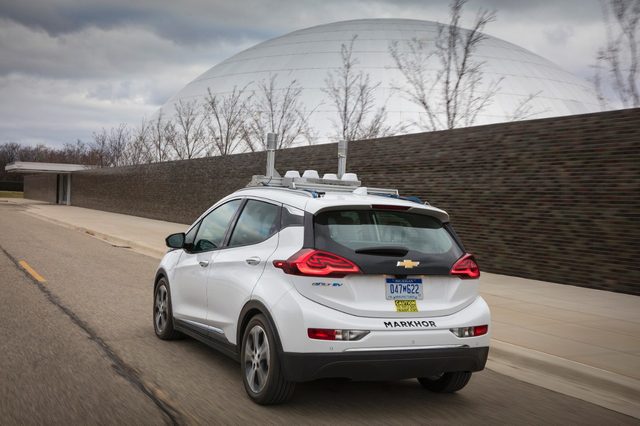
Chevrolet Bolt EV
Image used with permission by copyright holder

Unlike Silicon Valley — which is either blessed or cursed with perpetual summer depending on your perspective — Michigan’s weather can be a tad more harsh. This presents unique challenges and opportunities for GM, as driverless cars can struggle in low-visibility conditions like snow or ice. The company currently has more than 40 self-driving cars testing around San Francisco and Scottsdale, Arizona, but that number is sure to grow.

In addition to permitting autonomous vehicle testing and development, the SAVE Act establishes guidelines for the eventual sale of driverless cars and enables automakers to launch automated ridesharing services. The SAVE Act is also responsible for the newly christened Michigan Council on Future Mobility, which will propose industry standard policies, monitor connected vehicle networks, and determine how traffic data will be best utilized moving forward.

Andrew Hard
Andrew first started writing in middle school and hasn't put the pen down since. Whether it's technology, music, sports, or…
Audi tackles Ferrari Luce fever with the hybrid Nuvolari, it’s fastest and beefiest car ever
Meet the Audi that makes Formula 1 technology street legal.
Audi Nuvolari

Audi has just pulled the wraps off the Nuvolari, its first hybrid supercar, and the numbers are genuinely hard to comprehend. Named after Tazio Nuvolari, one of motorsport's most iconic figures, the car produces 1,001 PS and can reach a top speed of over 350 km/h. Only 499 people will ever get to own one, with deliveries kicking off in the first half of 2027.

The Nuvolari can go from 0 to 100 km/h in 2.6 seconds and can hit the 200 km/h mark in just 6.8 seconds. Under the hood is a 4.0-liter V8 biturbo engine producing 800 hp, paired with three electric motors for a combined system output of 1,001 PS. The electric motors at the front axle alone deliver 2,150 Nm of torque, which is a number that feels almost fictional.

Read more
Electric cars are getting more pocket-friendly globally, except for US buyers
The US EV market's 2025 decline wasn't about consumer disinterest. It was the predictable result of eliminating financial incentives.
Porsche Cayenne Coupe electric

In 2025, one in four cars sold anywhere in the world was electric. However, in the US, that figure is closer to one in ten, and it is not moving in the right direction. 

The falling EV prices globally have pushed sales to record levels. American buyers, on the other hand, are marching through 2026 with fewer incentives, higher prices, and a shrinking selection of affordable options. 

Read more
Lexus halts plans of an electric car based on the stunning LF-ZC concept and it’s such a bummer
Lexus finally designed a gorgeous EV and then sent it to timeout
LF-ZC concept

Toyota and Lexus may have just shelved one of the most exciting electric vehicle concepts shown in recent years. According to reports from Automotive News and Nikkei Asia, Toyota has halted development of the next-generation Lexus EV that was expected to be based on the futuristic LF-ZC concept.

For EV enthusiasts and Lexus fans, the news is particularly disappointing because the LF-ZC represented one of the clearest signs that Lexus was finally preparing to make a serious leap into the premium electric future.

Read more