
  1. Home
  2. Cars
  3. Emerging Tech
  4. Legacy Archives

Let the robots do the walking for you with the Honda ‘Walking Assist Device’

Add as a preferred source on Google
Honda walking assist device
Image used with permission by copyright holder

Honda was founded with a single principle at its core: “utilizing technology to help people.” Typically, that has meant cars, motorcycles and walk-behind lawnmowers. But it is in this spirit that Honda also created the Walking Assist Device, a hip-mounted mechanical unit that assists users in the act of walking.

Weighing less than 5.7-pounds, the WAD uses thin motors and acontrol system in combination with hip angle sensors to assist in walking while also improving the timing and symmetry of the user’s gate.

Recommended Videos

Presently, only 100 units have been sent out to Japanese hospitals on a leasing program. While the WAD has received a great deal of positive feedback in its preliminary trials, Honda hopes to take what it learns from this larger-scale lease program and apply it to a broader release.
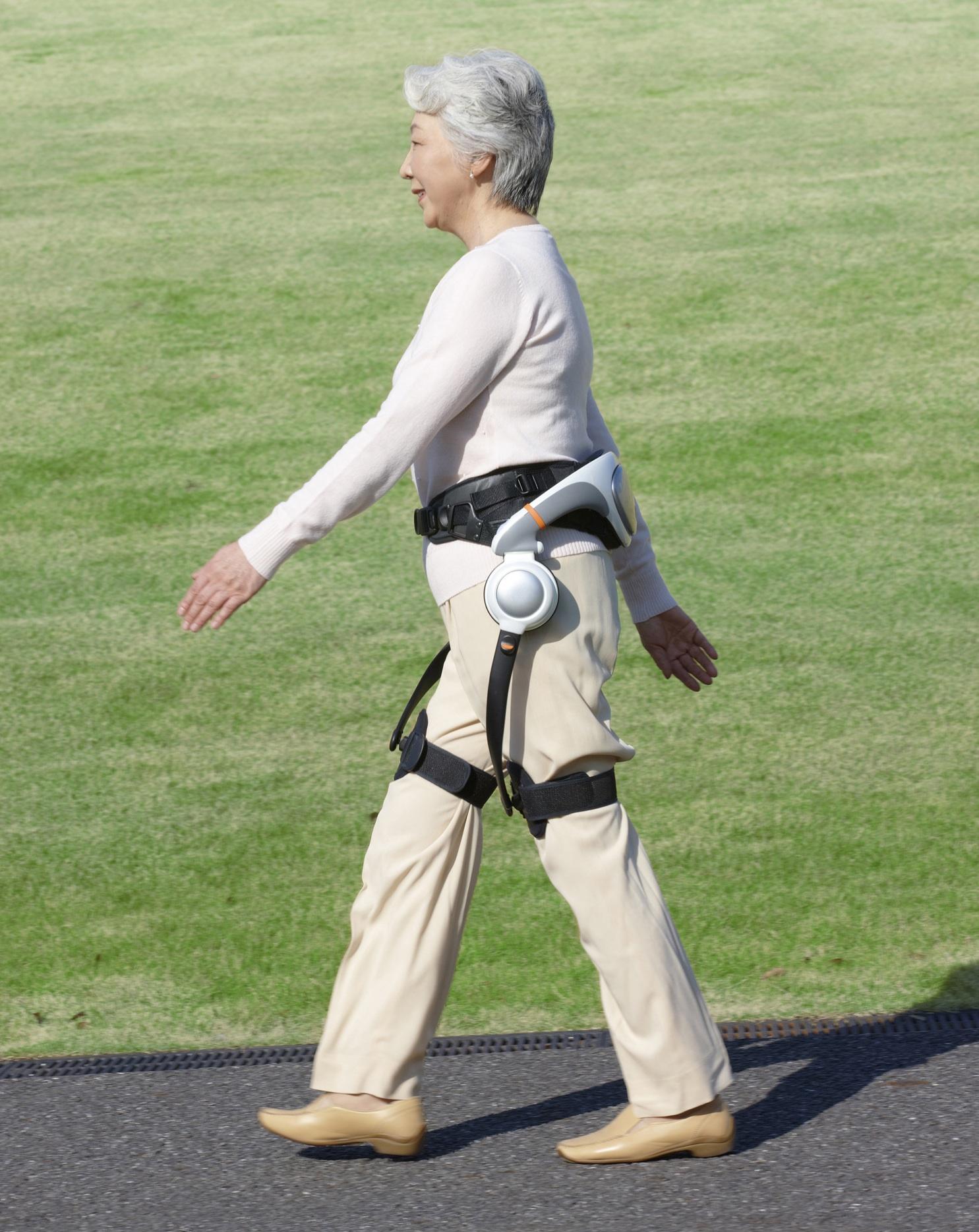
Honda WAD
Image used with permission by copyright holder

Powered by a small, onboard lithium-ion battery pack, Honda claims the WAD is capable of a 60+ minute operating time. Smartly, Honda has also made the WAD weather resistant and operational in temperatures from 36-degrees to 86-degrees Fahrenheit. The WAD also best operates in humidity levels between 30  and 85 percent.

As it stands, the WAD is only available in M-size (hip width: 13.3-inches) L-size (hip width: 14.9-inches), which makes it obliviously inappropriate for most Americans. Also, its limited temperature operation range cuts out most of the areas where retirees live, like Arizona and Florida, which often see temperatures well in excess of 86 degrees. Also, Florida often sees humidity well above 85 percent in the mornings, making the WAD a questionable choice for older Floridians. At least this version. 

Sure, we’re jumping the gun a bit, as the WAD is not yet available outside of Japan. Regardless, we’re quite excited by the development and eagerly await when we don’t have to walk from our desk to the office fridge under our own power.

Nick Jaynes
Former Automotive Editor
Nick Jaynes is the Automotive Editor for Digital Trends. He developed a passion for writing about cars working his way…
Cambrige experts find utterly simple fix for longer lasting EV batteries. Just put some pressure on it.
Scientists found a way to make EV batteries last longer without reinventing the battery
EV Charging

EV battery breakthroughs typically involve new chemistry, exotic materials, or faster charging/higher capacity. But a new study reveals that you can skip all the fancy stuff and go with a very simple solution, Researchers from the University of Cambridge found that putting the battery under the right amount of pressure actually helps.

The study was about how physical pressure affects lithium-ion battery life, which found that keeping cells under constant pressure could double their lifespan. The work was published in Nature Energy, and the team says the improvement came without changing the active materials, electrolyte, or basic battery chemistry.

Read more
BMW reveals redesigned X5 with petrol, hybrid, EV, and hydrogen options
BMW couldn't decide on a powertrain, so it launched all of them
BMW X5

BMW has pulled the wraps off the fifth-generation X5, giving one of its best-selling luxury SUVs its biggest overhaul yet. The new model brings a fresh Neue Klasse-inspired design, a completely redesigned interior, and the broadest choice of powertrains the X5 has ever offered. Alongside petrol, diesel, and plug-in hybrid versions, BMW has introduced the first fully electric iX5, while confirming that a hydrogen-powered X5 will join the lineup at a later stage.

More powertrain choices, more technology, and a fresh design

Read more
Tesla has a battery theft problem
Even Tesla's batteries can't wait to hit the road
Tesla cars at Superchargers

Tesla is facing an unusual security problem in the US, and it is happening before many of its batteries even make it onto the road. According to an investigation by WIRED, multiple truckloads of Tesla batteries have allegedly been stolen directly from the company's Nevada Gigafactory, highlighting a growing wave of organised cargo theft targeting high-value technology shipments.

Cargo theft is becoming a serious problem for Tesla

Read more