

Mercedes-Benz has given the EQS a serious second wind, and this is not the kind of refresh where they slap on a new color option and call it a year. The updated electric saloon arrives with a reworked architecture, genuinely impressive range numbers, and enough technology packed under its skin to make it feel like a different car from the one that launched back in 2021.
Over 900 km on a single charge? Yes, really!

The headline number here is hard to ignore. The new EQS 450+ is rated at 926 km WLTP range, a 13% improvement over the previous model, which was already no slouch. To put that in real-world terms, you could drive from Munich to Paris or from Zurich to Hamburg on a single charge without breaking a sweat or a schedule. A lot of that improvement comes from a new battery with updated cell chemistry, paired with a next-generation electric architecture. Mercedes has also fitted a two-speed gearbox at the rear axle, which helps the drivetrain stay in its efficiency sweet spot across different driving conditions.
Charging has gotten significantly quicker
The new EQS adopts an 800-volt architecture, unlocking charging speeds of up to 350 kW. At that rate, you are adding around 320 km of range in roughly 10 minutes. If you are stuck at a 400-volt station, the battery cleverly splits itself to charge at up to 175 kW, so you are not left waiting, regardless of the available infrastructure. Regenerative braking has also taken a big step forward, with recuperation power now hitting up to 385 kW. That is a meaningful amount of energy being fed back into the battery every time you lift off the accelerator.

This is arguably the most interesting engineering story in the new EQS. Mercedes-Benz becomes the first German manufacturer to offer steer-by-wire in a series-production car, with the option arriving a few months after launch. There is no mechanical connection between the steering wheel and the front wheels. It is all handled electronically, which allows for a more precise and tunable steering feel than a traditional setup can offer. For a brand that filed the original automobile patent 140 years ago, it is a fittingly bold move.
The interior is still a tech showcase
The MBUX Hyperscreen remains standard, spanning more than 55 inches of continuous glass and housing three displays in a single seamless surface. The system now runs on MB.OS, Mercedes’ new in-house operating system that uses AI, handles over-the-air updates, and connects to Mercedes’ cloud infrastructure. The virtual assistant can hold proper back-and-forth conversations rather than just responding to isolated commands, which brings it closer to something genuinely useful. Rear passengers get their own 13.1-inch screens and portable MBUX remotes for controlling entertainment and vehicle functions without leaning forward to poke at the dashboard.
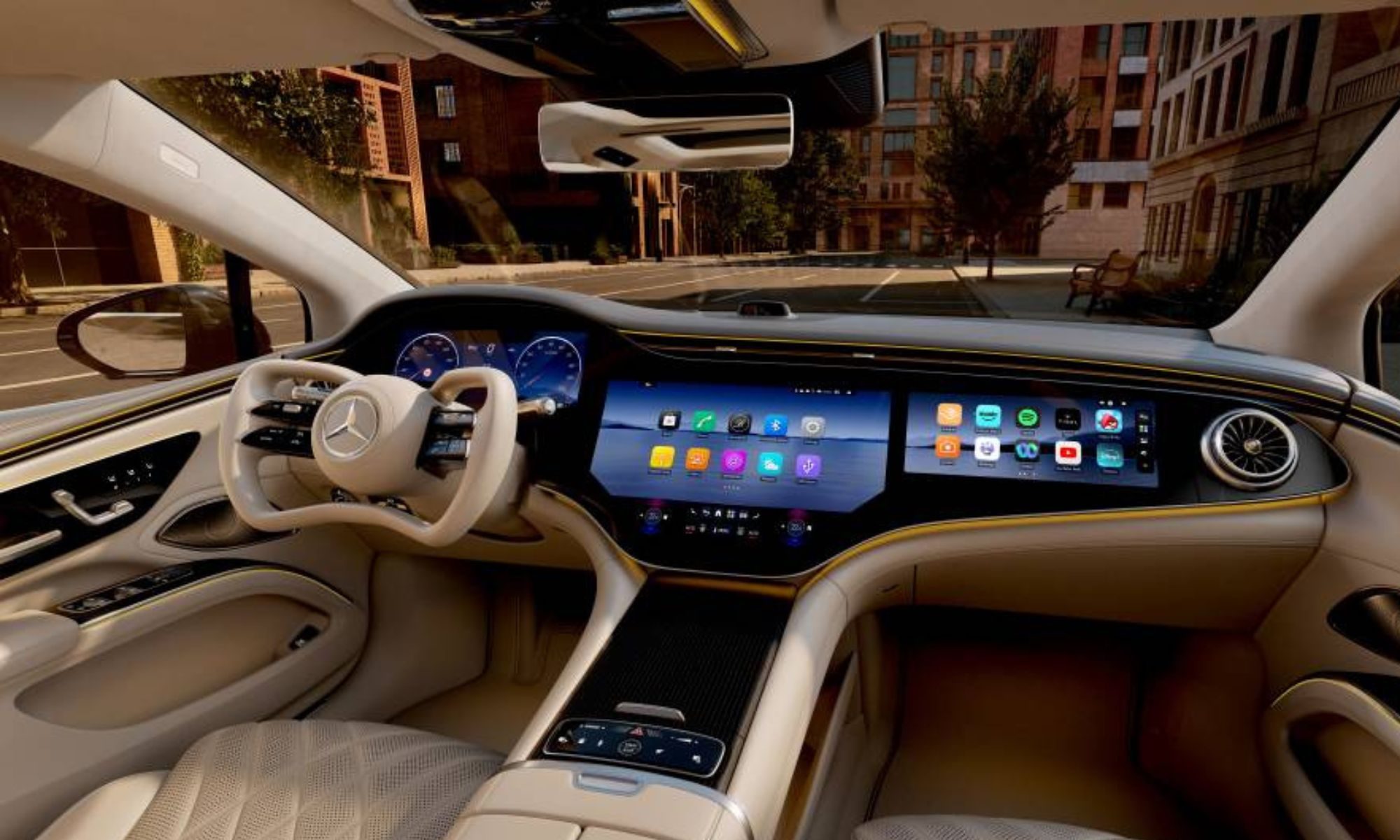
Beyond the big-ticket items, Mercedes has clearly sweated the smaller stuff too. The headlights now project a field 40% larger than before while consuming half the energy. The high beam reaches 600 meters down the road. The HEPA filter keeps out nearly all airborne particles. The suspension uses cloud-based damper regulation that reads upcoming speed bumps and adjusts in real time so the EQS floats over them rather than thudding through. There is even seatbelt heating on the front seats, which warms up to 44 degrees and is the kind of feature that sounds unnecessary until the first cold morning you try it.
A stronger case than ever

When the EQS first launched, it set the benchmark for electric luxury saloons. A few years on, the competition has caught up considerably. This refresh feels like Mercedes’ answer to that, addressing the areas where the original model was starting to show its age while doubling down on what made it special. Whether the price tag justifies it all is a conversation for your accountant, but as a piece of engineering, the new EQS is genuinely hard to argue with.


